Skip to content
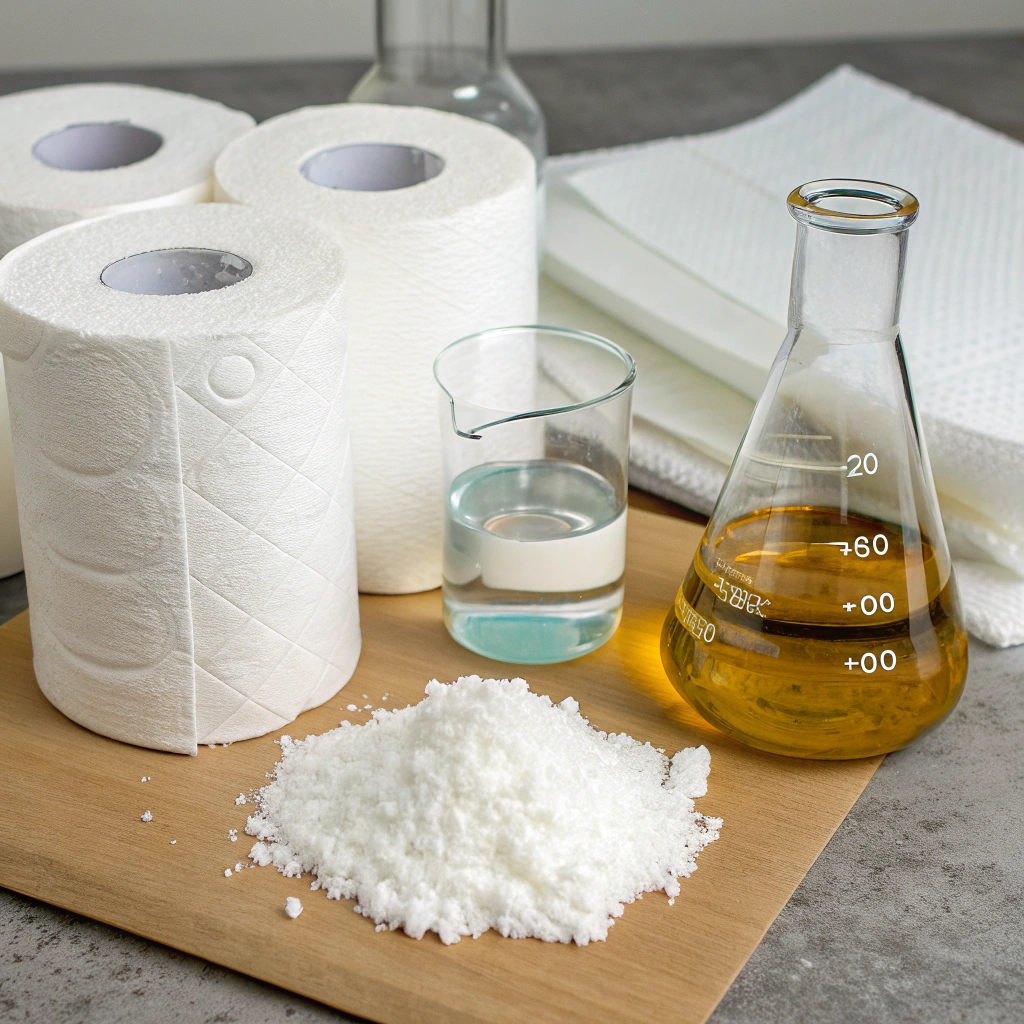
Many buyers worry about what touches their skin every day. Toilet paper looks simple, but hidden chemicals raise fear, doubt, and confusion for both families and bulk buyers.
Yes, most toilet paper contains chemicals from pulping, bleaching, softening, and converting processes, but the type and level of chemicals depend on how the paper is made and what quality standard it follows.
Understanding what goes into toilet paper helps buyers avoid skin risks, reduce long-term exposure, and choose safer options without paying unnecessary costs.
What Chemicals Are Used in Toilet Paper Production?
Some toilet paper chemicals stay hidden behind soft texture and white color. Many buyers only learn about them after skin issues or customer complaints appear.
Toilet paper production uses chemicals for pulping, bleaching, bonding, softness, and preservation, but not all of them stay in the final sheet at harmful levels.
Pulping and Fiber Processing Chemicals
Toilet paper starts with fiber. That fiber comes from wood pulp, bamboo pulp, or recycled paper. During pulping, chemicals help separate fibers and remove lignin.
Common pulping chemicals include:
- Sodium hydroxide
- Sodium sulfide
- Hydrogen peroxide
- Oxygen-based agents
These chemicals break down raw material into clean fibers. Most of them are washed out before paper forming. However, low-grade factories may reduce washing steps to cut costs.
Bleaching Chemicals
Bleaching creates the white look many buyers expect. The main bleaching methods are:
- Elemental chlorine
- Chlorine dioxide
- Oxygen-based bleaching
- Hydrogen peroxide bleaching
Older chlorine bleaching methods can create trace dioxins. Modern factories usually avoid this due to safety rules and export standards.
Additives for Performance
After fibers are formed, additives improve function and feel.
Common additives include:
- Wet strength resins
- Dry strength agents
- Softeners
- Starch binders
- Retention aids
These help toilet paper stay strong when wet and soft when dry. Most are polymer-based and approved for tissue use.
Preservatives and Processing Aids
During storage and transport, some factories add preservatives to prevent mold and bacteria growth. Trace amounts may remain, especially in humid regions.
Chemical Overview Table
| Chemical Category | Purpose | Risk Level When Properly Controlled |
|---|---|---|
| Pulping agents | Fiber separation | Low |
| Bleaching agents | Whiteness | Low to moderate |
| Strength additives | Durability | Low |
| Softeners | Comfort | Low |
| Preservatives | Shelf stability | Low |
The key issue is not whether chemicals exist, but whether they meet safety limits and are removed properly.
Are Bleached Toilet Papers Safe for Skin?
White toilet paper feels clean, but many people worry about bleaching residues touching sensitive skin.
Modern bleached toilet paper is generally safe for skin when produced under regulated processes, but low-quality bleaching methods may increase irritation risks for sensitive users.
Understanding Modern Bleaching Standards
Most export-grade toilet paper uses:
- Elemental Chlorine Free (ECF) bleaching
- Totally Chlorine Free (TCF) bleaching
These methods reduce harmful by-products. They meet international safety rules and are widely accepted in global markets.
Skin Sensitivity Factors
Not all skin reacts the same. Irritation risk depends on:
- Frequency of use
- Existing skin conditions
- Paper roughness
- Chemical residue level
People with eczema, hemorrhoids, or post-surgery skin are more sensitive.
My Real-World Observation
In bulk supply projects, complaints almost never come from certified bleached paper. Issues often appear with:
- Ultra-cheap products
- Inconsistent batches
- Poor storage conditions
This suggests quality control matters more than color alone.
Bleached vs Unbleached Comparison Table
| Feature | Bleached Toilet Paper | Unbleached Toilet Paper |
|---|---|---|
| Color | White | Light brown |
| Chemical exposure | Very low (certified) | Minimal |
| Skin comfort | High | Medium |
| Market acceptance | Very high | Limited |
| Cost | Slightly higher | Slightly lower |
Bleaching itself is not the enemy. Poor bleaching control is.
How Can I Choose Chemical-Free Toilet Paper?
Many buyers ask for “chemical-free” toilet paper, but the term often causes confusion and unrealistic expectations.
Truly chemical-free toilet paper does not exist, but buyers can choose low-chemical, skin-safe, and eco-friendly options by focusing on material, process, and certification.
Understand What “Chemical-Free” Really Means
Every paper product involves chemistry. The goal is not zero chemicals, but:
- No harmful residues
- No unnecessary additives
- No unsafe bleaching
A better term is “low-impact” or “skin-safe” toilet paper.
Choose the Right Raw Material
Some fibers require fewer treatments:
- Bamboo pulp needs less bleaching
- Virgin wood pulp is cleaner than recycled pulp
- Food-grade recycled pulp is safer than mixed waste pulp
Look for Clear Certifications
Reliable signs include:
- FSC certification
- ISO quality systems
- SGS testing reports
- FDA compliance for tissue products
These show the factory follows controlled processes.
Ask the Right Supplier Questions
Buyers should ask:
- What bleaching method is used?
- Are softeners added?
- Is the product tested for skin contact?
- How is batch consistency controlled?
Practical Buying Checklist
- Avoid strong chemical smell
- Avoid overly shiny paper
- Check fiber transparency
- Request sample testing
Low-chemical toilet paper is not rare. It just requires careful supplier selection.
Is Scented Toilet Paper Harmful?
Scented toilet paper feels fresh, but fragrance introduces another layer of chemical exposure.
Scented toilet paper may increase irritation risk due to added fragrances and binders, especially for sensitive skin or long-term daily use.
What Makes Toilet Paper Scented
Fragrance is added through:
- Synthetic fragrance oils
- Micro-encapsulated scents
- Perfumed coatings
These chemicals are designed to release smell through friction and moisture.
Potential Skin Reactions
Common reactions include:
- Itching
- Redness
- Burning sensation
- Contact dermatitis
These effects appear more often in:
- Children
- Elderly users
- Medical patients
- People with allergies
Long-Term Exposure Concerns
Daily exposure matters. Even mild fragrance can build irritation over time. Hospitals and hotels increasingly avoid scented tissue for this reason.
Market Trends and Buyer Shift
In recent years, bulk buyers show:
- Less demand for scented toilet paper
- More demand for plain, soft tissue
- Higher focus on skin safety
Unscented paper now dominates medical, hotel, and family markets.
Scented vs Unscented Overview
| Aspect | Scented Toilet Paper | Unscented Toilet Paper |
|---|---|---|
| Fragrance additives | Yes | No |
| Skin safety | Lower | Higher |
| Allergy risk | Medium | Very low |
| Market trend | Declining | Growing |
Fresh smell should never come at the cost of skin health.
Conclusion
Toilet paper does contain chemicals, but most are safe when controlled well. The real risk comes from low-quality production, poor bleaching, and added fragrances. Choosing certified, unscented, well-made paper protects skin and builds long-term trust.