
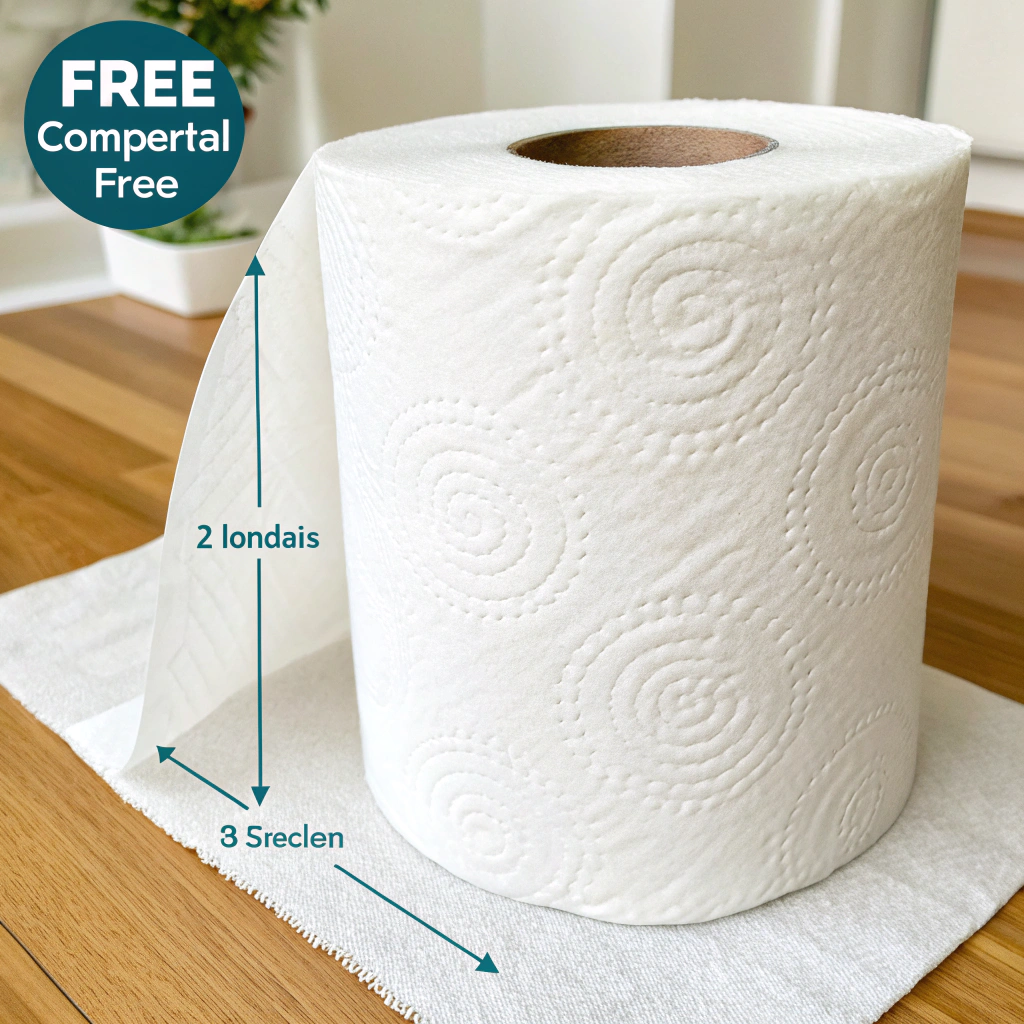
Many buyers feel confused when they compare toilet paper rolls. The package looks big, but the roll feels small at home. This gap creates doubt and mistrust.
A toilet paper roll length usually ranges from 15 to 50 meters, depending on roll type, paper thickness, and brand positioning. Standard rolls sit at the lower end, while mega and jumbo rolls extend far beyond that range.
This topic matters more than it seems. Roll length affects cost, storage, transport, and real usage. Understanding it helps buyers make better choices and avoid marketing traps.
Is there a difference between standard and mega rolls?
Many people assume a roll is just a roll. But after a few days, the roll is gone faster than expected. This often happens because the roll type was misunderstood.
Yes, standard and mega rolls differ mainly in paper length, sheet count, and core size, even if they look similar on the shelf.
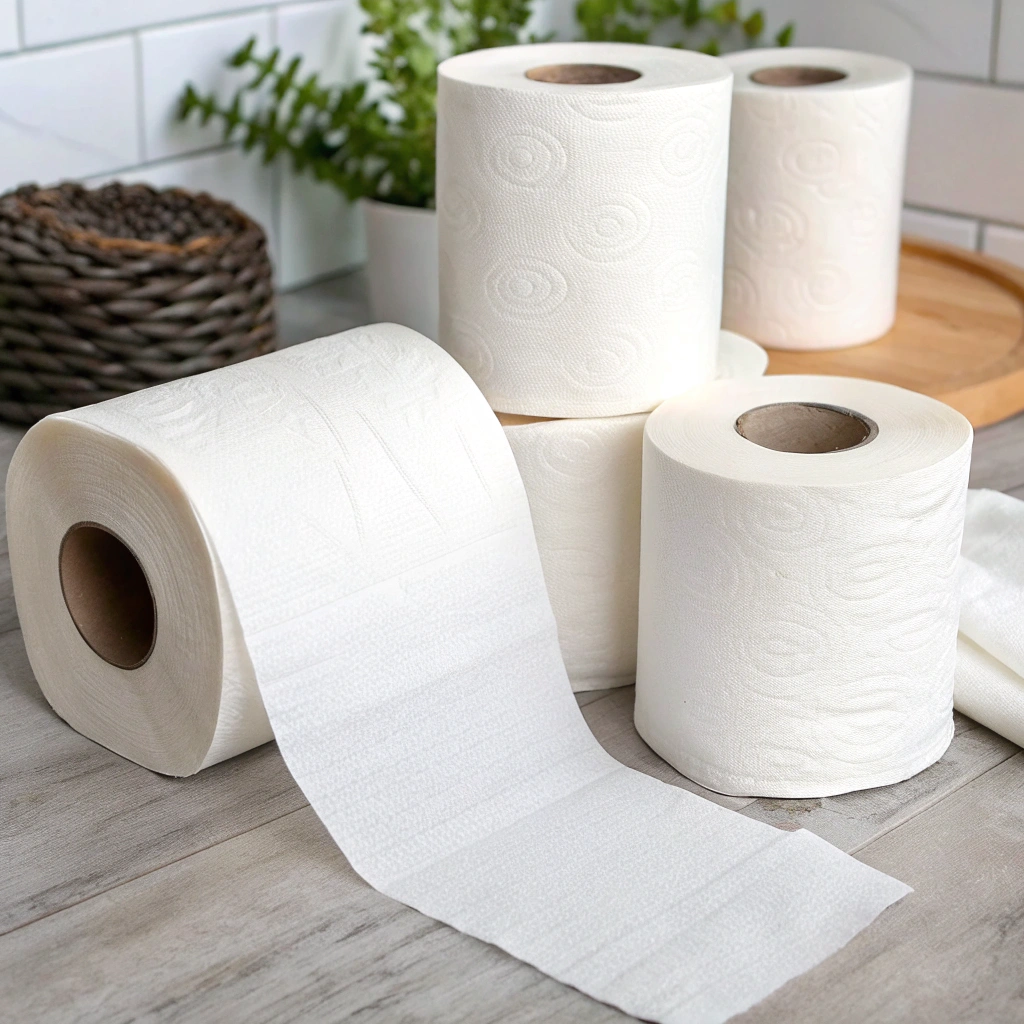
The term standard roll usually refers to the most basic format sold in retail. These rolls are designed to fit all home holders. A typical standard roll often contains between 150 and 300 sheets. The total length usually falls between 15 and 25 meters, depending on sheet size and ply count.
Mega rolls, on the other hand, are built for longer use. They can contain two, three, or even four times the paper of a standard roll. The length can reach 40 to 50 meters or more. The diameter is larger, and the core is often wider or stronger to support the added weight.
The key difference is not only length. It is also how that length is presented. Mega rolls may use thinner paper, tighter winding, or smaller sheets. This allows brands to increase sheet count without making the roll look too large.
From a production view, the machines adjust tension and rewinding speed. Tighter rolls reduce air gaps. This improves transport efficiency. It also changes how fast the roll is consumed at home.
There is also a holder issue. Some mega rolls do not fit older wall-mounted holders. This creates friction for users, even if the value is better on paper.
Below is a simple comparison.
| Feature | Standard Roll | Mega Roll |
|---|---|---|
| Typical length | 15–25 meters | 40–50 meters |
| Sheet count | 150–300 | 400–1000 |
| Roll diameter | Small to medium | Large |
| Holder fit | Universal | Sometimes limited |
The difference matters most for families, hotels, and public places. A mega roll reduces change frequency. A standard roll offers easy fit and lower upfront cost.
How does roll length impact toilet paper value?
Many buyers focus on price per pack. This feels logical. But it often hides the real cost problem.
Roll length directly affects toilet paper value because longer rolls usually lower the cost per meter, even if the pack price is higher.
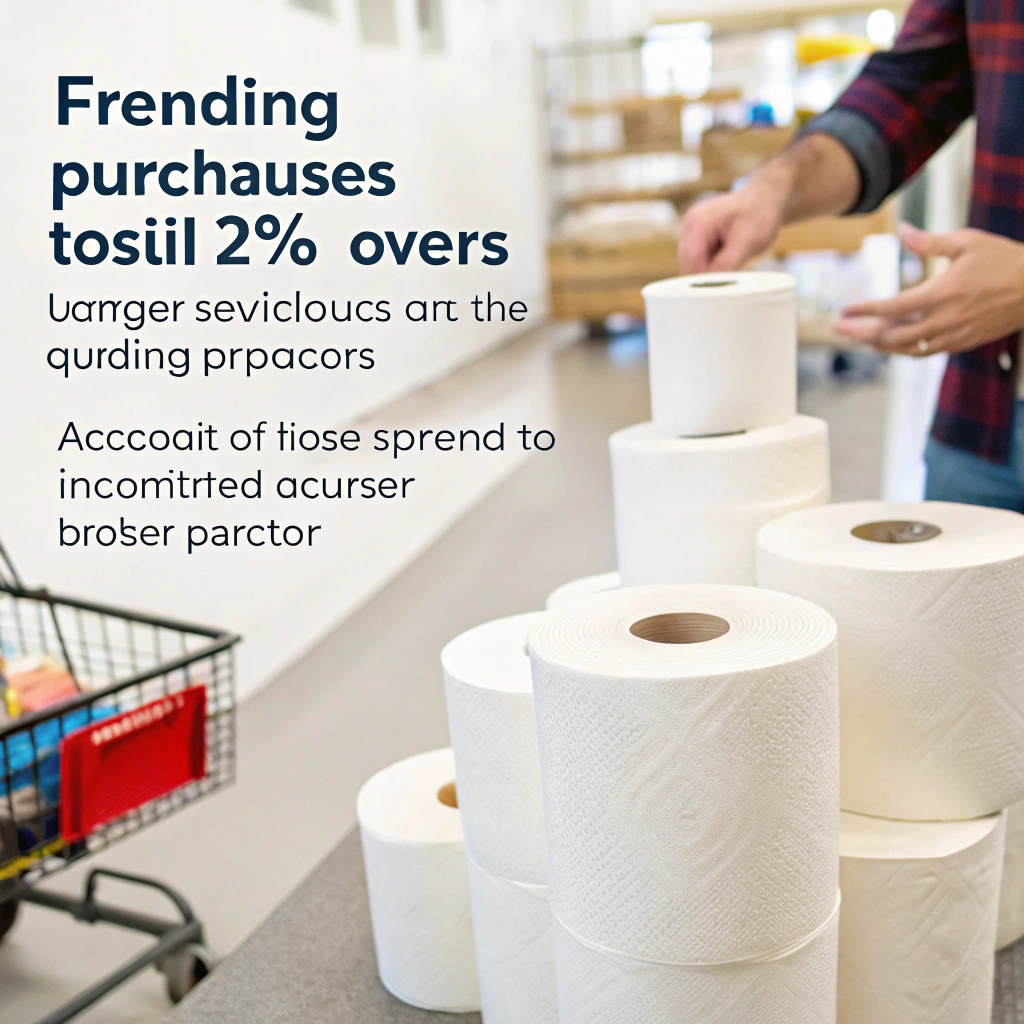
Value in toilet paper is not about softness alone. It is about how much usable paper you get for the money. The best way to measure this is cost per meter or cost per 100 sheets.
A cheap pack with short rolls can run out fast. This leads to more frequent purchases. Over time, the total spend increases. Longer rolls reduce this cycle.
Another factor is usage behavior. Short rolls tend to be used faster because users feel less need to control usage. Longer rolls create a sense of abundance. This often slows consumption slightly.
In bulk settings, roll length matters even more. Hotels, offices, and malls track replacement time. Each roll change costs labor time. A longer roll reduces staff workload and downtime.
Transport also plays a role. Longer rolls are often wound tighter. This means more paper per container. The shipping cost per meter drops. This saving often reflects in wholesale pricing.
However, longer does not always mean better. If the paper is too thin, users may pull more sheets. This cancels out the length advantage. Balance is key.
Below is a simplified value comparison.
| Metric | Short Roll | Long Roll |
|---|---|---|
| Price per pack | Lower | Higher |
| Cost per meter | Higher | Lower |
| Replacement frequency | High | Low |
| Transport efficiency | Low | High |
Smart buyers look past the shelf price. They check total length, ply count, and sheet size. This gives a clear view of real value.
Are longer rolls more eco-friendly?
Eco claims are everywhere on tissue packaging. Green colors and leaf icons are common. But the truth is more complex.
Longer toilet paper rolls can be more eco-friendly because they reduce packaging waste, transport emissions, and roll core usage.
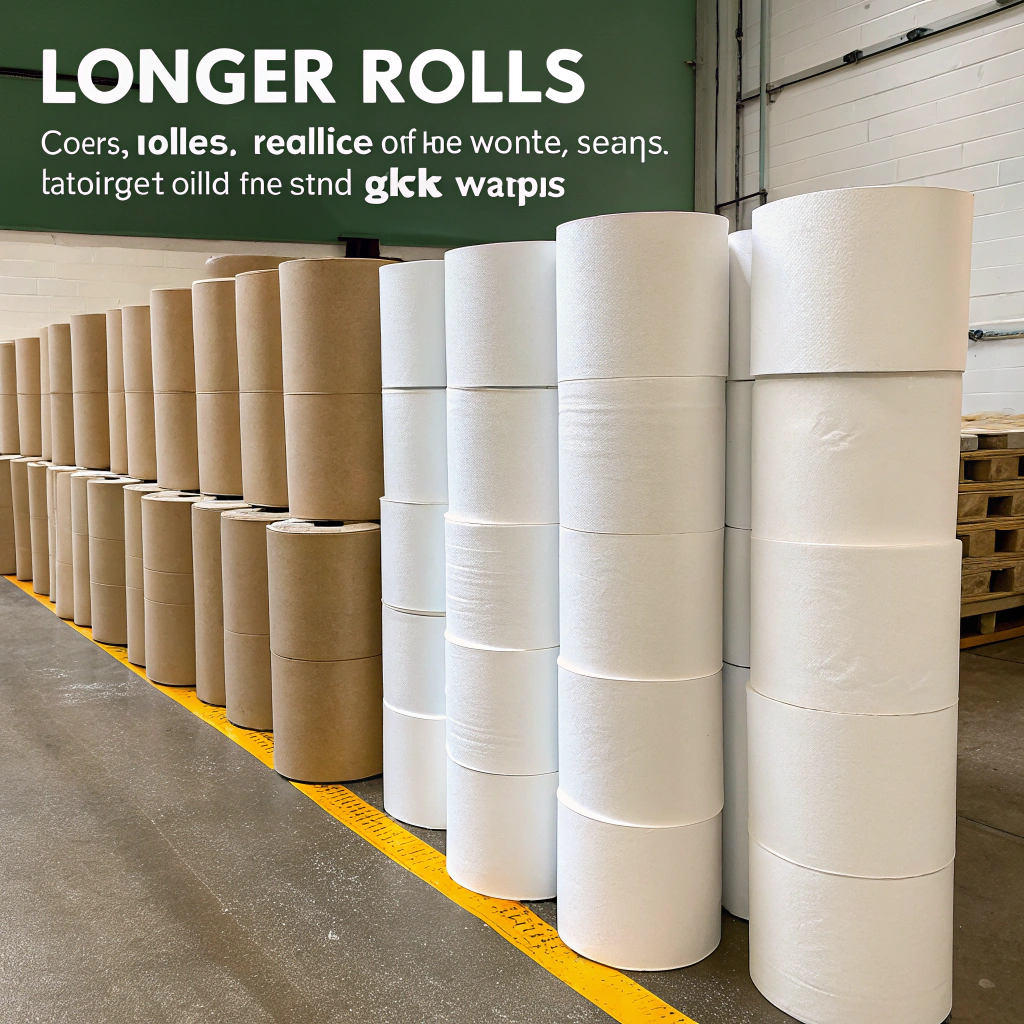
Each roll needs a core, wrap, and space. When rolls are short, more cores and wraps are needed for the same amount of paper. This increases waste.
Longer rolls mean fewer cores. Less glue is used. Fewer plastic wraps or paper bands are needed. Over large volumes, this adds up.
Transport is another key factor. A container filled with short rolls carries more air. Longer rolls are wound tighter. This improves load density. Fewer shipments are needed to move the same paper volume.
Energy use during production also matters. Changing rolls on machines takes time and energy. Longer rolls reduce changeovers. This improves machine efficiency.
However, eco impact also depends on raw material. A long roll made from poor fiber is not green. Bamboo pulp, recycled paper, and certified wood pulp make a bigger difference than roll length alone.
Water and chemical use during pulping also matter. These factors are not visible to buyers, but they shape the true footprint.
From a user view, longer rolls can reduce wasteful habits. Fewer empty cores remind users to use paper wisely.
Still, there are limits. If rolls become too large, they may need special holders. Extra plastic parts may be added. This offsets some gains.
Eco value comes from balance. Length helps, but only when combined with responsible materials and design.
Why do brands market toilet paper by roll count?
Shoppers often see “12 rolls” or “24 rolls” in large print. Length and sheet count appear smaller. This is not accidental.
Brands market toilet paper by roll count because it is easier to compare visually and creates a strong sense of quantity, even when roll length varies.
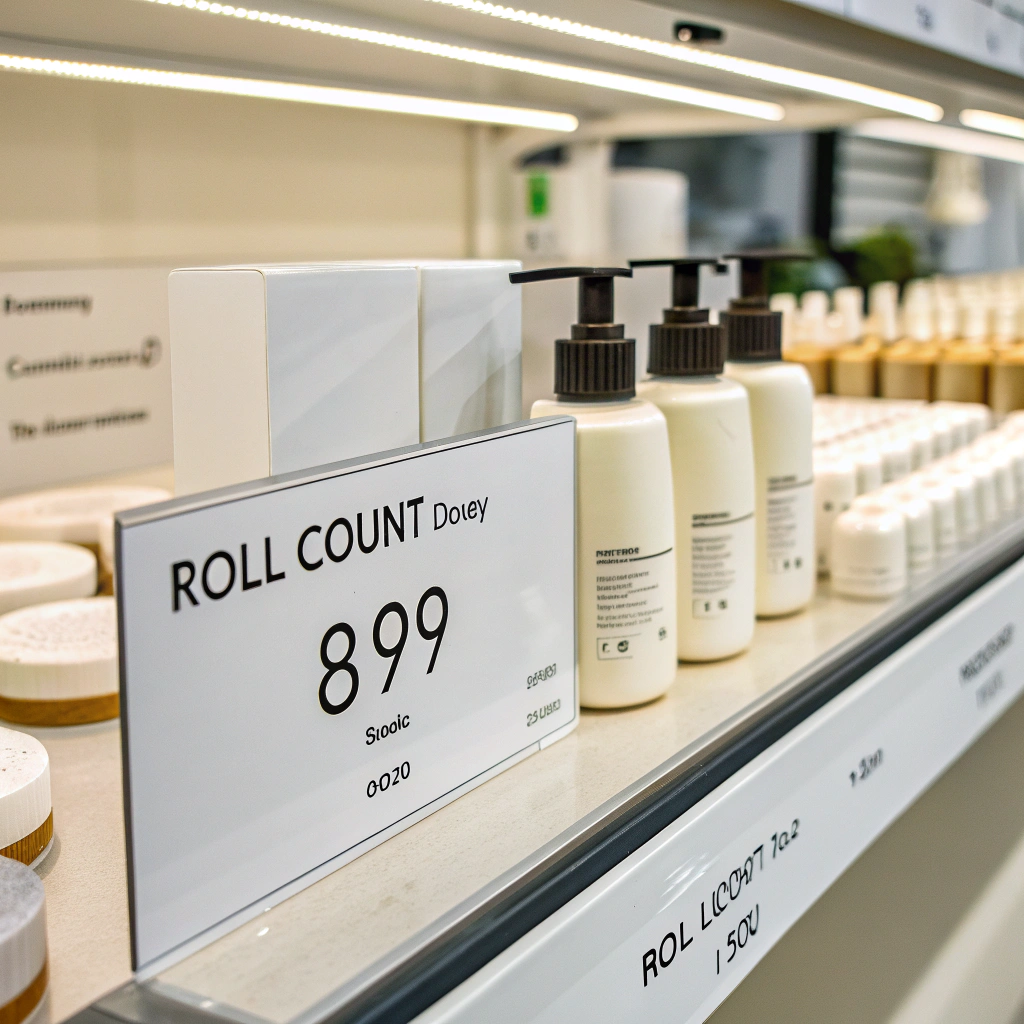
Roll count is simple. Everyone understands numbers. It allows fast comparison on crowded shelves. This helps quick decisions.
Length in meters feels abstract. Many buyers cannot picture 30 or 50 meters. Sheet count also varies by size and ply. Roll count avoids this complexity.
Marketing teams know that larger numbers feel like better deals. A pack of “24 rolls” sounds generous, even if each roll is short. This triggers a value signal in the mind.
Another reason is legacy standards. For decades, rolls were similar in size. Roll count made sense. As products diversified, the habit stayed.
Retail shelf space also plays a role. Packs with high roll counts look bigger. This gives brands more visual presence. It can push competitors aside.
From a regulation view, roll count is easier to standardize across regions. Length units differ by country. Roll count avoids conversion issues.
However, this system creates confusion. A “mega roll” may equal two or three standard rolls. Brands sometimes print this in small text. Many buyers miss it.
This is why smart buyers check the fine details. They look for total length, sheet size, and ply. These numbers reveal the real story.
Brands are slowly adapting. Some now highlight “total meters” or “equivalent rolls.” This helps trust. But roll count still dominates because it sells.
Conclusion
Toilet paper roll length shapes value, comfort, cost, and impact. Longer rolls often offer better efficiency and less waste, but only when paper quality and design are balanced. Understanding length helps buyers see past labels and make smarter choices.