Skip to content

Many buyers feel confused when they compare toilet paper rolls that look the same but last for very different times. This confusion often leads to distrust in brands and wrong cost calculations.
The number of sheets in a toilet paper roll depends on brand standards, sheet size, paper thickness, and roll diameter, not just how big the roll looks.
This topic matters for households, wholesalers, and commercial buyers. Understanding sheet count helps estimate real value, control costs, and avoid misleading packaging claims.
Is there a standard sheet count per roll?
People often expect toilet paper to follow one clear rule. When rolls vary, they assume something is wrong. In reality, there is no single global standard.
There is no universal standard sheet count per toilet paper roll, but common ranges exist based on roll type and market use.
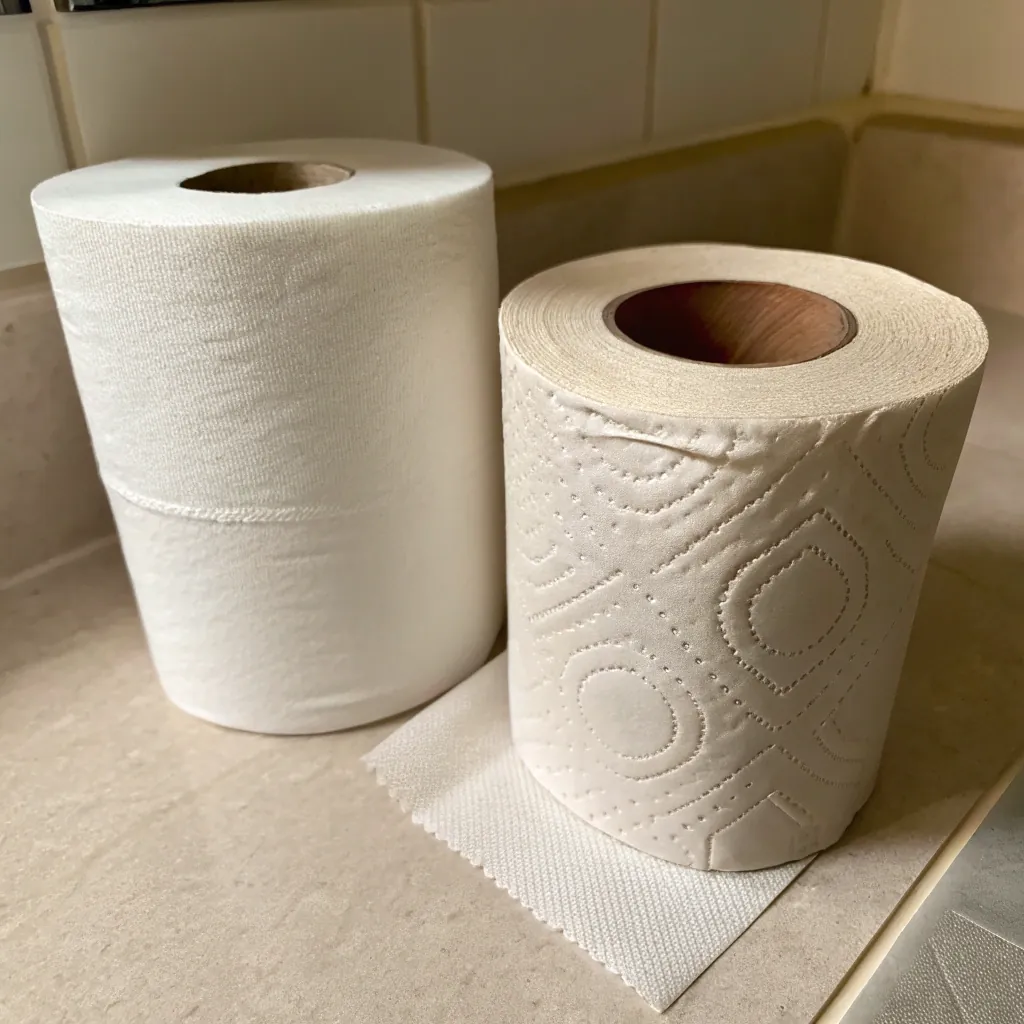
Sheet count developed from industry habits, not strict rules. Different regions and use cases shaped different norms.
Common sheet count ranges
Most household toilet paper falls into familiar ranges. These numbers help buyers compare products within the same category.
| Roll Type | Typical Sheet Count |
|---|---|
| Standard roll | 150–250 sheets |
| Double roll | 300–500 sheets |
| Mega roll | 600–1,000 sheets |
| Jumbo commercial roll | 800–2,500 sheets |
These ranges are not fixed. They depend on sheet size and paper thickness.
Why no global standard exists
Toilet paper is not regulated like medicine or food weight in many regions. Brands compete on marketing terms such as “double” or “mega,” which do not have shared definitions.
A double roll from one brand may equal a single roll from another. This freedom allows brands to design products for price, space, and target users.
Regional differences
In North America, sheet counts are often high, but sheets are shorter. In parts of Africa and Asia, sheets may be larger, but rolls have fewer sheets.
Commercial rolls focus on capacity and dispenser fit. Home rolls focus on comfort and storage space.
Without a standard, sheet count becomes a design choice, not a rule.
Do brands differ in sheet count for same-size rolls?
Many buyers place two rolls side by side and expect equal usage time. When one runs out faster, trust drops.
Yes, brands often use different sheet counts even when rolls look the same size, because sheet length, thickness, and winding tension vary.

Visual size is misleading. What matters is how much paper is inside the roll.
Sheet length differences
One brand may use sheets that are 10 cm long. Another may use 11.5 cm. That small change reduces total sheet count even if the roll diameter stays the same.
Shorter sheets increase sheet count without adding more paper weight. This is a common strategy.
Paper thickness and ply
Thicker paper takes more space on the roll. Two-ply paper uses twice the material per sheet compared to single-ply.
A thick two-ply roll may have fewer sheets but still weigh more than a thin single-ply roll.
Core size and winding
The cardboard core also matters. A larger core leaves less space for paper.
Winding tension matters too. Tightly wound rolls hold more sheets in the same space. Loosely wound rolls feel bigger but finish faster.
Same size, different reality
| Factor | Brand A | Brand B |
|---|---|---|
| Sheet length | 10 cm | 11.5 cm |
| Ply | 2-ply | 2-ply |
| Core diameter | Small | Large |
| Total sheets | 400 | 320 |
Both rolls may look equal on a shelf. Usage time will differ.
Brand differences are not always dishonest. They reflect design choices aimed at different buyers.
What affects the number of sheets per roll?
Sheet count is not decided by one factor. It results from several linked decisions made during product design and production.
The number of sheets per roll is affected by sheet size, ply count, paper weight, embossing, and roll diameter.
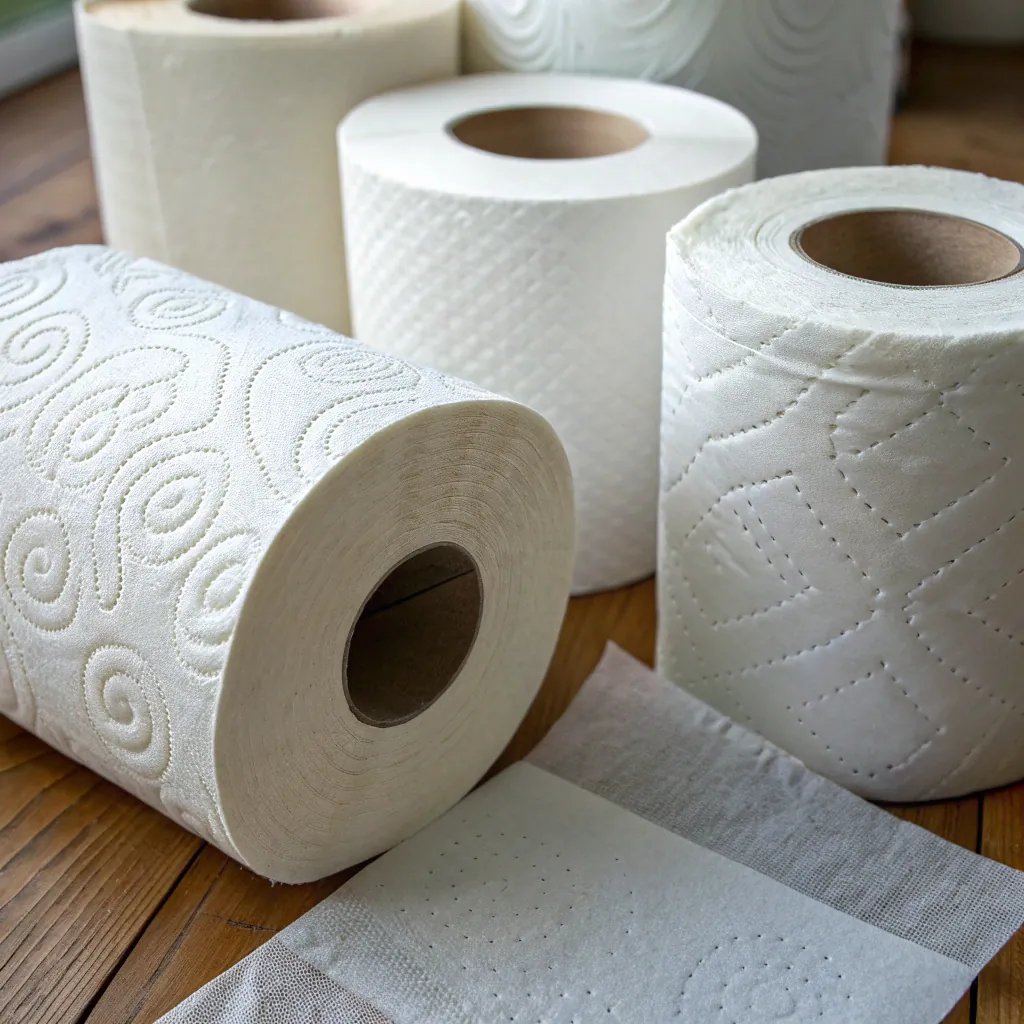
Understanding these factors helps buyers compare products fairly.
Sheet size
Sheet size includes length and width. Width is usually fixed by machine design. Length is easy to adjust.
Shorter sheets increase count. Longer sheets reduce count but may improve comfort.
Ply count
Single-ply uses one layer. Two-ply bonds two layers together. Three-ply adds more softness but uses more material.
More ply usually means fewer sheets per roll at the same size.
Grammage and density
Grammage measures paper weight per square meter. Higher grammage means thicker paper.
Dense paper takes more space and reduces sheet count. Lightweight paper allows more sheets.
Embossing pattern
Embossing creates air pockets. Deep embossing increases thickness without adding fiber weight.
This improves softness but reduces how much paper fits on the roll.
Roll diameter limits
Shelf space and dispensers limit roll diameter. Once diameter is fixed, manufacturers must balance all other factors inside that limit.
Summary of influences
| Factor | Effect on Sheet Count |
|---|---|
| Shorter sheets | Increase |
| More ply | Decrease |
| Higher weight | Decrease |
| Tighter winding | Increase |
| Larger core | Decrease |
Sheet count is a result, not a starting point.
Are sheet counts always accurate on packaging?
Many buyers worry that printed numbers are exaggerated. This concern grows when rolls feel lighter than expected.
Sheet counts on packaging are usually accurate, but rounding rules, testing methods, and production tolerance can cause small differences.
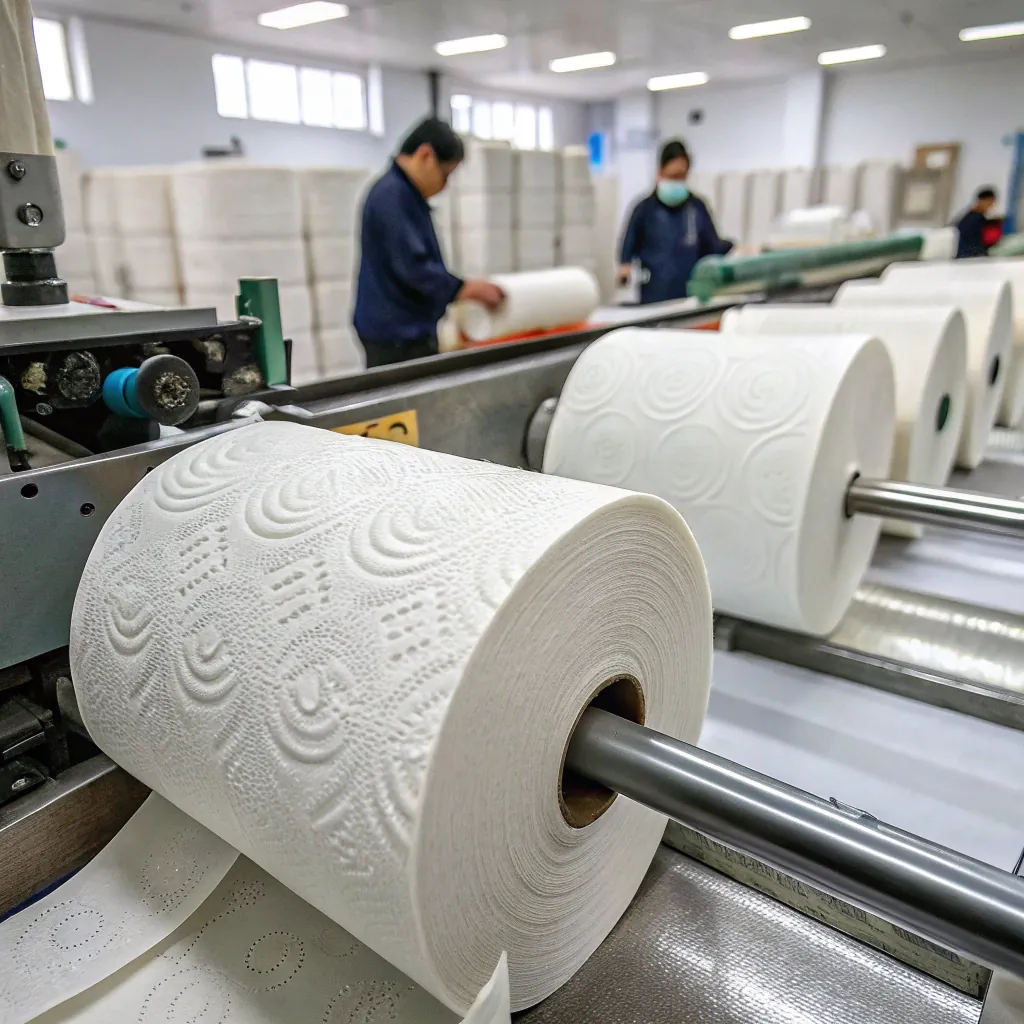
Accuracy depends on process control and honesty.
How sheet counts are measured
Manufacturers calculate sheet count based on machine settings. Perforation length is fixed. Total paper length per roll is measured.
Sheet count equals total length divided by sheet length.
Production tolerance
Machines allow small variation. Paper stretches when wet and shrinks when dry. This affects final length.
Most factories allow a tolerance range, often ±2–5%.
Rounding and labeling
If a roll averages 398 sheets, the label may state 400 sheets. This is common practice and usually allowed by local rules.
Problems arise only when differences are large and consistent.
When counts feel wrong
Sheet counts may feel inaccurate because:
- Sheets are shorter than expected
- Paper dissolves faster
- Ply separates easily
Usage experience is not the same as numeric accuracy.
How buyers can verify
Commercial buyers often:
- Weigh rolls
- Measure sheet length
- Count sheets from sample rolls
These checks confirm consistency over time.
Packaging numbers are tools, not guarantees of comfort. They should be read together with weight, ply, and sheet size.
Conclusion
There is no fixed number of sheets in a toilet paper roll. Sheet count depends on design choices, not appearance alone. By understanding sheet size, ply, and production limits, buyers can judge real value instead of relying on marketing terms.