Toilet paper looks simple, but many buyers feel confused when rolls look smaller or wider than expected. This small detail often leads to cost issues, user complaints, and supply mistakes.
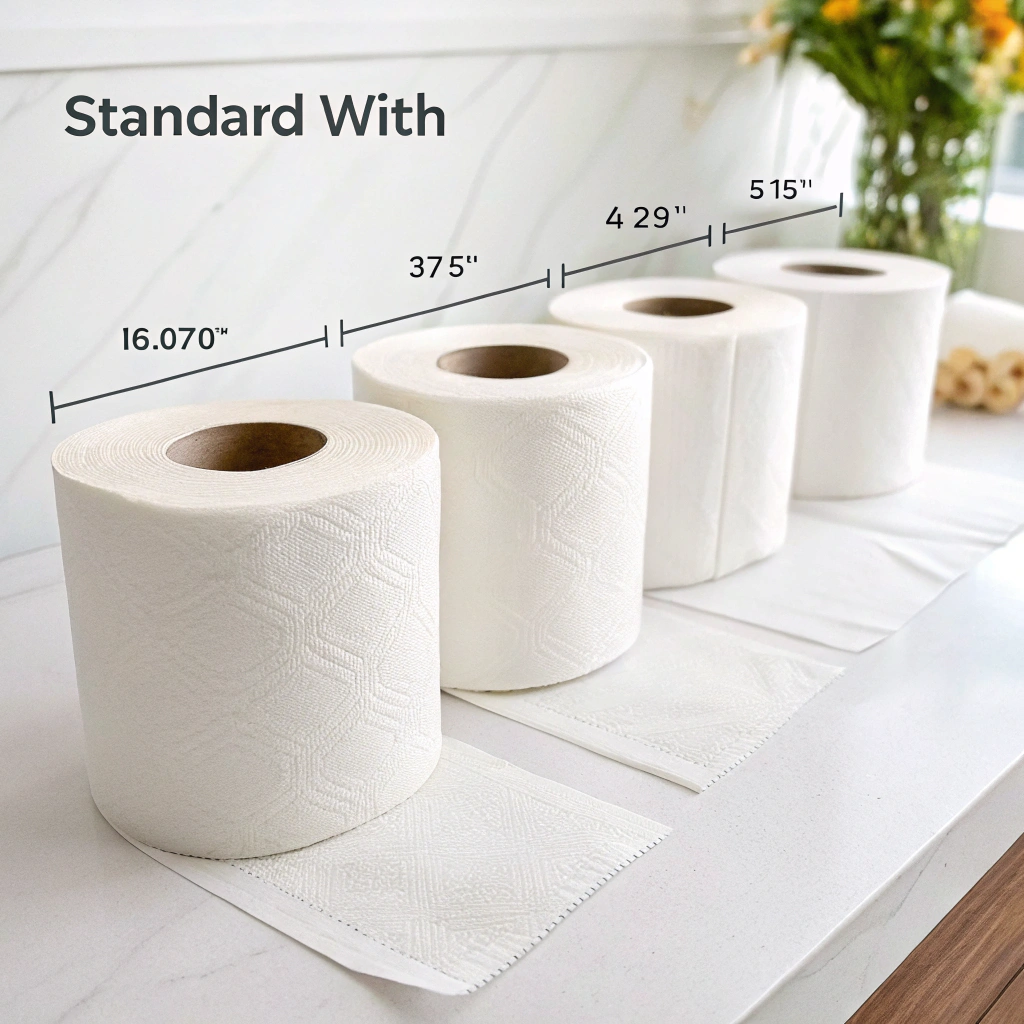
Toilet paper width usually ranges between 9 and 11 centimeters worldwide, but there is no single global standard. Width depends on region, brand strategy, production cost, and end-use needs like home, hotel, or public spaces.
Many buyers start with width, but few understand why it changes. Knowing this helps avoid wrong purchases and improves user experience.
Is there a standard toilet paper width?
Toilet paper feels like a daily basic item, yet buyers often ask why rolls do not look the same. This question appears often during sourcing and private label planning.
There is no global standard toilet paper width, but most rolls fall between 9 cm and 11 cm. Different markets accept different sizes based on habits, machines, and cost targets.

To understand this, it helps to look at how toilet paper developed. Early toilet paper was made mainly for local markets. Each country built machines based on its own habits. Over time, those machines defined width limits. Changing width later requires new equipment, which costs money. This is one reason why “standard” still varies.
In many Asian markets, especially China and Southeast Asia, common widths are around 9 to 9.5 cm. This size fits compact bathrooms and saves pulp. In Europe, 9.5 to 10 cm is common. In North America, many brands use around 10 to 11 cm, which gives a larger sheet feel.
Another reason standards do not exist is usage style. Some users fold sheets many times. Others crumple. A wider sheet feels softer to some users, but not to all. Because comfort is subjective, brands adjust width to match local preference.
From a production view, width also links to roll diameter and sheet length. A factory may reduce width slightly to increase sheet count per roll. This helps marketing claims like “more sheets.” Buyers see value, even if each sheet is narrower.
Below is a simple overview of common widths by region.
| Region | Common Width Range (cm) | Main Reason |
|---|---|---|
| East Asia | 9.0 – 9.5 | Space saving, cost control |
| Europe | 9.5 – 10.0 | Balance of comfort and cost |
| North America | 10.0 – 11.0 | User comfort preference |
| Africa | 9.0 – 10.0 | Price sensitivity, durability |
From my experience, buyers often focus only on price per roll. Width is ignored until users complain. This is why checking width before ordering matters, especially for private label products.
Why do toilet paper widths vary by brand?
Many buyers assume width differences come from quality. This is not always true. In reality, brand strategy and cost planning play a larger role.
Toilet paper width varies by brand mainly due to cost control, machine limits, market positioning, and user habits. Width is a silent tool brands use to balance profit and perception.
First, let us talk about cost. Toilet paper is a high-volume, low-margin product. Small changes matter. Reducing width by just 5 mm can save tons of pulp over large orders. For mass-market brands, this saving is huge. The consumer may not notice right away, but the factory does.
Second, machines define limits. Each paper machine is set to a fixed width range. Adjusting it is possible, but not simple. Brands working with multiple factories may accept different widths to avoid extra setup cost. This leads to variation even inside the same brand family.
Third, market positioning affects width. Premium brands often choose wider sheets. The goal is to create a “soft and large” feeling. Economy brands may use narrower sheets but increase sheet count. Both approaches aim to show value, just in different ways.
Fourth, usage environment matters. For hotels, offices, and public toilets, durability matters more than width. Jumbo roll toilet paper often uses narrower widths to improve roll strength and loading efficiency. In these cases, width is designed for machines, not hands.
Here is a simple comparison of brand strategies.
| Brand Type | Typical Width | Core Focus |
|---|---|---|
| Premium retail | 10.5 – 11 cm | Comfort and softness |
| Mid-range retail | 9.5 – 10 cm | Balance |
| Economy retail | 9 – 9.5 cm | Cost and sheet count |
| Commercial jumbo roll | 8.5 – 9.5 cm | Strength and efficiency |
Another factor is packaging. Some brands want rolls to look bigger on shelves. A wider sheet increases roll diameter faster. This visual impact helps sales, even if sheet length is shorter.
I have seen cases where two rolls look the same size, but one uses wider sheets and fewer sheets, while the other uses narrow sheets and more sheets. Without checking specs, buyers may misunderstand value.
For B2B buyers, width also affects container loading. Narrower rolls often allow more units per container. This lowers shipping cost per roll. For price-driven markets, this matters a lot.
Does toilet paper width affect comfort?
Comfort is a personal topic, but width plays a clear role. Many users blame softness alone, but sheet size changes how paper feels during use.
Yes, toilet paper width affects comfort, but only together with softness, thickness, and absorbency. Width alone does not define comfort, but it shapes user perception.
Wider sheets cover more area with fewer folds. This gives a feeling of security. Users feel they need fewer sheets. This often links to premium brands. Narrow sheets require more folds, which some users find less comfortable.
However, wider does not always mean better. If paper is thin, a wide sheet may still feel weak. In contrast, a slightly narrower sheet with higher grammage can feel stronger and safer.
Comfort also depends on hand size and habit. Some users prefer smaller sheets because they feel easier to control. This is common in regions where water use is combined with paper use.
Another overlooked point is absorbency. Width affects how liquid spreads across the sheet. A wider sheet can absorb more before leaking, but only if pulp quality supports it.
Here are the main comfort factors and how width connects to them.
Sheet Coverage
Wider sheets cover more area. This reduces folding steps. Many users link this to comfort.
Folding Habit
Some users fold twice, others fold many times. Narrow sheets need more folds. This changes feel.
Paper Strength
If width increases but strength stays low, comfort does not improve. Strength must match width.
Absorbency
Absorbency depends on pulp and embossing. Width only helps if absorbency is high.
In commercial settings, comfort matters less than reliability. Offices, malls, and airports choose paper that works, not paper that feels luxury. In these places, width is often reduced to prevent waste.
From feedback I have seen, home users notice width changes faster than thickness changes. A small width reduction can lead to complaints, even if sheet count increases. This shows how sensitive comfort perception is.
Can I buy extra wide toilet paper?
Many buyers search for extra wide toilet paper, especially for premium brands or special users. The answer depends on supply and volume.
Yes, extra wide toilet paper is available, usually between 11 and 12 cm, but it is often custom-made and requires higher order volumes. It is not common in mass retail.
Extra wide toilet paper targets niche needs. Some luxury hotels want a clear difference from standard products. Some care facilities want easier handling for elderly users. In these cases, wider sheets help.
However, extra wide paper has limits. Machines must support the width. Wider sheets reduce the number of rolls per pallet and per container. This raises shipping cost. For export markets, this can offset the comfort benefit.
Custom width orders often come with higher minimum order quantities. Factories need to adjust cutting settings and packing lines. This setup cost must be spread across volume.
Here are common scenarios where extra wide toilet paper makes sense.
Luxury Hospitality
Hotels want visible comfort upgrades. Wider sheets support brand image.
Premium Private Label
Retail brands want to stand out. Extra width becomes a selling point.
Special Care Use
Elder care and medical settings may prefer easier handling.
For regular household use, extra wide paper is rare because shelf space matters. Retailers prefer standard sizes that fit displays.
Below is a comparison of standard and extra wide options.
| Type | Width Range | Typical Use |
|---|---|---|
| Standard | 9 – 10 cm | Mass retail, home use |
| Wide | 10 – 11 cm | Premium retail |
| Extra wide | 11 – 12 cm | Custom, luxury, care use |
From a sourcing view, buyers should test samples before committing. Extra width changes roll size, dispenser fit, and packaging design. A small design change can create many follow-up changes.
In my past projects, extra wide paper worked best when combined with higher ply or bamboo pulp. Width alone did not justify the premium. The full product story mattered.
Conclusion
Toilet paper width usually sits between 9 and 11 cm, with no global standard. Brands adjust width for cost, comfort, and market needs. Wider sheets can improve comfort, but only when matched with strength and absorbency. Extra wide options exist, mostly as custom products.