Zum Inhalt springen
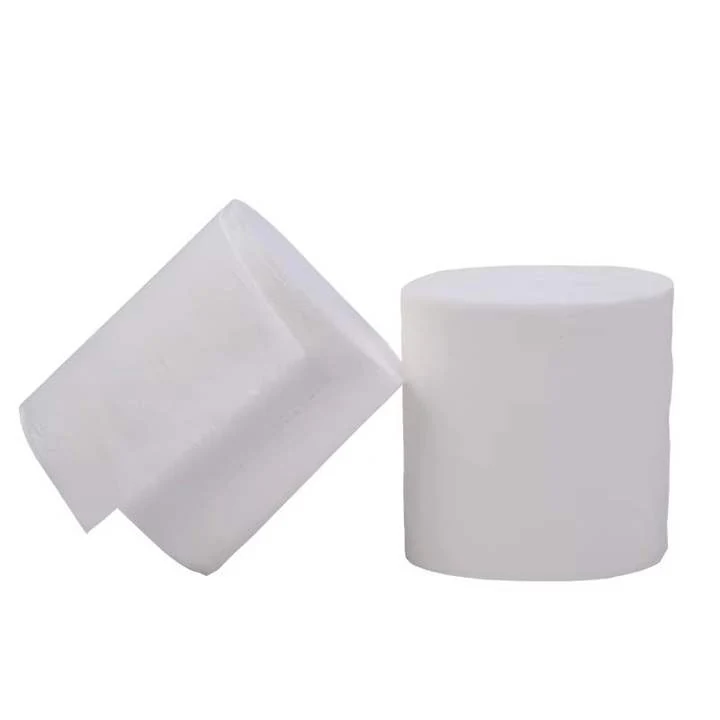
Toilet paper is used every day, but its environmental cost is easy to miss. Traditional production can consume forests, water, energy, and other resources at a very large scale.
Bamboo toilet paper is a sustainable choice because bamboo grows quickly, renews naturally, and can reduce dependence on slow-growing trees. When responsible sourcing and efficient production are also used, bamboo tissue can lower pressure on forests and support a more renewable paper supply chain.
For buyers, sustainability is not only about choosing a different fiber. The full picture includes raw materials, farming, processing, packaging, transport, product performance, and disposal. Bamboo has several strong advantages, but those advantages need to be examined across the whole product life cycle. This is especially important for wholesalers, retailers, hotels, and other businesses that buy toilet paper in large volumes.
How Does Bamboo Toilet Paper Help Sustainability?
Toilet paper looks simple, but producing millions of rolls needs a constant supply of fiber. When that fiber comes from slow-growing trees, daily consumption can create long-term pressure on natural resources.
Bamboo toilet paper helps sustainability mainly by using a fast-growing renewable fiber instead of relying only on wood. Bamboo can regrow after harvesting, and well-managed bamboo sources can provide repeated fiber supplies while reducing demand for virgin tree pulp.
Bamboo Has a Fast Renewal Cycle
The main sustainability advantage starts with the plant itself. Bamboo is a grass rather than a tree. Many bamboo species grow very quickly. After mature bamboo is harvested, the underground root system can remain alive and produce new shoots.
This feature creates a different raw-material cycle from conventional forestry. A tree plantation usually needs years before the trees become suitable for pulp production. Bamboo can generally return to a harvestable stage much faster. The exact growth and harvest cycle depends on the species, climate, soil, and farm management, so buyers should avoid treating every bamboo source as identical.
Still, the basic difference matters. A faster renewable fiber source can help manufacturers build a supply system that does not depend only on slow-growing wood.
For large paper buyers, this issue becomes more important as order volumes rise. A small household may think in packs and rolls. A wholesaler or supermarket chain has to think in pallets and containers. A hotel supply company may need stable orders every month. At this scale, raw-material renewal becomes a business issue as well as an environmental issue.
| Nachhaltigkeitsfaktor | Bamboo Fiber | Conventional Virgin Wood Fiber |
|---|---|---|
| Plant type | Gras | Baum |
| Wachstumsgeschwindigkeit | Usually fast | In der Regel langsamer |
| Regrowth after harvest | Can regrow from existing underground system | Usually requires a longer forestry cycle |
| Renewable fiber potential | High with good management | High when forests are responsibly managed |
| Pressure on tree resources | Can reduce direct demand | Depends on forestry source |
| Suitability for tissue | Soft and strong after proper processing | Widely used and proven |
Sustainability Depends on More Than Growth Speed
Bamboo should not automatically receive an "eco-friendly" label simply because it grows fast. Production still matters.
The bamboo has to be harvested. It must be transported to a processing facility. The fiber must be converted into pulp. That pulp then goes through cleaning, forming, drying, converting, cutting, and packaging. Each stage can use energy, water, chemicals, and equipment.
This means buyers should look beyond a green package design.
A useful purchasing review should ask where the bamboo comes from, how the pulp is produced, what chemicals are used, how wastewater is handled, what type of packaging protects the rolls, and how efficiently the finished products are shipped.
Product quality also affects sustainability. Weak paper may cause users to take more sheets each time. Poorly made rolls may also become damaged during transport. Both problems create waste. A well-designed bamboo toilet roll should therefore balance softness, strength, absorbency, sheet size, roll length, and packaging strength.
From a sourcing point of view, sustainability works best when the raw material and the manufacturing system support each other. Bamboo provides a strong renewable starting point. Efficient production then helps turn that advantage into a practical tissue product.
Why Is Bamboo Better Than Traditional Paper?
Traditional toilet paper performs well, but much of the market still depends on virgin wood pulp. That creates a basic question: should a disposable product rely so heavily on a resource that takes years to grow?
Bamboo can be better than traditional wood-based toilet paper because it grows faster, can regenerate after harvesting, and provides a renewable source of cellulose fiber. It can also produce soft, strong tissue when the pulp and converting processes are properly controlled.
The Difference Starts Before Manufacturing
When comparing bamboo toilet paper with traditional paper, it helps to start at the farm or forest rather than at the finished roll.
Wood pulp comes from trees. Responsible forestry can provide renewable wood, so traditional paper should not automatically be described as environmentally harmful. Certified forestry, efficient mills, recycled fiber, and responsible land management can all improve its environmental performance.
The main issue is time.
Trees usually need a much longer period to mature than bamboo. Bamboo grows through an underground system of roots and rhizomes. Once an established bamboo area is managed correctly, new shoots can continue to emerge. This gives bamboo a useful advantage for products that are consumed continuously.
Toilet paper is a good example. Consumers do not buy one roll for life. Homes, hotels, restaurants, offices, airports, hospitals, schools, and shopping centers consume tissue every day. The raw-material system must therefore replace fiber continuously.
Bamboo Can Still Deliver Practical Performance
Environmental value means little to a commercial buyer if customers dislike the finished product.
The good news is that bamboo pulp can be converted into tissue with the softness, absorbency, and strength expected from modern toilet paper. Product performance still depends on manufacturing choices. Ply count, basis weight, embossing, sheet dimensions, pulp treatment, and converting settings all influence the final feel.
This is why two bamboo toilet papers can feel very different even if both packages say "100% bamboo."
A buyer should test actual samples instead of making a decision based only on fiber claims. A useful sample evaluation can include:
- Softness against the skin
- Dry and wet strength
- Saugfähigkeit
- Dust or lint levels
- Sheet separation
- Prägequalität
- Roll firmness
- Rumpfkraft
- Actual roll weight and length
- Packaging resistance during transport
The same approach should be used when comparing bamboo with traditional virgin pulp and recycled tissue.
A Practical Material Comparison
| Faktor | Toilettenpapier aus Bambus | Virgin Wood Toilet Paper | Toilettenpapier aus Recyclingmaterial |
|---|---|---|---|
| Hauptquelle für Ballaststoffe | Bambus | Bäume | Recovered paper |
| Renewal speed | Schnell | Langsamer | Reuses existing fiber |
| Need for new tree fiber | Low or none for 100% bamboo products | Hoch | Niedrig |
| Softness potential | Hoch | Hoch | Unterschiedlich |
| Strength potential | Hoch | Hoch | Unterschiedlich |
| Supply-chain focus | Bamboo source and processing | Forest source and pulp production | Recovered fiber quality and processing |
| Main environmental advantage | Rapidly renewable fiber | Efficient established production | Extends the life of existing fiber |
| Main buyer concern | Verify sourcing and manufacturing claims | Verify responsible forestry | Verify cleanliness and consistent quality |
The table also shows why the answer is not simply "bamboo good, wood bad." Recycled tissue has clear environmental value because it gives existing paper fiber another use. Responsibly managed wood can also be renewable.
Bamboo becomes especially attractive when a buyer wants a combination of renewable virgin fiber, premium product positioning, strong performance, and reduced dependence on tree-based pulp.
For private-label brands, this difference can also support clearer product positioning. The packaging can explain the fiber source in simple language. Still, every environmental statement should be accurate. Claims about carbon, biodegradability, chemical use, or forest protection should be supported by real evidence rather than broad marketing language.
Can Bamboo Toilet Paper Protect Forests?
Toilet paper disappears in seconds after use, but the raw fiber may take years to grow. That gap is one reason buyers are paying more attention to where tissue fiber comes from.
Bamboo toilet paper can help protect forests by reducing demand for virgin wood fiber when bamboo replaces tree-based pulp. The benefit is strongest when bamboo comes from responsibly managed land and its production does not cause forest clearing, habitat loss, or other environmental damage.
Reducing Demand Is the Direct Connection
The link between bamboo toilet paper and forest protection is mainly about substitution.
If a toilet roll uses bamboo pulp instead of virgin wood pulp, that roll does not need the same amount of fresh tree fiber. When this change happens across millions of rolls, the reduction in wood-fiber demand can become meaningful.
This does not mean that buying one bamboo roll directly saves one tree. Supply chains are more complex than that. Wood pulp can come from natural forests, managed plantations, mixed sources, or certified forestry systems. The environmental effect depends heavily on the origin of the fiber.
A better way to understand the benefit is to think about pressure.
Global tissue consumption creates continuous demand for cellulose fiber. If all virgin tissue fiber had to come from trees, forestry systems would have to supply that demand. Adding bamboo, recycled paper, and other responsible fiber sources creates more options. It can spread demand across different renewable material systems.
That is useful because toilet paper has a very short useful life. Unlike timber used in furniture or buildings, toilet tissue cannot remain in use for decades. The material is consumed almost immediately. A rapidly renewable source therefore makes practical sense for this product category.
Bamboo Is Not Automatically Forest-Safe
There is an important condition. Bamboo production should not replace valuable natural ecosystems.
If a natural forest were cleared simply to establish a bamboo plantation, calling the final toilet paper "forest friendly" would be misleading. Land-use history matters. Biodiversity matters. Farming methods matter.
This is why responsible sourcing needs traceability.
Commercial buyers can ask suppliers for information about pulp origin and relevant environmental certification. Certifications such as FSC can help buyers assess whether forest-based and bamboo fiber supply chains follow defined sourcing standards. Buyers should also check whether a certification applies to the specific product, material, or supply chain rather than assuming that one company document covers everything it sells.
Packaging and Logistics Matter Too
Forest protection is only one part of the environmental picture. Shipping also deserves attention, especially in international wholesale.
Toilet paper is bulky. A container can reach its volume limit before reaching its weight limit. Poor roll dimensions or inefficient cartons can leave unused space inside the container. That means more containers may be needed to transport the same commercial quantity.
For an importer, loading efficiency should therefore be discussed during product development.
Roll diameter, sheet count, compression level, inner packaging, outer carton dimensions, and container loading plans can all influence logistics. The goal is not to crush the tissue. The goal is to find a design that protects product quality while using shipping space well.
This is also where sustainability and purchasing cost can point in the same direction. Better loading density can reduce freight cost per roll. It can also reduce transport resources per unit.
A bamboo toilet paper project should therefore be treated as a full supply-chain project. Fiber choice is the starting point. Responsible sourcing, efficient converting, strong packaging, and smart container loading determine how much of that environmental value survives by the time the product reaches the customer.
What Makes Bamboo Toilet Paper Eco Friendly?
A bamboo picture on a package can look sustainable, but packaging graphics do not prove environmental performance. Buyers need to know what actually makes the product different.
Bamboo toilet paper can be eco friendly because bamboo is rapidly renewable, can regrow after harvest, and can reduce reliance on virgin tree pulp. Its total environmental value also depends on responsible sourcing, efficient pulp production, safe materials, suitable packaging, product durability, and efficient transportation.
The Fiber Is Only the First Layer
The first reason is simple: bamboo provides cellulose fiber from a fast-growing plant.
But an eco-friendly product needs more than a renewable raw material. The manufacturing process has to convert that material into usable tissue. That process can change the environmental profile of the finished roll.
Pulp production is an important stage. Manufacturers need to separate useful cellulose fibers from other parts of the bamboo. Processing methods can involve heat, water, energy, and chemicals. Bleaching may also be used when buyers want bright white tissue.
For this reason, buyers should ask practical questions instead of relying on words such as "natural" or "green."
They can ask what percentage of the tissue fiber is bamboo. They can ask whether other pulp is blended into the product. They can ask about bleaching, wastewater control, product testing, packaging materials, and relevant certifications.
These questions are especially important for OEM and private-label projects. The brand owner will eventually place environmental statements on retail packaging. The buyer should have enough supply-chain information to support those statements.
Product Design Can Reduce Waste
Good design also matters.
A roll with poor strength may look economical, but consumers may use more sheets. A very loose roll can also take more space during shipping. Weak packaging can tear inside a container or warehouse and create damaged stock.
The most sustainable specification is therefore not always the lightest or cheapest specification.
A commercial buyer should look at the full use case. A supermarket brand may need softness, shelf appeal, and clear environmental messaging. A hotel may focus on reliable roll length and fast replacement. A commercial building may care more about strength, dispenser fit, and cost per use.
Each market may need a different bamboo tissue design.
OEM buyers can adjust ply, grammage, embossing, sheet size, roll diameter, sheet count, core size, wrapping method, carton size, and printing. These decisions affect both performance and material use.
Sustainability Claims Need Evidence
Environmental marketing has become common in the tissue industry. That makes careful language more important.
Terms such as "eco friendly," "sustainable," "plastic free," "biodegradable," and "responsibly sourced" can mean different things in different markets. A buyer should not assume that every claim can be printed on every package.
Evidence should come first.
Material records can confirm fiber composition. Supplier documents can support sourcing information. Product testing can confirm physical performance. Certifications can support specific claims when they apply to the actual product and supply chain.
This approach protects both the buyer and the end customer. It also creates better long-term brand value because the sustainability message is based on measurable product features.
The same rule applies when comparing suppliers. A low quotation may not include the same pulp quality, sheet count, packaging strength, certification scope, or quality control. Price per roll alone can hide these differences.
A more useful comparison looks at cost per usable sheet, fiber source, product weight, packing quantity, loading capacity, defect rate, lead time, and documentation. These factors give importers a clearer view of the real commercial and environmental cost.
Bamboo toilet paper works best when sustainability is treated as a system. Renewable bamboo provides the foundation. Responsible sourcing protects that foundation. Efficient production limits unnecessary resource use. Good product design prevents waste. Smart packaging and container loading improve logistics. Clear documentation makes environmental claims more reliable.
That combination is what turns bamboo from a green marketing idea into a practical option for wholesalers, retailers, hospitality suppliers, and private-label tissue brands.
Fazit
Bamboo toilet paper offers a practical path toward more renewable tissue products. Its fast-growing fiber can reduce dependence on trees, while responsible sourcing, efficient manufacturing, good product design, and smart logistics can strengthen its environmental value across the full supply chain.