
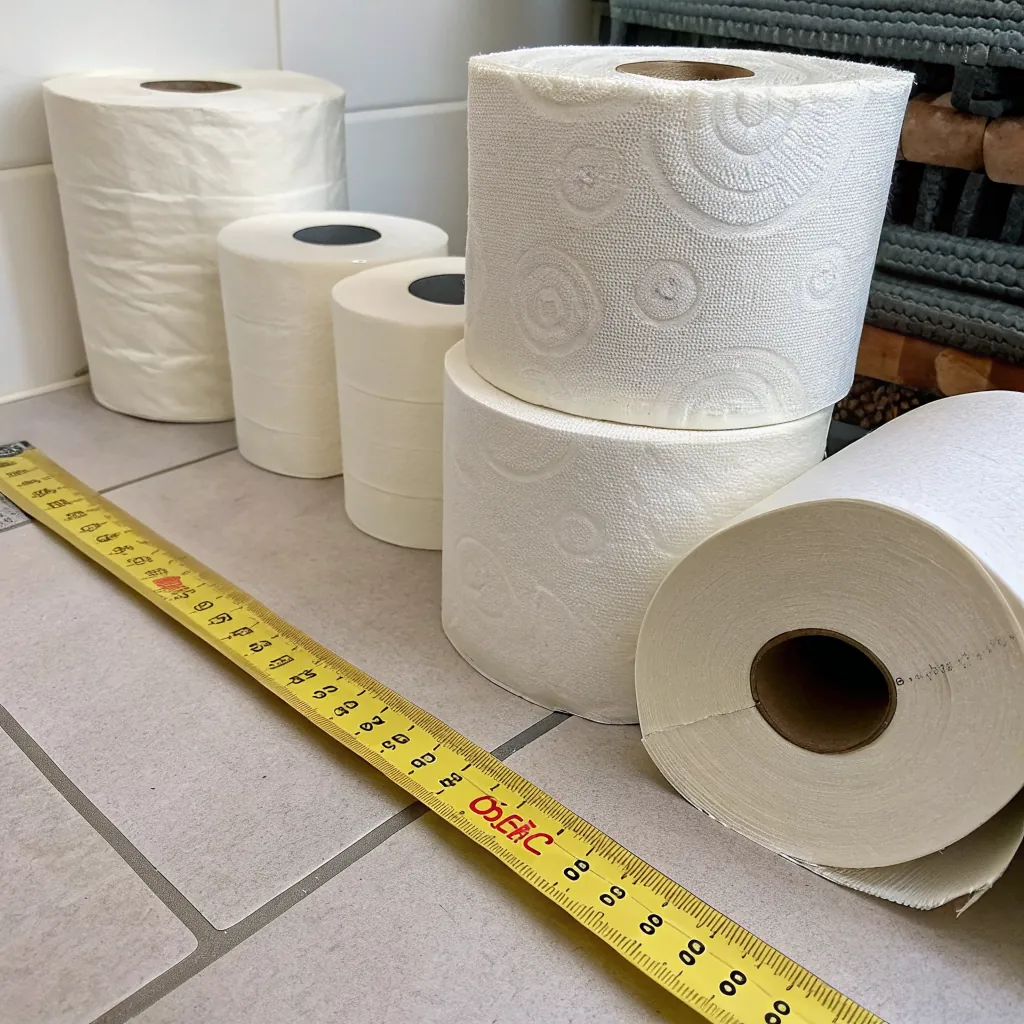
Many buyers feel confused when choosing toilet paper. Sizes seem unclear. This creates problems in storage, transport, and cost planning.
A toilet paper roll usually measures about 3.7–4.1 inches in diameter and 3.5–4 inches in width, but sizes can vary by type, brand, and intended use.
Understanding roll size helps avoid waste, reduce shipping costs, and improve storage efficiency. It also helps match the right product to the right market.
What are the typical dimensions of a toilet paper roll?
Small differences in size often cause big issues. Many buyers assume all rolls are the same, but this is not true.
A standard toilet paper roll is typically about 3.7–4.1 inches (9.5–10.5 cm) in diameter, with a width of 3.5–4 inches (9–10 cm), and contains 150–300 sheets depending on ply and thickness.
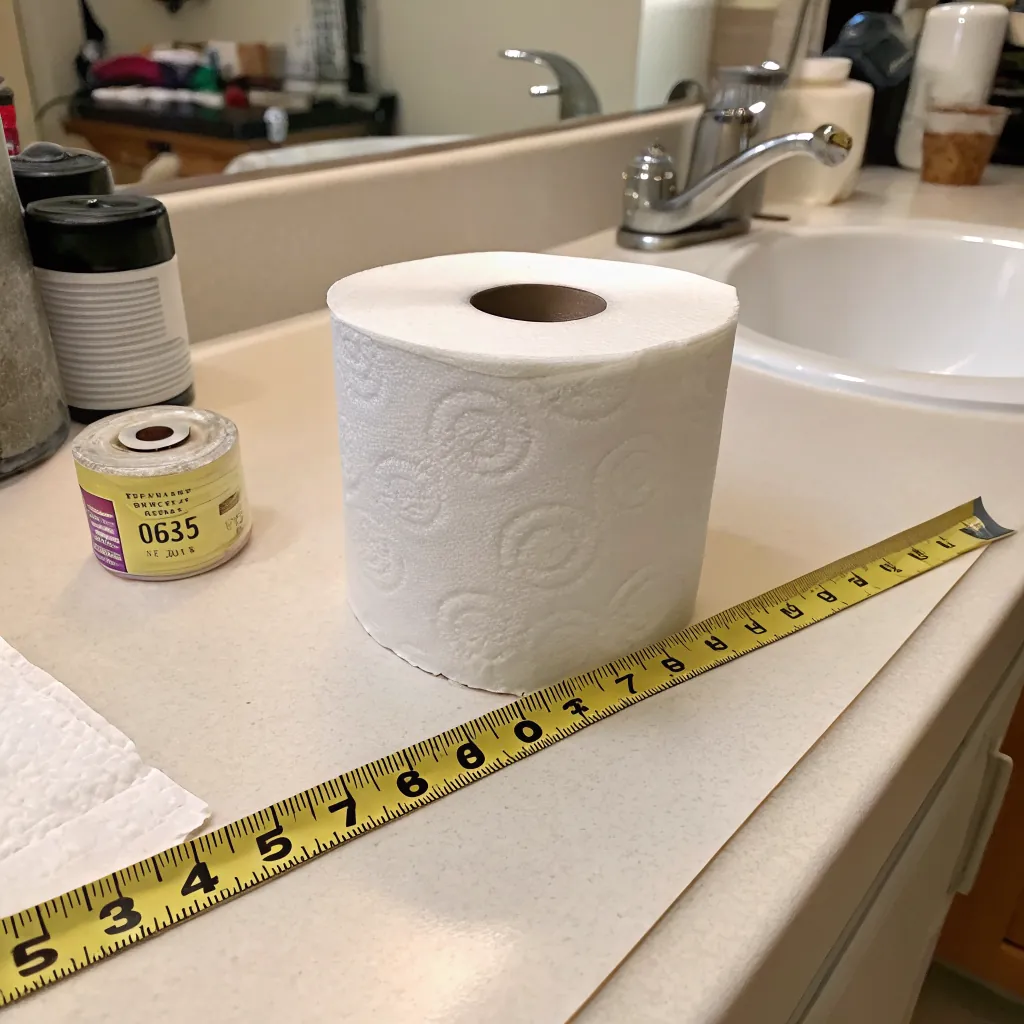
To understand roll size, it is important to break it into key parts. Each part affects performance, packaging, and user experience.
Key dimensions explained
| Component | Typical Size Range | Why It Matters |
|---|---|---|
| Roll Diameter | 3.7–4.1 inches | Affects storage and dispenser fit |
| Roll Width | 3.5–4 inches | Matches holder size |
| Core Diameter | 1.5–2 inches | Impacts strength and usage |
| Sheet Count | 150–300 sheets | Determines usage duration |
How ply affects size
Ply means how many layers each sheet has. A 2-ply roll is thicker than a 1-ply roll. This changes the total roll diameter even if sheet count stays the same.
- 1-ply: thinner, more sheets, smaller diameter
- 2-ply: thicker, fewer sheets, larger diameter
- 3-ply: premium feel, larger roll size
Real-world example
In one project, a buyer ordered standard rolls without checking diameter. The rolls did not fit into existing dispensers. This caused delays and extra costs. Since then, checking dimensions became a basic step.
Why dimensions are not exact
There is no single global rule for toilet paper size. Manufacturers adjust size based on:
- Market demand
- Packaging design
- Cost control
- Raw material thickness
Even a small change of 0.2 inches can affect container loading. Over large orders, this becomes significant.
Does size change between standard and jumbo rolls?
Many buyers think all toilet paper rolls are similar. This is not correct. Jumbo rolls are very different.
Yes, jumbo rolls are much larger than standard rolls, often reaching 8–12 inches in diameter and holding several times more paper, making them ideal for commercial use.
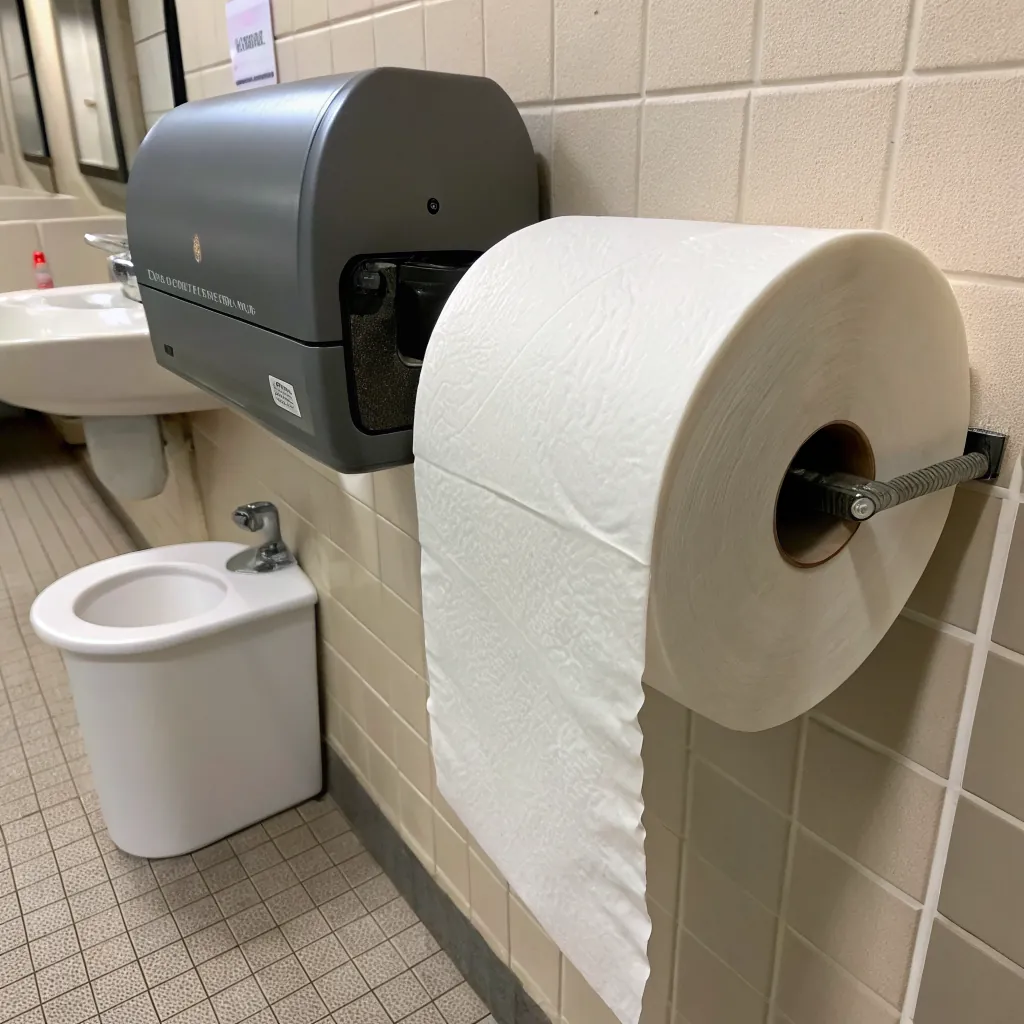
Jumbo rolls are designed for high-traffic environments. These include malls, airports, hotels, and office buildings.
Key differences between standard and jumbo rolls
| Feature | Standard Roll | Jumbo Roll |
|---|---|---|
| Diameter | 3.7–4.1 inches | 8–12 inches |
| Sheet Count | 150–300 sheets | 1000–3000+ sheets |
| Usage | Household | Commercial |
| Replacement Rate | Frequent | Less frequent |
Why jumbo rolls are popular
Jumbo rolls reduce labor and maintenance. Staff do not need to replace rolls often. This saves time and cost.
They also reduce theft and waste. Many jumbo systems use locked dispensers.
Impact on shipping and storage
Jumbo rolls take more space per unit but less space per sheet. This means:
- Fewer cartons needed
- Better long-term storage efficiency
- Lower replacement frequency
However, they require special dispensers. This is an important consideration.
Practical insight
A hotel supplier once switched from standard to jumbo rolls. The result was fewer complaints from cleaning staff. Also, inventory turnover became easier to manage.
Cost perspective
Jumbo rolls often have lower cost per sheet. This is why they are preferred in bulk supply markets.
But initial investment may be higher due to dispenser systems.
Is roll size standardized across brands?
Buyers often expect consistency. But the reality is different.
No, toilet paper roll size is not fully standardized across brands, as manufacturers adjust dimensions based on market needs, pricing, and product positioning.
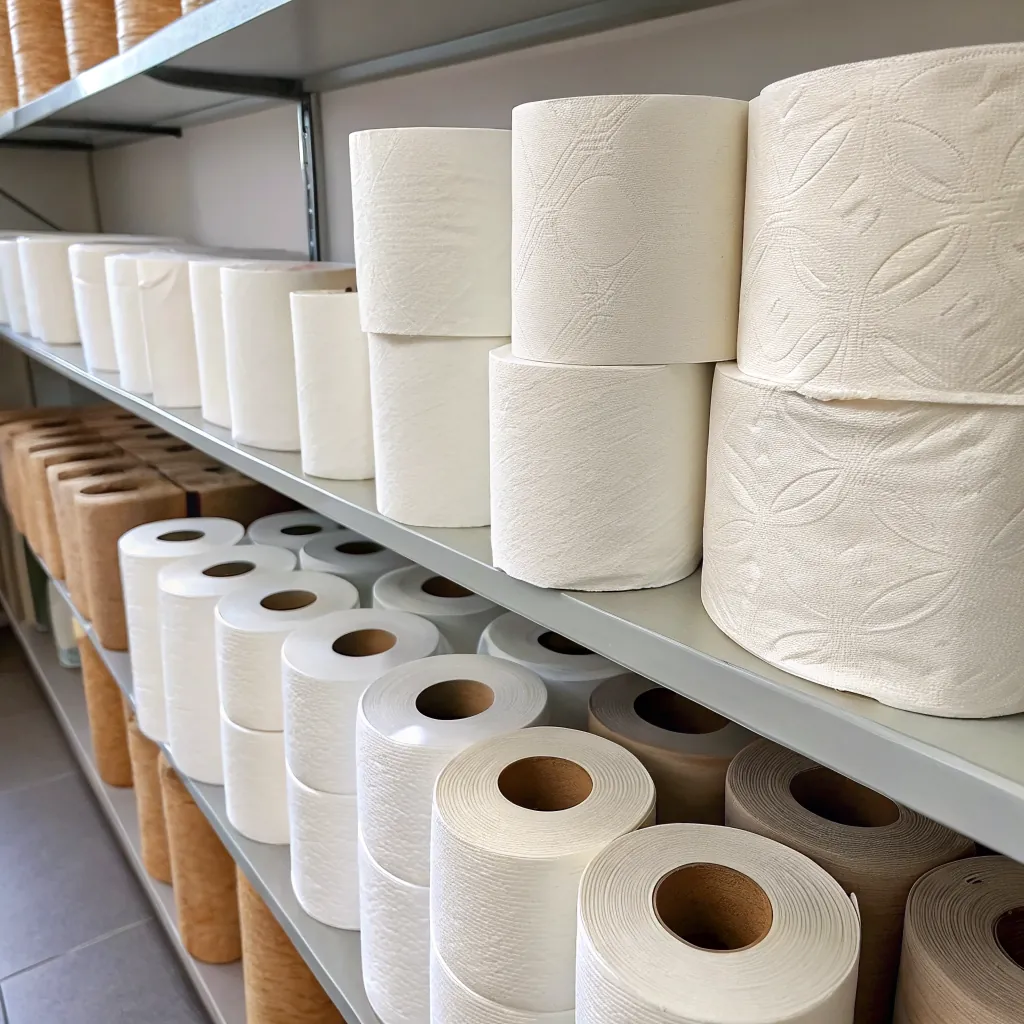
This lack of standardization creates both challenges and opportunities.
Why sizes differ
Manufacturers change sizes to:
- Reduce production cost
- Increase perceived value
- Fit different packaging formats
- Adapt to regional preferences
For example:
- US market prefers thicker rolls
- Some African markets prefer higher sheet count
- European markets focus on eco-friendly compact rolls
Hidden variation
Two rolls may look similar but differ in:
- Core size
- Sheet thickness
- Total paper length
This can mislead buyers.
Brand strategy differences
Some brands make “mega rolls” or “double rolls.” These are not standard units. They are marketing terms.
This creates confusion in comparison.
What buyers should check
Instead of relying on labels, it is better to check:
- Total sheet count
- Total length (meters)
- Roll diameter
- Core size
Real experience
In export business, mismatched expectations happen often. One client expected “double rolls” to match a previous supplier. But the actual sheet count was lower. This caused dissatisfaction.
Simple rule
Always confirm specifications in numbers, not names.
Can toilet paper roll size affect storage?
Storage problems often come from poor planning. Roll size plays a key role here.
Yes, toilet paper roll size directly affects storage efficiency, carton quantity, and container loading, which impacts logistics cost and warehouse space.
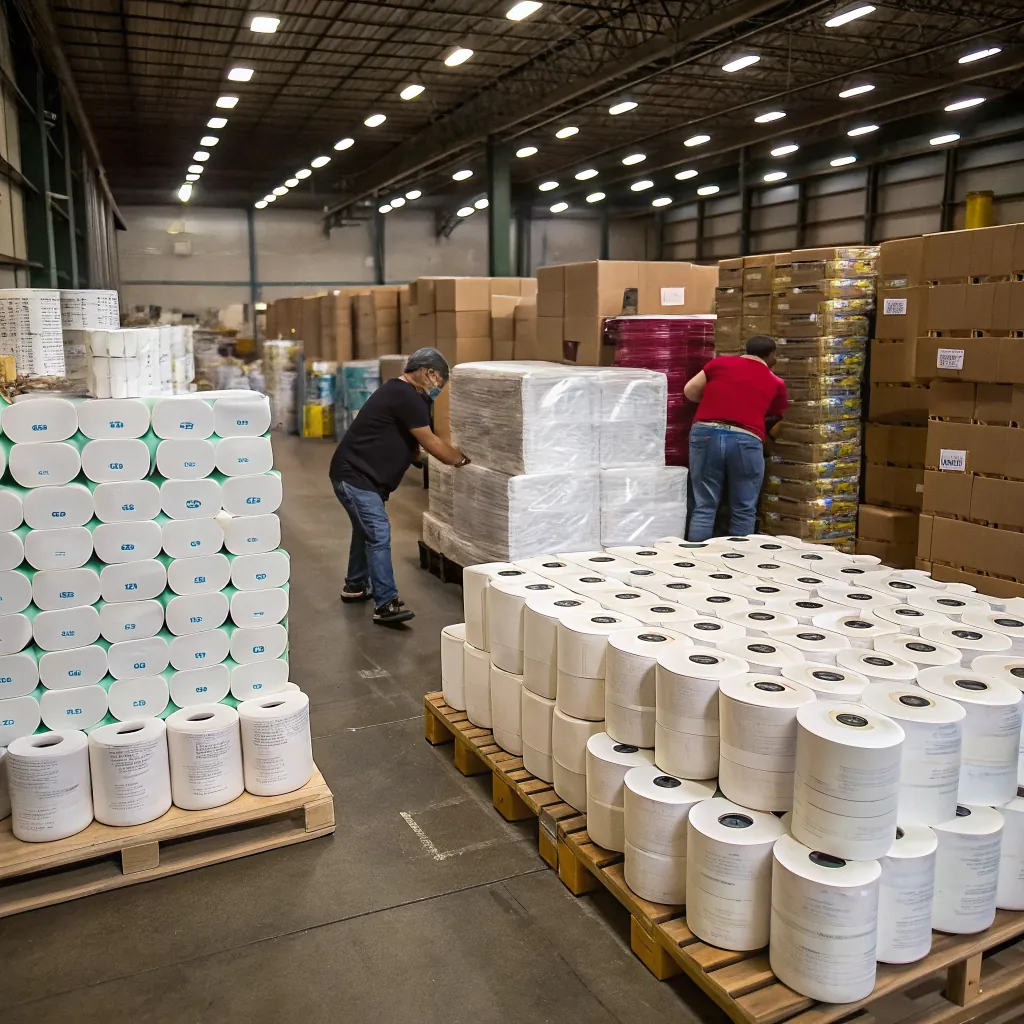
Understanding this helps reduce waste and improve operations.
Storage efficiency basics
Larger rolls mean:
- Fewer replacements
- Lower handling frequency
But they also mean:
- Larger carton size
- More space per unit
Container loading impact
Roll size affects how many cartons fit in a container.
For example:
- Smaller rolls → more cartons per container
- Larger rolls → fewer cartons but more paper per roll
The balance depends on business goals.
Example comparison
| Roll Type | Rolls per Carton | Cartons per Container | Total Sheets |
|---|---|---|---|
| Standard Roll | 48 | High | Medium |
| Jumbo Roll | 6–12 | Lower | Very High |
Warehouse planning
If storage space is limited, compact rolls may be better.
If labor cost is high, jumbo rolls may be better.
Common mistakes
Many buyers ignore carton size. They focus only on unit price. This leads to:
- Higher shipping cost
- Poor storage use
- Difficult handling
Practical tip
Before ordering, it is useful to ask:
- Carton dimensions
- Rolls per carton
- Total CBM (cubic meters)
This gives a clear picture of storage needs.
Real case
A distributor once reduced storage cost by switching roll size. The change allowed better stacking and reduced wasted space.
Key takeaway
Roll size is not just about the product. It affects the whole supply chain.
Conclusion
Toilet paper roll size may look simple, but it affects cost, storage, and usability. Understanding dimensions, differences, and variations helps make better buying decisions and improves long-term efficiency.