Skip to content
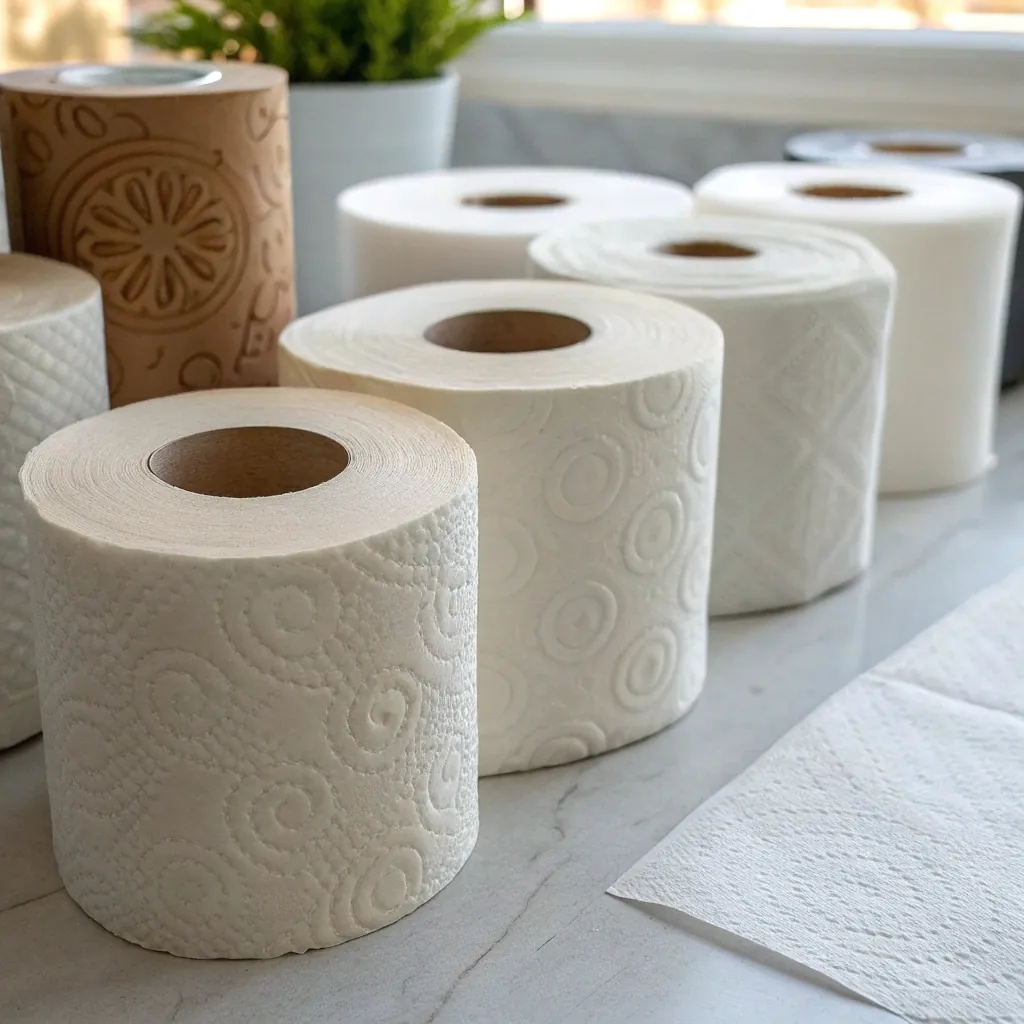
Many buyers assume toilet paper rolls are all the same size. This small detail often gets ignored until rolls do not fit holders or run out too fast.
A standard toilet paper roll size is defined by its diameter, width, and core size, but real dimensions vary by market, brand, and usage scenario.
This topic looks simple, yet roll size affects storage, logistics, dispenser fit, cost control, and user experience. Understanding the full picture helps buyers avoid mistakes.
What is the average toilet paper roll diameter?
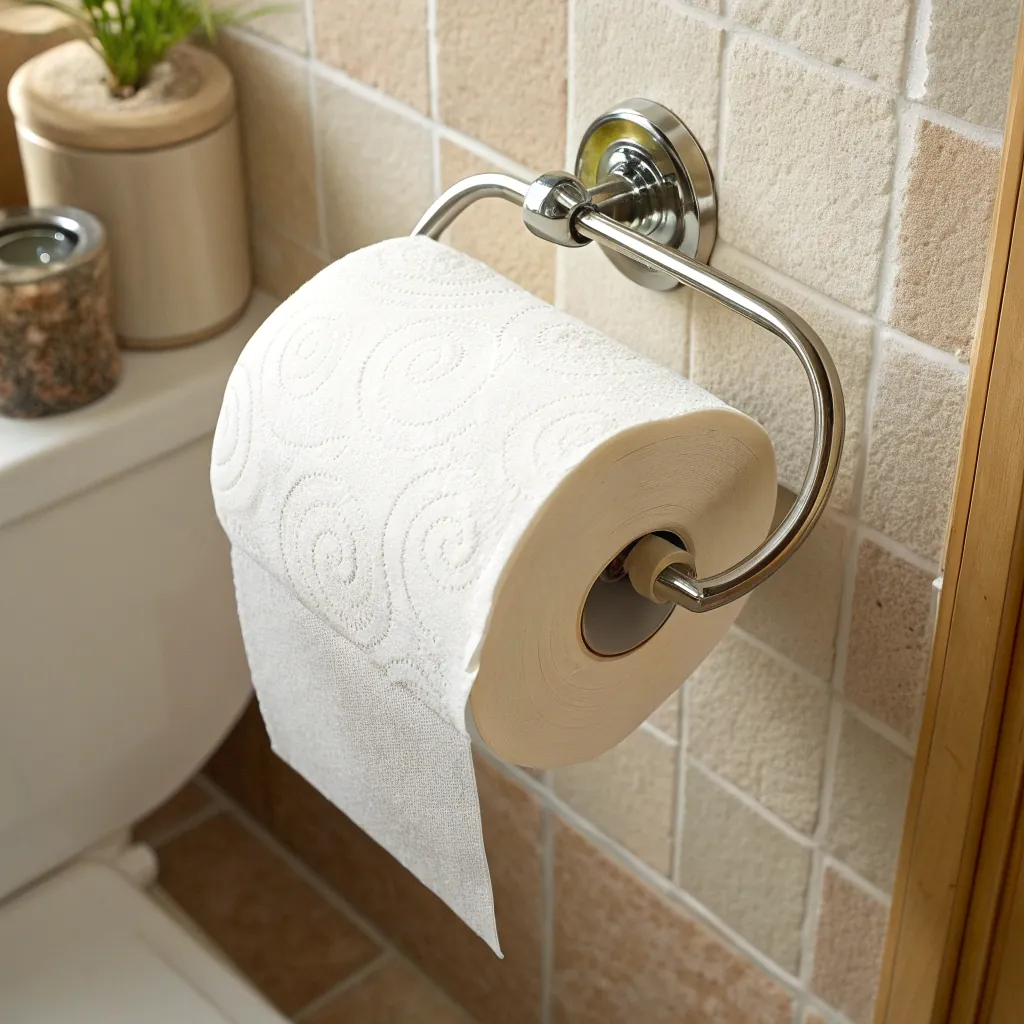
Many people never measure a roll until it causes a problem. The issue usually appears when a roll does not fit a holder or dispenser.
The average toilet paper roll diameter for household use is about 4 to 4.5 inches (10–11.5 cm).
This number is not random. It comes from years of standard bathroom fixture design.
Standard household roll size
Most home toilet paper rolls share similar dimensions so they fit common wall-mounted holders. The holder arm length and wall clearance limit how large a roll can be.
Typical household roll dimensions:
- Diameter: 4–4.5 inches
- Width: 3.7–4 inches
- Core diameter: about 1.6 inches
These sizes balance comfort, storage, and compatibility.
Commercial roll diameter difference
Commercial and public restroom rolls often use larger diameters. Jumbo rolls can reach 9–12 inches or more.
These rolls reduce replacement frequency and maintenance work.
Why diameter matters most
Diameter affects:
- Holder fit
- Roll capacity
- Dispensing speed
If diameter is too large, the roll rubs against walls or dispenser covers. If too small, rolls run out quickly.
Home vs commercial comparison
| Use Type | Typical Diameter |
|---|---|
| Household | 4–4.5 inches |
| Compact commercial | 5–6 inches |
| Jumbo roll | 9–12 inches |
Hidden user impact
A roll that barely fits may not spin freely. This causes tearing and user frustration. Diameter is not only a number. It affects daily comfort.
Does toilet paper roll size vary by brand?
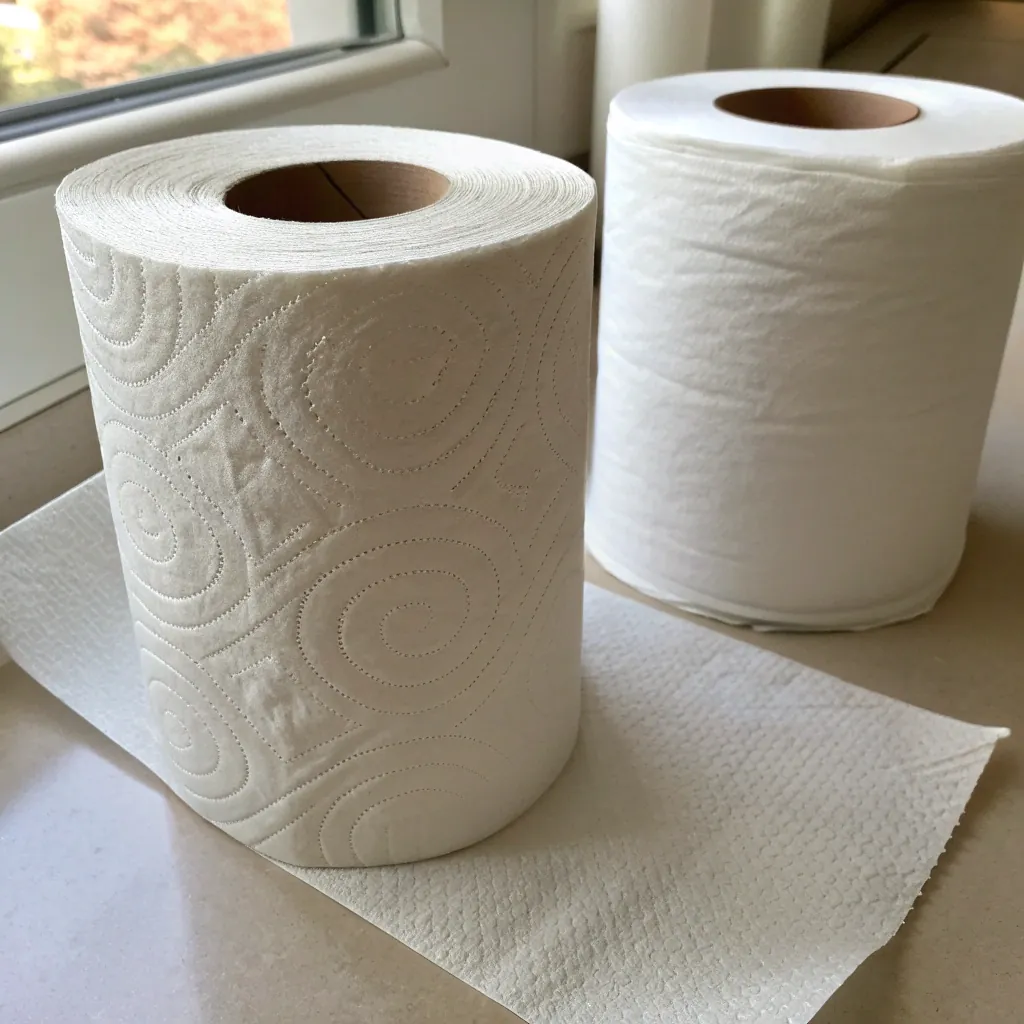
Many buyers notice that some rolls look bigger even when packages claim similar sheet counts. This creates confusion and mistrust.
Yes, toilet paper roll size varies by brand due to differences in sheet count, paper thickness, winding tension, and core size.
Brand variation is intentional.
Why brands change roll size
Brands compete on shelf appeal. A bigger-looking roll often sells better. To achieve this, brands adjust internal factors.
Common adjustment methods include:
- Increasing sheet count
- Using thicker paper
- Looser winding
- Smaller or larger cores
Each choice changes the final diameter.
The illusion of “mega” and “double” rolls
Terms like “double roll” or “mega roll” are marketing tools. There is no global standard.
One brand’s double roll may equal another brand’s single roll.
Core size variation
Some brands use smaller cores to increase paper length without increasing diameter. Others use standard cores for dispenser compatibility.
Core size impacts how full a roll appears.
Packaging and logistics impact
Bigger rolls take more space. This affects:
- Carton packing
- Container loading
- Warehouse storage
Brands balance visual size and logistics cost.
Brand comparison example
| Brand Strategy | Result |
|---|---|
| Thicker paper | Larger diameter |
| More sheets | Larger diameter |
| Tighter winding | Smaller diameter |
| Smaller core | More paper per roll |
Buyer takeaway
Never judge roll value by diameter alone. Size can mislead. Always check sheet count and paper weight.
Is roll size linked to number of sheets?
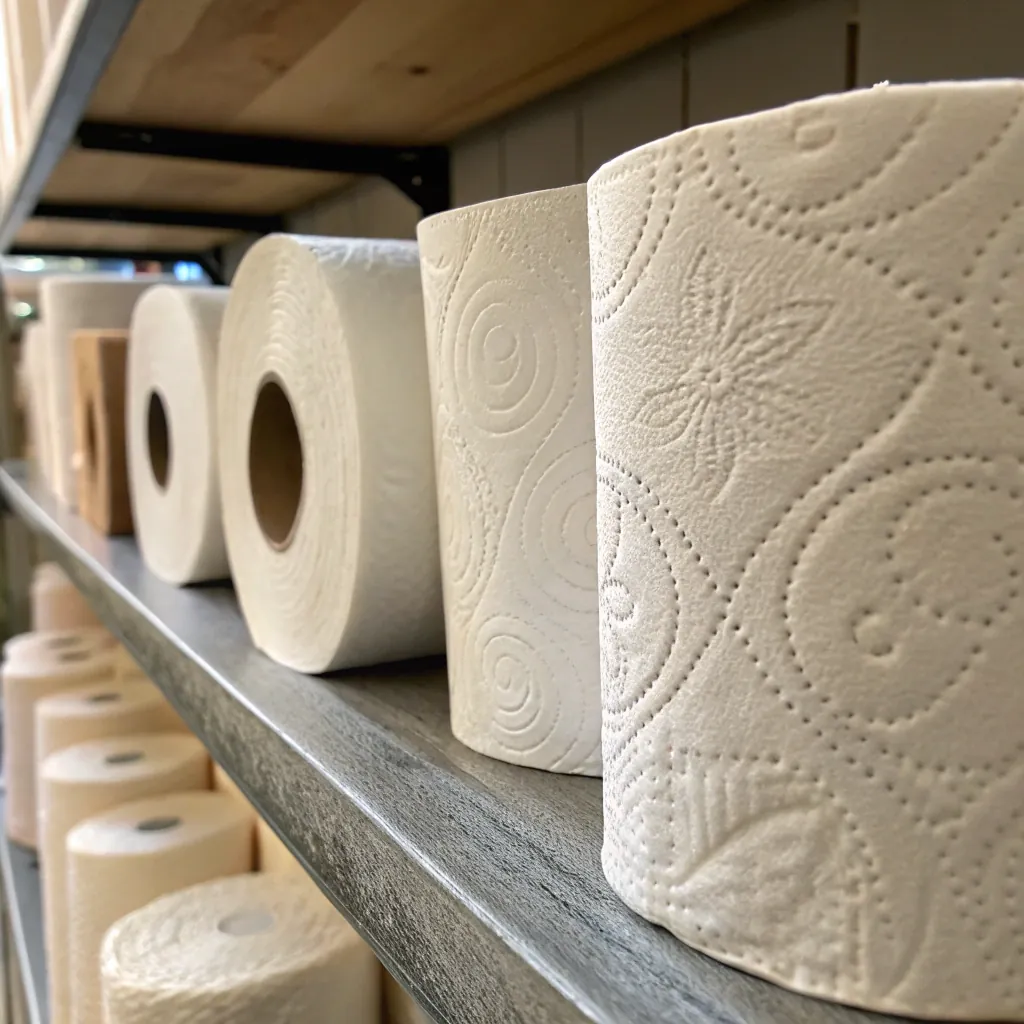
Many people believe bigger rolls always mean more sheets. This belief is only partly true.
Roll size is linked to the number of sheets, but paper thickness, ply count, and winding style also play major roles.
Understanding this link prevents wrong buying decisions.
The core formula
Roll diameter depends on:
- Sheet length
- Number of sheets
- Paper thickness
- Ply count
- Winding tension
If any one changes, the diameter changes.
Same diameter, different sheet counts
Two rolls can look the same size but hold very different sheet counts. One may use thin one-ply paper. The other may use thick two-ply paper.
The thicker paper uses more space per sheet.
Ply count effect
One-ply paper packs tighter. Two-ply paper traps more air between layers.
This means:
- One-ply rolls often hold more sheets
- Two-ply rolls feel softer but run out faster
Practical example
A 4.5-inch roll could contain:
- 500 sheets of one-ply
- 300 sheets of two-ply
Both rolls look similar, but usage time differs.
Why sheet length matters
Some brands shorten sheet length slightly. This allows higher sheet counts without increasing diameter.
Users rarely notice a small length change.
Simple relationship table
| Factor | Effect on Roll Size |
|---|---|
| More sheets | Larger diameter |
| Thicker paper | Larger diameter |
| Higher ply | Larger diameter |
| Tighter winding | Smaller diameter |
| Shorter sheets | Smaller diameter |
Buyer focus
For cost and usage planning, sheet count per roll is more reliable than roll size alone.
How is toilet paper roll size measured?
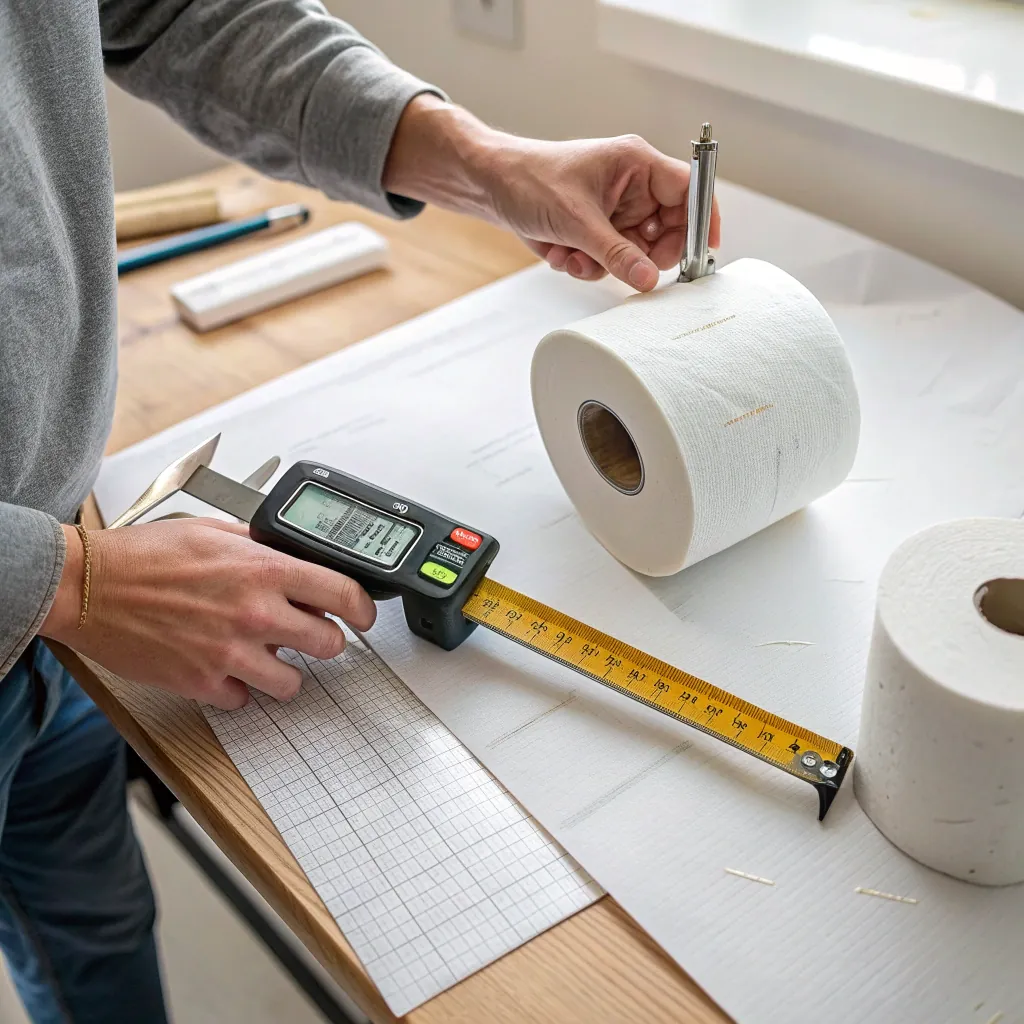
Many buyers rely on packaging claims without knowing how size is measured. This leads to confusion when products arrive.
Toilet paper roll size is measured using diameter, roll width, and core diameter, usually with simple physical tools.
These measurements follow basic methods.
Key measurements explained
There are three main dimensions:
- Roll diameter
- Roll width
- Core inner diameter
Each serves a purpose.
Roll diameter measurement
Diameter is measured across the roll from one outer edge to the other, passing through the center.
This determines holder and dispenser fit.
Roll width measurement
Width is measured from one side of the roll to the other along the axis.
Standard width is about 3.7–4 inches for household rolls. Commercial rolls may vary.
Core diameter measurement
Core diameter is the inner hole size. Most standard cores measure about 1.6 inches.
Some dispensers require strict core sizes.
Tools used
Common tools include:
- Calipers
- Rulers
- Tape measures
Factories often use digital calipers for accuracy.
Tolerance matters
Roll size is not exact. Most factories allow small tolerances, often ±2–5 mm.
Small differences do not affect use but matter for dispenser compatibility.
Measurement summary table
| Measurement | Purpose |
|---|---|
| Roll diameter | Holder fit |
| Roll width | Comfort and coverage |
| Core diameter | Dispenser compatibility |
Why buyers should measure samples
Packaging numbers may differ from real products. Measuring samples avoids bulk order mistakes.
Real-world advice
Always test rolls in actual holders before final approval. This step saves time and cost.
Conclusion
Toilet paper roll size depends on diameter, width, core size, and paper structure. While average household rolls measure about 4 to 4.5 inches in diameter, real sizes vary by brand, sheet count, and design choices. Understanding these details helps buyers choose the right product with confidence.