Skip to content
Most people never think about toilet paper length until they run out too fast. The roll looks normal, but it feels shorter. This gap causes doubt, waste, and poor buying choices.
A standard toilet paper roll length is usually between 300 and 500 inches, depending on brand, ply, and paper thickness. This number matters more than roll size or package count when comparing value.
Many buyers focus on price or roll count. That habit hides the real cost. Understanding roll length helps avoid bad deals and helps choose paper that fits real daily use.
What is the typical roll length in U.S. units?
Many shoppers feel confused when two rolls look the same but last very different times. This often leads to frequent repurchasing and higher costs over time.
In the U.S., a typical toilet paper roll is around 350 to 425 inches long, with 400 inches being the most common reference point. This length is based on standard sheet counts and sheet sizes.
To understand this clearly, it helps to break the roll into simple parts. A roll is made of sheets. Each sheet has a fixed length. The total roll length is the sheet length multiplied by the number of sheets.
Common sheet size in the U.S.
Most U.S. toilet paper brands use a sheet length of about 4 inches. Some brands use 4.0 inches, while others go up to 4.5 inches. The width is usually around 4 inches as well, but width does not affect roll length.
If a roll has 100 sheets and each sheet is 4 inches long, the total roll length is 400 inches. This is why 400 inches is often seen as a reference number.
Typical sheet counts
Here is a simple table showing how sheet count affects roll length:
| Sheets per roll | Sheet length (inches) | Total roll length (inches) |
|---|---|---|
| 250 | 4.0 | 1,000 |
| 200 | 4.0 | 800 |
| 150 | 4.0 | 600 |
| 100 | 4.0 | 400 |
| 88 | 4.0 | 352 |
Many “regular” rolls fall between 150 and 100 sheets. That is why most standard rolls land in the 350 to 600 inch range.
Why some rolls feel shorter
Roll diameter can mislead buyers. A thicker paper uses more space per sheet. This makes the roll look big, but it may contain fewer sheets. As a result, the total length drops even when the roll looks full.
In daily use, this means a soft and thick roll may last fewer days than a thinner roll with more sheets. This is not good or bad. It simply depends on usage needs.
Commercial vs home rolls
Commercial toilet paper, often used in offices or public restrooms, usually comes in much longer rolls. These can reach 1,000 to 2,000 inches or more. Home rolls stay shorter because they must fit standard holders.
Understanding this difference helps avoid wrong comparisons when buying in bulk or online.
Do toilet paper rolls come in different lengths?
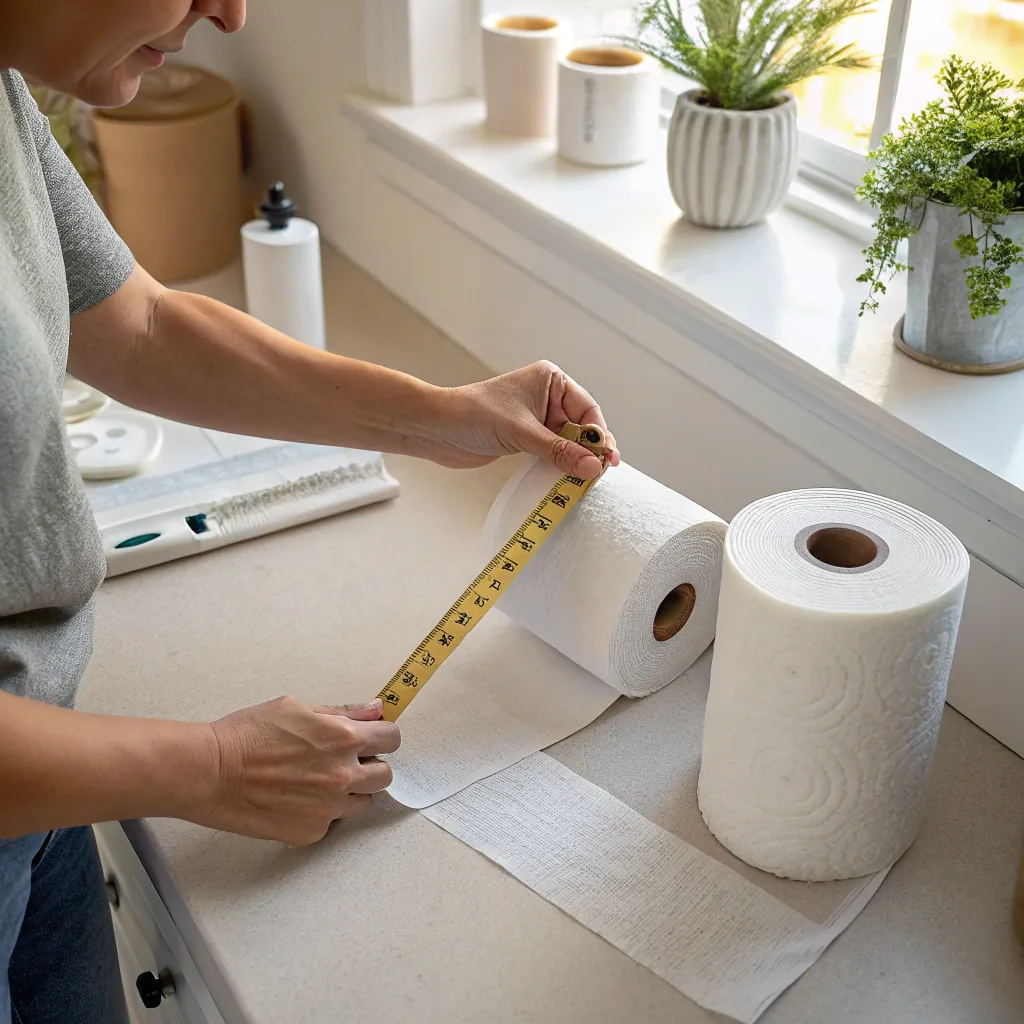
Many buyers assume all rolls are the same. This assumption causes confusion when one pack runs out much faster than another.
Yes, toilet paper rolls come in many different lengths, even if they look similar on the shelf. Length changes based on ply, thickness, sheet size, and target market.
This variation is not random. It is part of how brands position products for different users and price levels.
Single ply vs multi ply
Single ply paper uses one thin layer. Because it is thin, more sheets fit on one roll. This increases total roll length.
Two ply or three ply paper uses more layers per sheet. This makes each sheet thicker and softer. But it also reduces the number of sheets per roll.
A two ply roll may have only 150 sheets, while a single ply roll may have 400 sheets. Even if the roll looks the same size, the length can be very different.
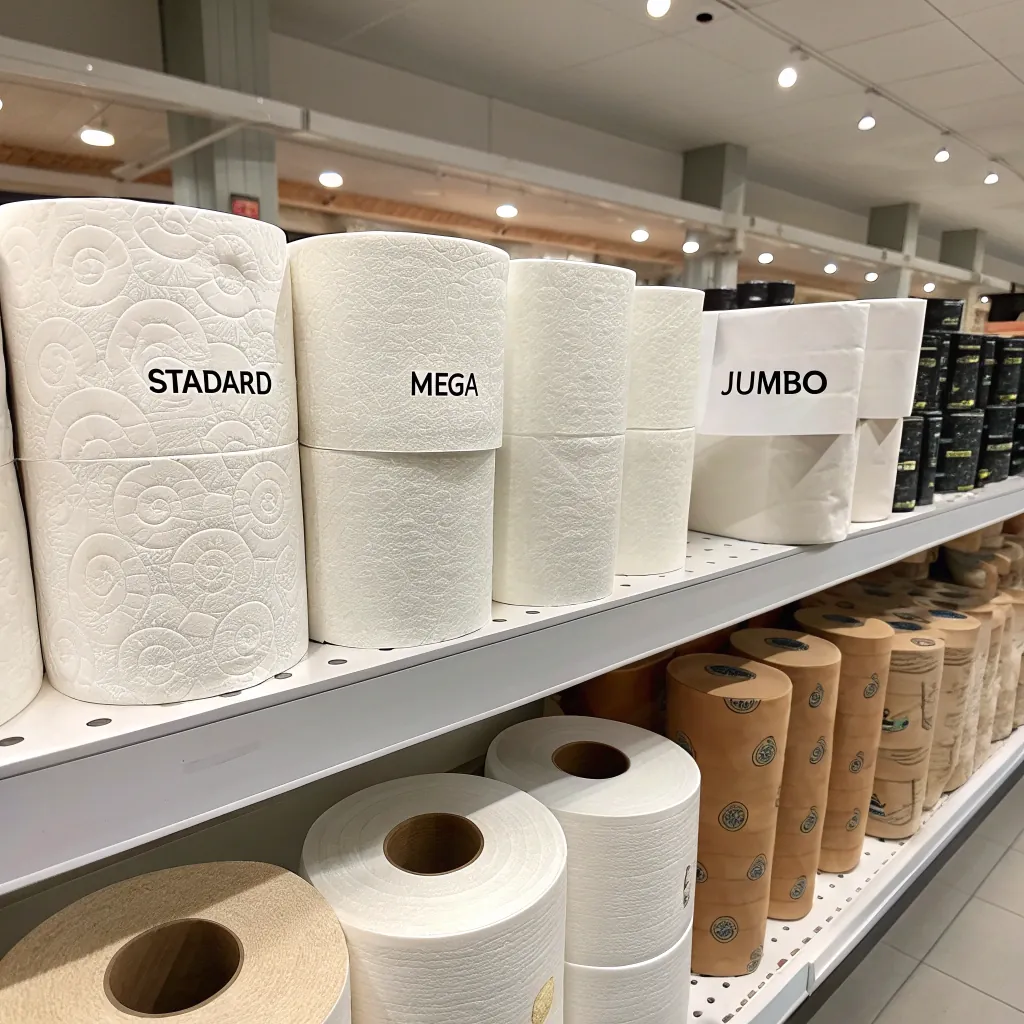
“Mega” and “jumbo” labels
Words like mega, double, or triple roll do not follow one fixed rule. One brand’s mega roll may equal two regular rolls from the same brand, but not from another brand.
This makes direct comparison hard unless roll length or sheet count is checked. Many buyers miss this detail and rely on brand trust alone.
Household vs commercial use
Household rolls focus on comfort and fit. Commercial rolls focus on reducing refill time and labor. Because of this, commercial rolls are much longer.
Below is a comparison table to make this clearer:
| Roll type | Typical length (inches) | Common use area |
|---|---|---|
| Standard home | 350–425 | Homes and apartments |
| Double roll | 700–850 | Homes, value packs |
| Mega roll | 900–1,200 | Homes, bulk buyers |
| Jumbo commercial | 1,500–2,000+ | Offices, malls, hotels |
Knowing this helps buyers match the roll to real needs instead of marketing words.
Regional and brand differences
Some brands adjust roll length for different markets. Budget brands often increase length by using thinner paper. Premium brands often reduce length to keep softness high.
Neither choice is wrong. The key is knowing what is being bought.
How is roll length labeled on packaging?
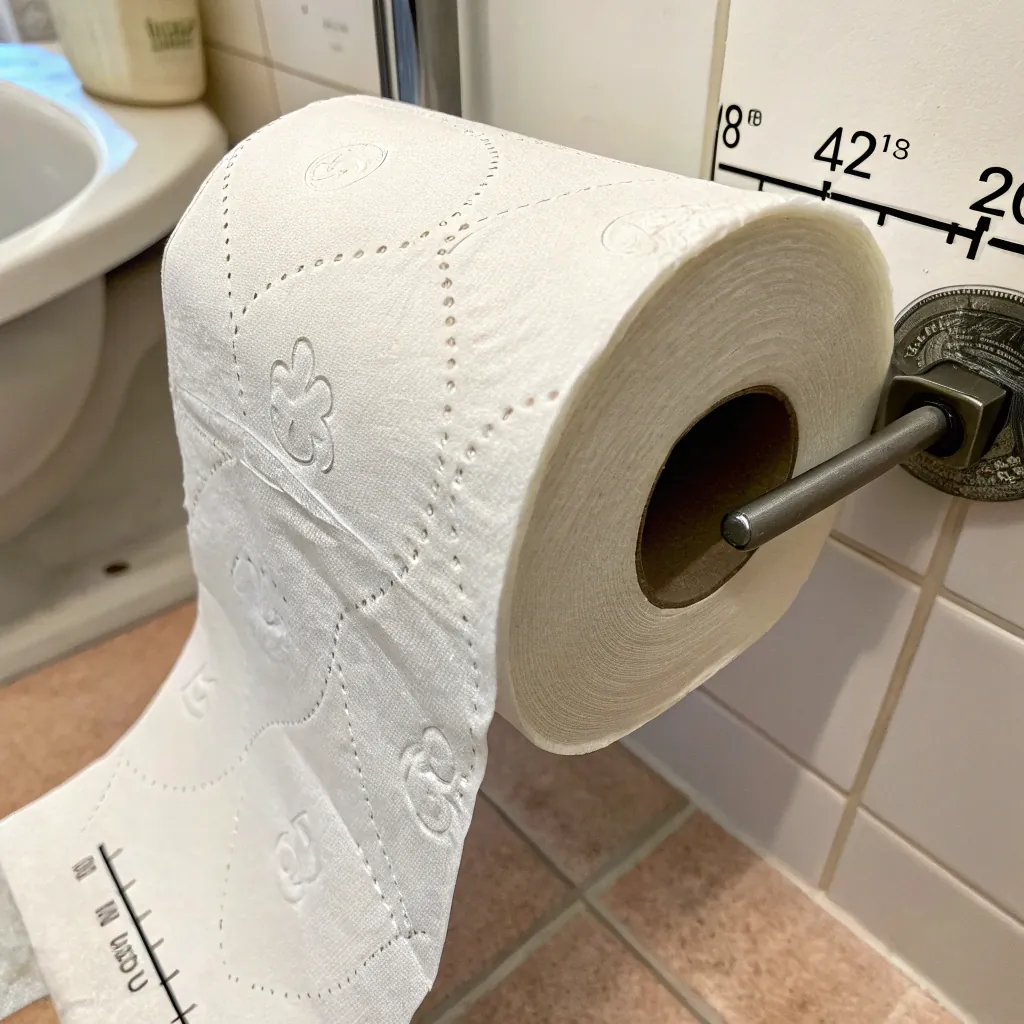
Many shoppers feel that toilet paper labels are hard to read. Important numbers are small. Big words distract attention.
Roll length is usually labeled in total sheet count, total square footage, or comparison statements rather than inches. Inches are often hidden or not shown clearly.
Learning how to read these labels helps avoid confusion.
Sheet count
Sheet count is the most common label. It might say “200 sheets per roll.” To convert this to inches, multiply by sheet length.
If the sheet length is not shown, assume about 4 inches for U.S. products. This gives a close estimate.
Total square footage
Some packages show total square feet per roll. This includes both length and width.
For example, a roll may say “33.3 sq ft.” If the width is about 4 inches, the length can be estimated by simple division. This method takes more effort but gives useful insight.
Comparison language
Phrases like “equals 4 regular rolls” are common. These comparisons only apply within the same brand. They should not be used to compare across brands.
This language is legal but can be misleading if taken at face value.
Where to find small print
Roll length details are often near the barcode or on the back of the package. They are printed in small text.
Buyers who take a few extra seconds to read this area often make better choices.
Why inches are not shown clearly
Inches are not shown because most buyers do not think in inches for toilet paper. Brands focus on simple numbers and emotional language.
Still, understanding inches gives power back to the buyer.
Can I measure toilet paper roll length at home?
Some people want proof instead of labels. Others need exact numbers for planning or bulk buying.
Yes, toilet paper roll length can be measured at home using simple tools and basic counting. No special equipment is needed.
This process also helps build trust in future purchases.
Method one: count sheets
The easiest way is to count the sheets. Pull the roll slowly and count each sheet until the end. Then multiply by sheet length.
This takes time but gives a clear result. It is best done once per brand, not every roll.
Method two: measure one sheet
Use a ruler or tape measure to measure the length of one sheet. Most sheets are between 3.8 and 4.5 inches.
Write this number down. Then multiply it by the sheet count listed on the package.
Method three: measure total length directly
This method is less common but possible. Roll out the entire roll along a hallway or large room. Use a tape measure to track length.
This works best for short rolls. Long rolls may be harder to manage.
Common mistakes to avoid
Do not stretch the paper while measuring. Stretching adds false length. Also, avoid counting torn sheets as full sheets.
Small errors add up fast when dealing with hundreds of sheets.
Why home measurement matters
Home measurement helps buyers test brand claims. It also helps businesses estimate usage rates and reorder cycles.
For bulk buyers, this data can reduce waste and improve cost control.
Conclusion
Understanding toilet paper roll length in inches helps avoid confusion, save money, and choose the right product. Roll length matters more than roll size or marketing words, and simple checks make smarter buying possible.