Skip to content
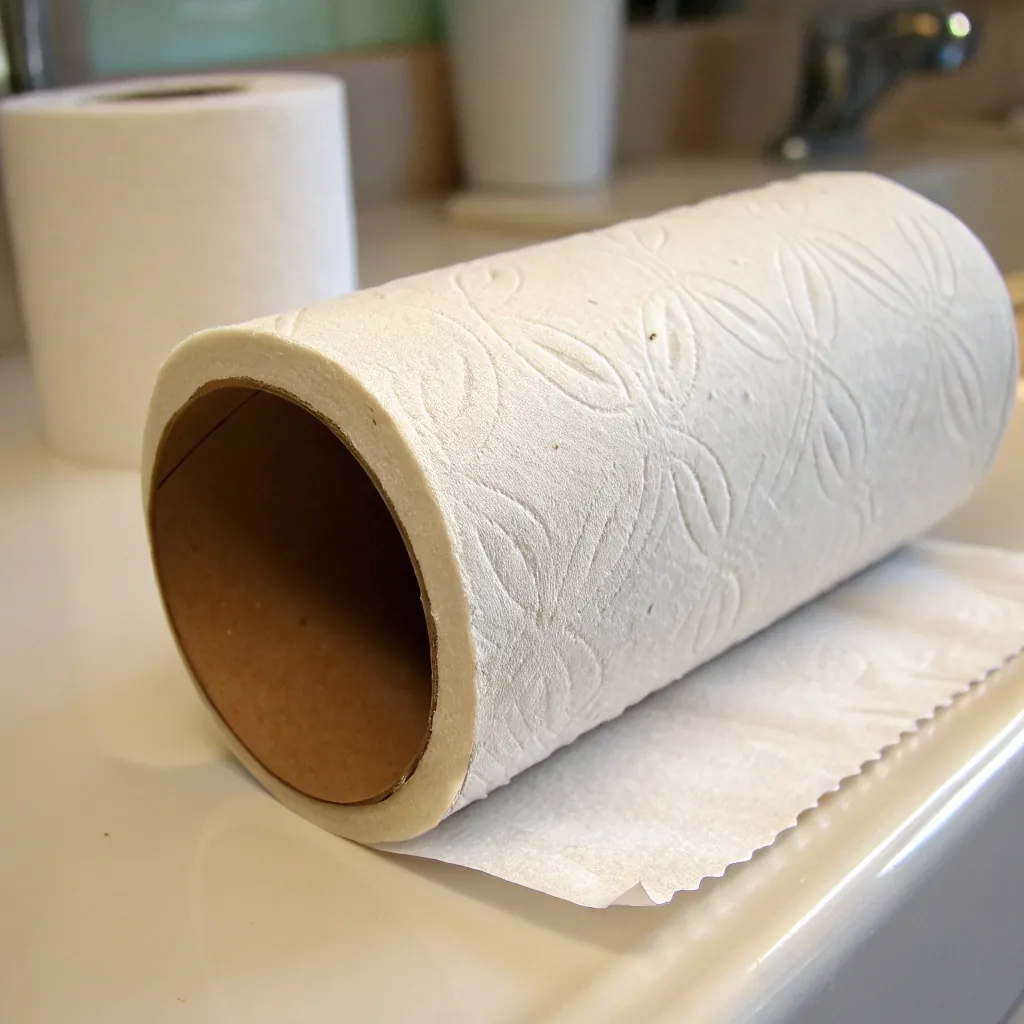
Many buyers focus on paper weight and roll diameter, but the tube inside often gets ignored. This small detail causes real problems when rolls do not fit dispensers or machines.
A toilet paper roll tube usually measures between 9.5 cm and 10.5 cm in length. This range covers most household, commercial, and jumbo toilet paper rolls worldwide.
Tube length looks simple, but it affects packaging, storage, transport, and dispenser use. Once you understand the numbers, many supply problems become easier to solve.
What is the average length of a tube in centimeters?
Most toilet paper roll tubes follow a narrow size range. This helps rolls work with standard machines and holders across different markets.
The average toilet paper roll tube length is about 10 cm. Small variations exist, but 10 cm is the most common target in mass production.
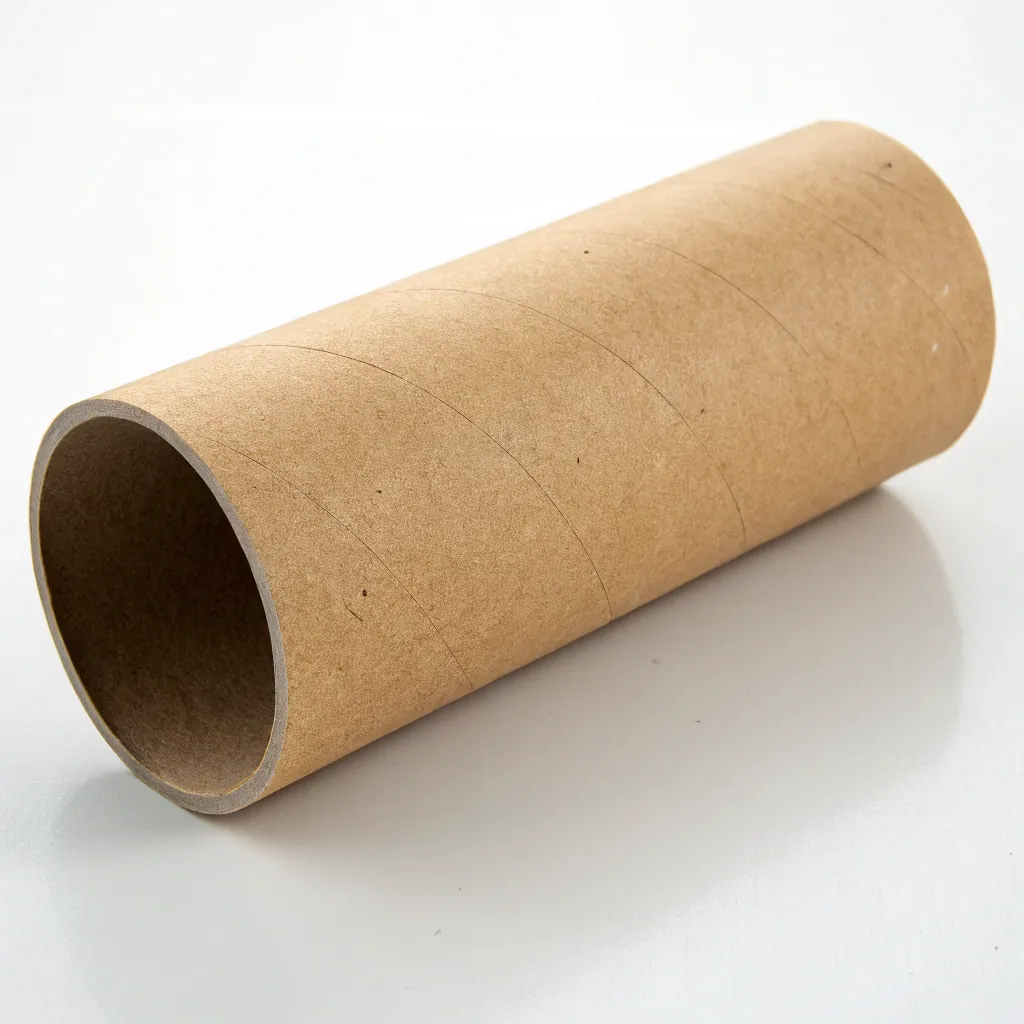
This size did not appear by chance. It developed over decades as manufacturers and dispenser makers aligned their designs.
Common tube length ranges
In real production, tube length usually falls into these ranges:
- 9.5–9.8 cm for compact household rolls
- 9.8–10.2 cm for standard household rolls
- 10.2–10.5 cm for commercial and jumbo rolls
These differences look small, but they matter in tight dispenser systems.
Why 10 cm became the standard
Several practical reasons explain this average:
- It fits most wall-mounted holders
- It balances roll stability and material cost
- It works with automated winding machines
A shorter tube may wobble. A longer tube wastes space and paperboard.
Manufacturing tolerance
Tube length is never exact to the millimeter. Factories allow small tolerance to keep speed high.
Typical tolerance ranges from ±0.5 mm to ±1 mm. This means a “10 cm” tube may measure anywhere from 9.9 cm to 10.1 cm.
Tube length vs tube diameter
Many people confuse tube length with tube diameter. These are different values.
| Measurement Type | Typical Size |
|---|---|
| Tube length | 9.5–10.5 cm |
| Inner diameter | 3.8–4.2 cm |
| Outer diameter | 4.0–4.5 cm |
Length affects dispenser fit. Diameter affects holder grip and roll stability.
Are metric measurements used in toilet paper specs?
Toilet paper is sold worldwide, so measurement systems must work across regions. Metric units play a larger role than many people expect.
Yes, metric measurements are widely used in toilet paper specifications, especially in manufacturing and international trade.
Even when products are sold in inch-based markets, factories often work in centimeters and millimeters.
Manufacturing reality
Most paper machinery is built with metric standards. Cutting, winding, and tube forming machines use millimeters for setup.
This means tube length, diameter, and wall thickness are controlled in metric units at the factory level.
Sales vs production specs
There is a difference between:
- Production specifications
- Sales and marketing descriptions
Production specs almost always use metric units. Sales labels may convert these to inches for local markets.
Common metric specs for tubes
Factories usually define tube specs like this:
- Length: 100 mm
- Inner diameter: 40 mm
- Wall thickness: 1.5–2.5 mm
These numbers are easy to control and repeat.
Why metric is preferred
Metric units offer clear advantages:
- Simple decimal system
- Easy scaling across sizes
- Better machine calibration
This reduces errors when changing orders or producing custom sizes.
Metric and international trade
In export business, metric specs avoid confusion. Buyers from different countries can compare products without converting units.
This is why serious buyers often request full metric data, even if local retail labels use inches.
Do longer tubes indicate bigger rolls?
At first glance, it seems logical that a bigger roll would need a longer tube. In reality, this assumption often leads to mistakes.
Longer tubes do not necessarily mean bigger toilet paper rolls. Roll size depends more on paper length, thickness, and winding tension.
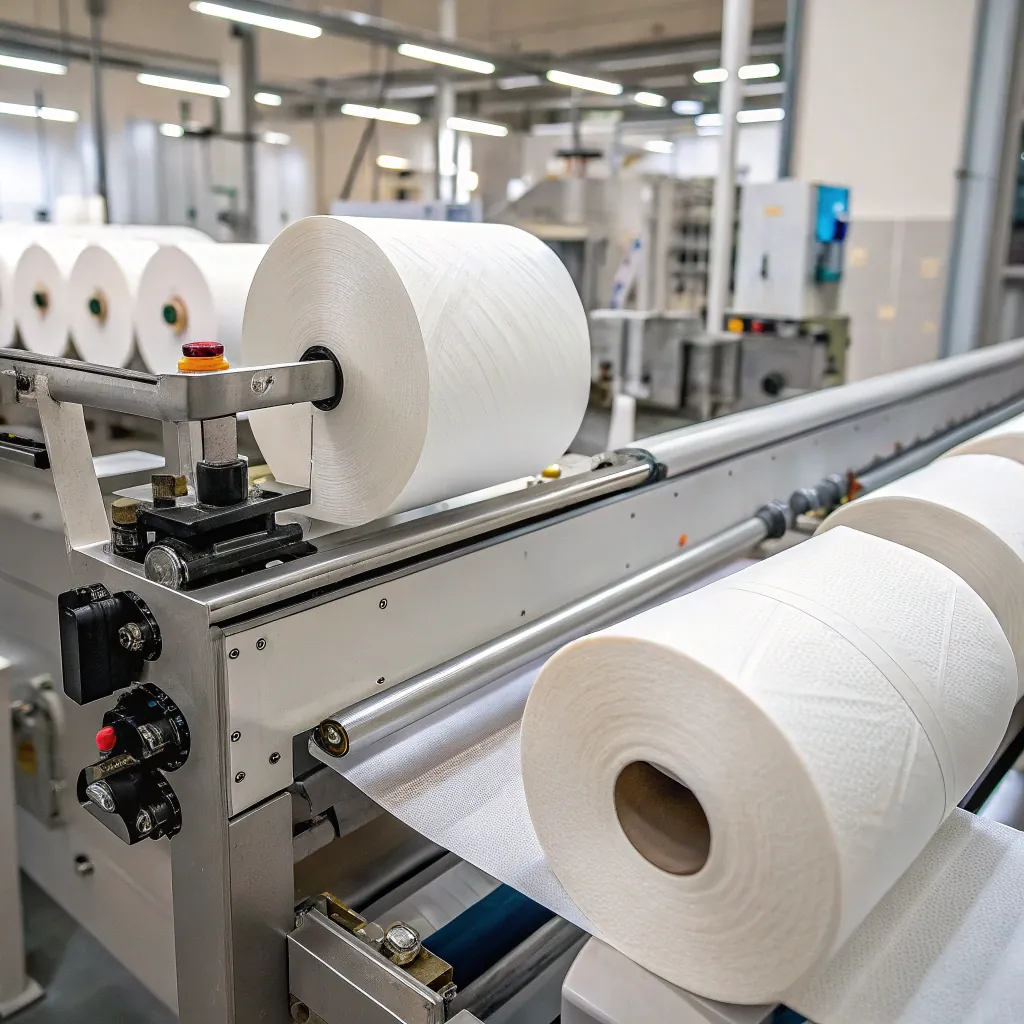
Tube length and roll diameter serve different functions.
What really defines a “big roll”
A bigger roll usually means:
- More paper length
- Thicker paper
- Tighter or looser winding
Tube length stays mostly the same to fit holders and machines.
Jumbo rolls and tube length
Even jumbo rolls often keep tube length close to 10 cm. Instead of extending length, manufacturers increase diameter.
This keeps compatibility with standard dispensers.
When tube length does change
There are some cases where tube length increases:
- Industrial rolls for floor stands
- Custom dispensers in factories
- Special export specifications
These are exceptions, not the rule.
Visual illusion problem
Longer tubes can make rolls look bigger in photos. This sometimes causes confusion in online buying.
Buyers may think they are getting more paper when they are only getting a longer tube.
Comparison table
| Feature | Affects Roll Size | Affects Tube Length |
|---|---|---|
| Paper length | Yes | No |
| Paper thickness | Yes | No |
| Roll diameter | Yes | No |
| Dispenser type | No | Yes |
Understanding this difference helps buyers avoid false assumptions.
How does tube length affect dispenser fit?
Tube length becomes critical when rolls are used in holders, wall mounts, or automatic dispensers.
Tube length directly affects whether a toilet paper roll fits securely in a dispenser without jamming or falling out.
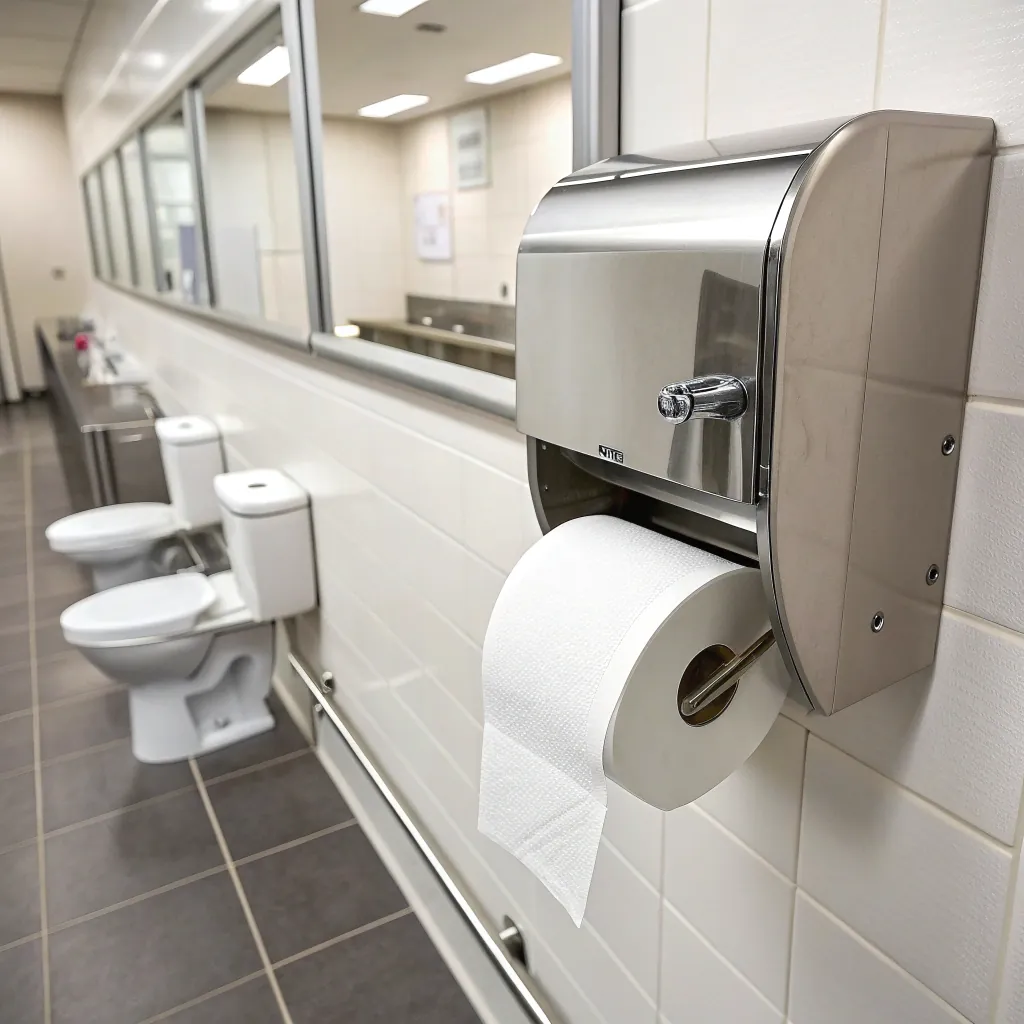
Even a few millimeters can cause problems in tight systems.
Standard household holders
Most household holders are forgiving. Springs or open arms allow slight variation.
Tube length issues are rare in this setting.
Commercial dispensers
Commercial dispensers are stricter. They are designed for specific roll sizes.
If the tube is too short:
- The roll may slip sideways
- The dispenser may not lock properly
If the tube is too long:
- The roll may not sit flat
- The cover may not close
Automated and controlled dispensers
In controlled-use systems, tube length is critical. These systems rely on exact alignment.
A mismatch can cause:
- Paper feeding issues
- Paper tearing
- Dispenser damage
Common fit problems
Many service complaints come from small tube errors:
- 2–3 mm too long
- Uneven tube cuts
- Bent tube edges
These problems often appear only after installation.
Dispenser fit checklist
Before ordering large quantities, buyers should confirm:
- Required tube length range
- Allowed tolerance
- Inner diameter compatibility
- Edge finish quality
This prevents costly replacements later.
Practical example
In public restrooms, maintenance staff often blame paper quality. In reality, the issue is often tube length mismatch.
Once the correct tube length is used, paper flow becomes smooth and predictable.
Conclusion
A toilet paper roll tube is usually about 10 cm long, but small differences matter. Tube length affects dispenser fit, transport, and user experience. Knowing the real measurements helps buyers choose the right product and avoid hidden problems.