Ever wondered if your toilet paper roll is really standard? Many people buy rolls without knowing the real length.
A typical toilet paper roll is about 4 to 5 inches in width, but the total length of paper varies from 300 to 500 inches depending on the brand and type.
Understanding the length of a roll helps you compare brands and avoid running out too soon. Let’s break down what you need to know.
What is the average toilet paper roll length in inches?
Not all toilet paper is equal. You might grab a roll and think it’s standard, but lengths differ a lot.
The average roll of household toilet paper ranges from 300 to 500 inches. Standard rolls are around 4.5 inches wide and provide about 150 to 200 sheets per roll.
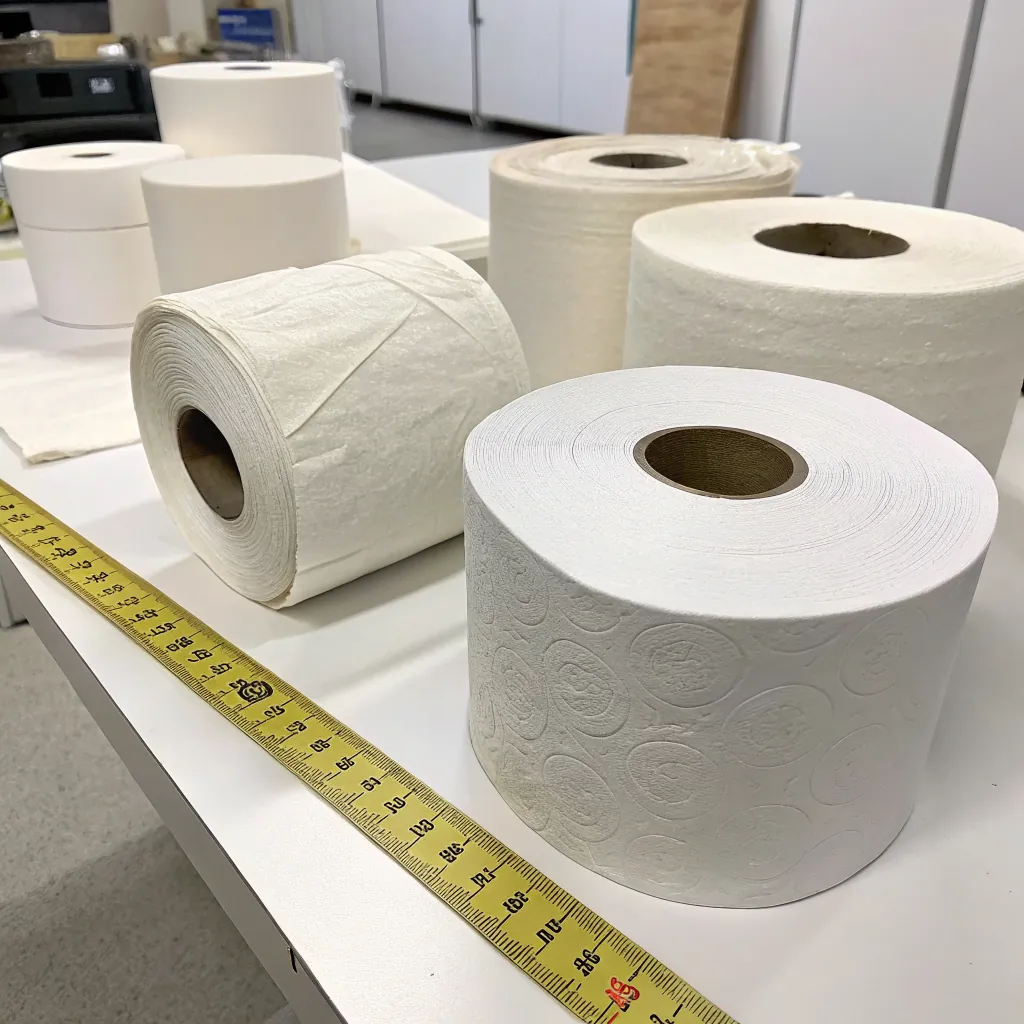
To understand toilet paper length, first know the factors affecting it. Sheet size, ply, and brand all matter. Most brands use 4 to 4.5 inches per sheet width. When you multiply the number of sheets per roll by sheet length, you get the total roll length. For example, a roll with 150 sheets of 3.2 inches each totals 480 inches.
Factors affecting average roll length
| Factor | How it affects length |
|---|---|
| Sheet size | Larger sheets increase total inches |
| Number of sheets | More sheets = longer roll |
| Ply | 2-ply uses more paper per sheet |
| Brand | Some brands make shorter or longer rolls |
In commercial settings, rolls are often longer. Jumbo rolls can reach 1,000 to 2,000 inches. These are common in hotels and public restrooms. Household rolls are smaller for convenience. Even within the same brand, lengths can vary slightly due to manufacturing tolerances. Knowing the average helps plan usage, especially in places with multiple users. It also helps when comparing bulk packs to ensure you are getting good value.
Counting the length in inches allows better budget planning. For instance, a roll of 500 inches might last a family longer than three smaller rolls. Consumers often confuse sheets with inches, but a roll with more sheets might not be longer if the sheets are small. Comparing inches instead of sheet counts gives a more accurate idea of usage.
Are all household toilet paper rolls the same length?
Many think all toilet paper rolls are alike, but you would be surprised how much lengths differ.
Household toilet paper rolls are not all the same length. Variations exist between brands, product lines, and roll sizes, ranging from 300 inches to over 500 inches per roll.
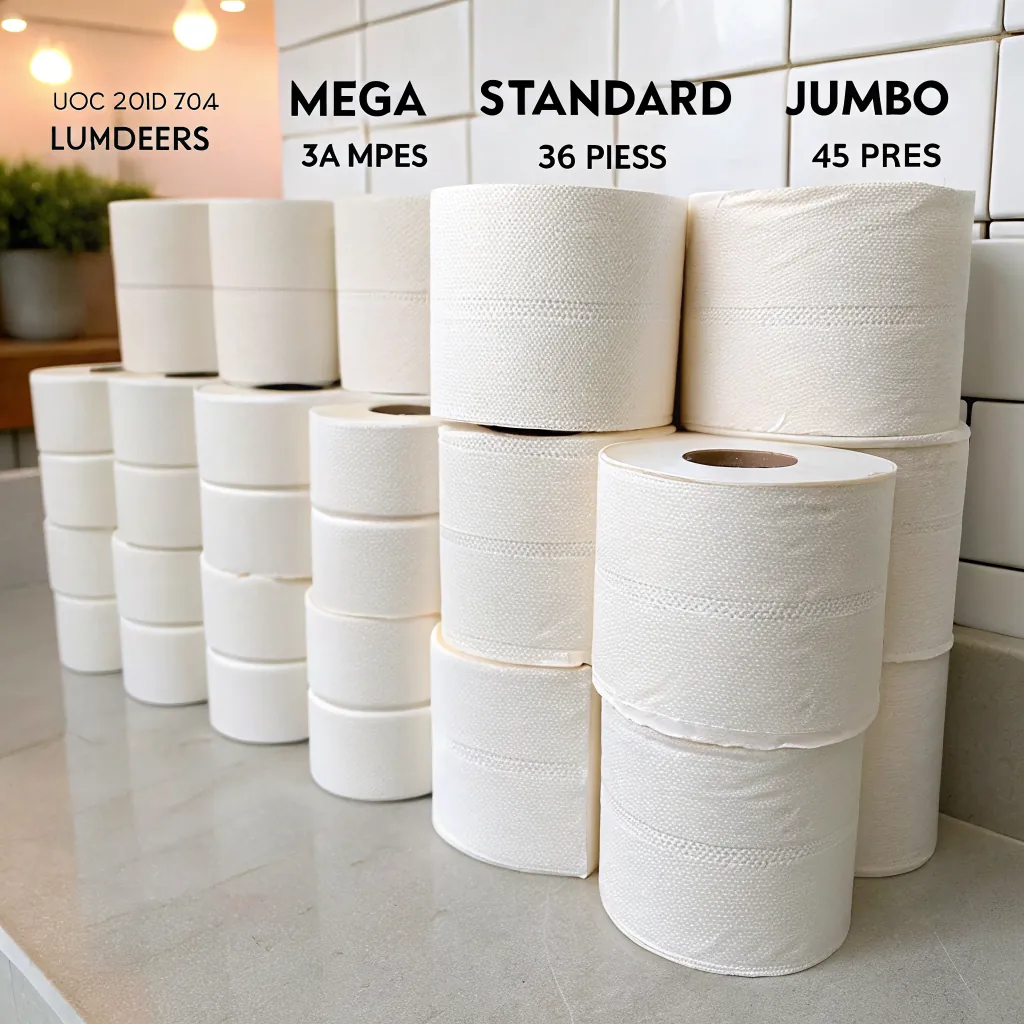
Most households use standard rolls, but there is no strict rule on length. Manufacturers decide roll length based on marketing, cost, and user preferences. Standardization helps in packaging, but differences still exist. For example, one brand may provide 160 sheets per roll at 4 inches per sheet, totaling 640 inches, while another might offer 200 sheets at 3 inches, totaling 600 inches.
Common roll length categories
| Category | Approximate length in inches |
|---|---|
| Standard roll | 300–500 |
| Mega roll | 600–1,000 |
| Jumbo roll | 1,000–2,000 |
Consumers often face confusion when switching brands. A “mega roll” may have fewer sheets but still be longer because sheets are bigger. Factors like sheet thickness and ply also matter. Thicker sheets may reduce total sheets but increase comfort. Packaging can mislead users; marketing often highlights “more sheets” but not total inches. Understanding actual length ensures better purchasing decisions and prevents running out too fast.
Differences also affect storage. Larger rolls require more space, which can be a problem in small bathrooms. Public restrooms prefer long rolls to reduce refill frequency. At home, shorter rolls may be fine but may need frequent replacement. Awareness of actual length helps in planning and comparing costs between brands and roll types.
How to measure toilet paper roll in inches?
Measuring a roll might sound tricky, but it’s easy once you know what to do.
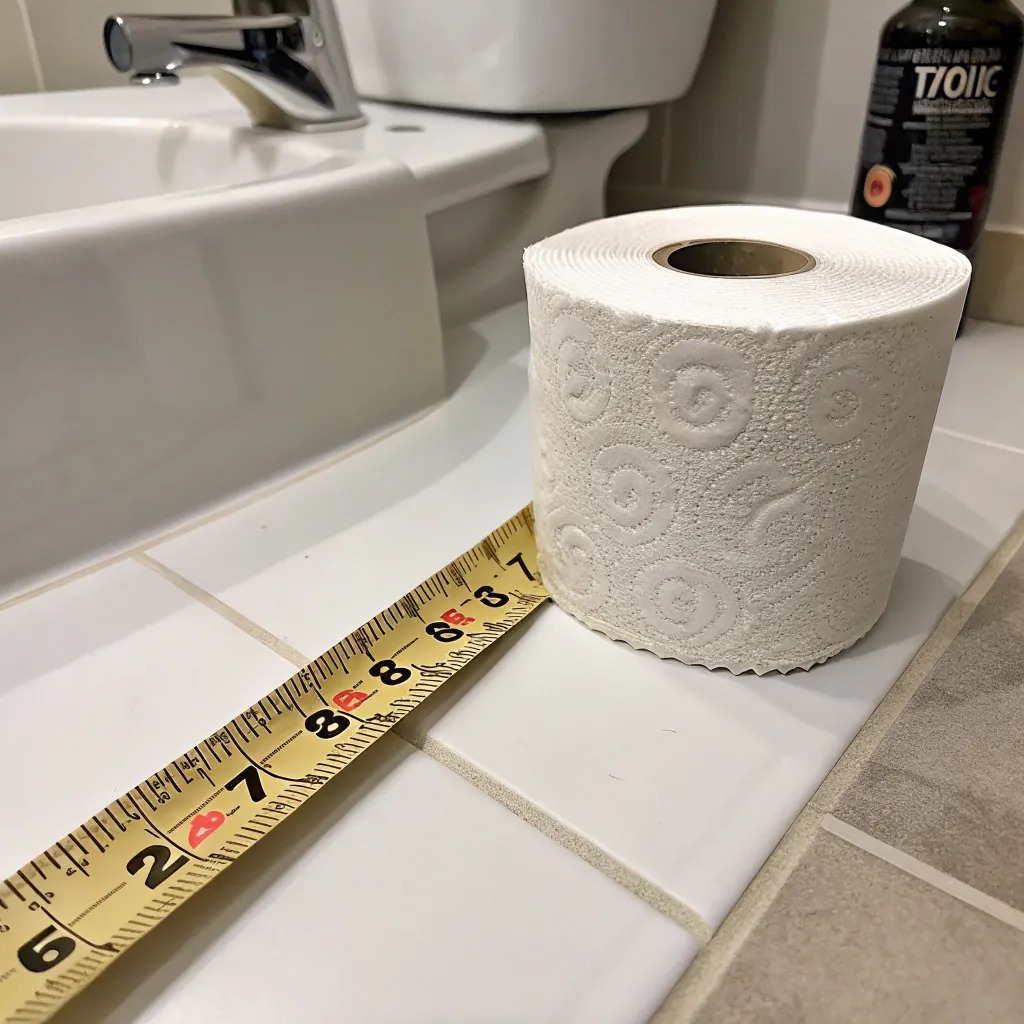
To measure toilet paper in inches, unroll it fully, measure the length with a tape or ruler, or calculate using sheet count times sheet length for an accurate total.
Measuring toilet paper requires either direct measurement or calculation. For direct measurement, unroll the entire roll and use a measuring tape. This gives precise length but is inconvenient for long rolls. For calculation, check the sheet count on the packaging and multiply by sheet length. For example, a roll with 180 sheets at 3.3 inches each equals 594 inches.
Step-by-step measurement
- Check sheet count on packaging.
- Measure one sheet’s length in inches.
- Multiply sheet length by sheet count.
- Add any extra paper if the roll is not full.
This method also works for commercial or jumbo rolls. Make sure to note sheet length; some sheets are longer or shorter than standard 4 inches. Measuring in inches is more precise than relying on sheet count alone, especially for brands with variable sheet sizes.
For businesses, measuring helps in inventory planning. Large-scale buyers can calculate how many rolls are needed per month. This method prevents running out and ensures consistent supply. It also allows comparing different brands on real length rather than marketing claims.
In some cases, ply thickness affects measurement. Thicker rolls may appear larger but have fewer total inches. Measuring ensures you know the actual usable length. Accurate measurement supports smarter purchasing decisions both at home and in commercial settings.
Does length vary between 1-ply and 2-ply rolls?
People often wonder if ply affects roll length. The answer is yes, and it’s more than just comfort.
Yes, length can vary between 1-ply and 2-ply rolls. 2-ply rolls often have fewer sheets to maintain a similar roll diameter, resulting in slightly shorter total length than 1-ply rolls.
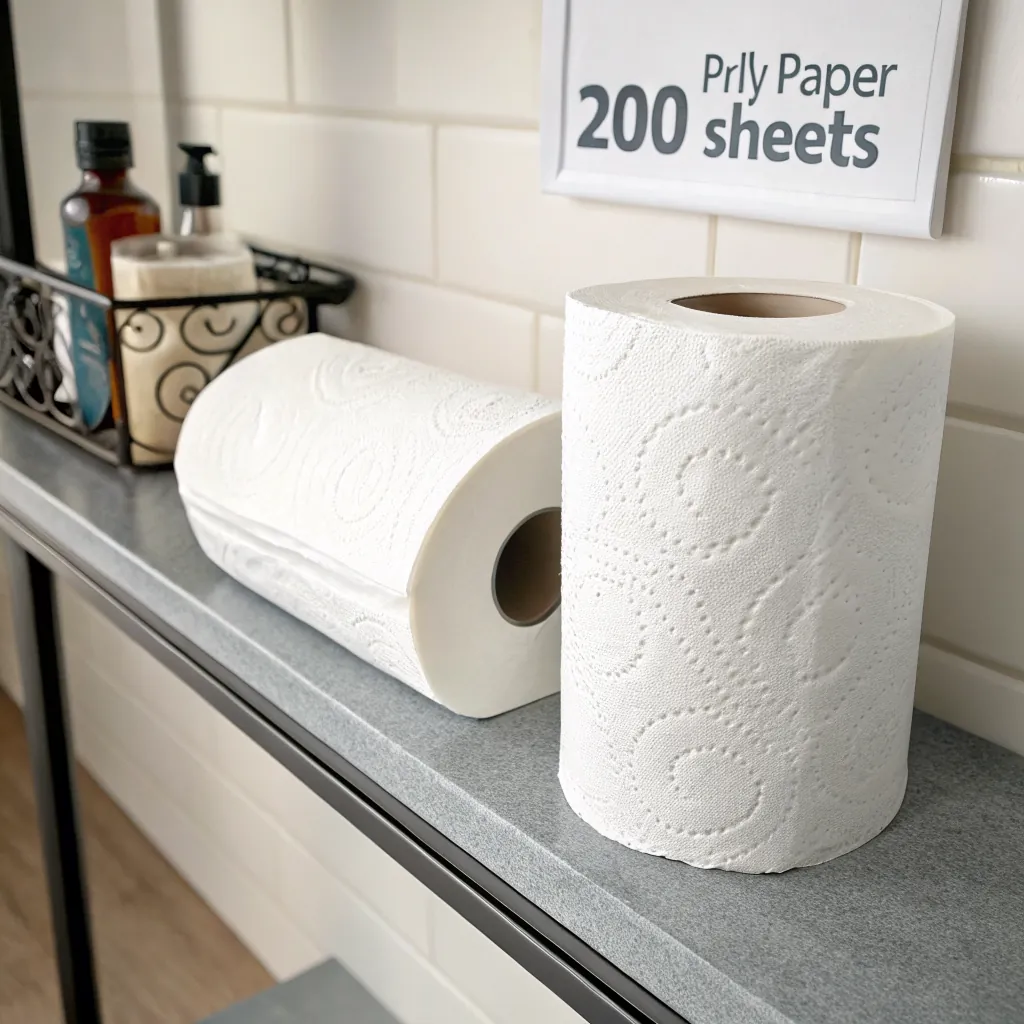
Ply refers to the number of paper layers. 1-ply is thinner, while 2-ply combines two sheets for extra softness. The total roll diameter is often designed to stay the same, so 2-ply rolls have fewer sheets than 1-ply. This means the total length in inches may be less, even though thickness and feel are higher.
Comparing 1-ply and 2-ply rolls
| Ply | Sheet count | Typical sheet length (in) | Approximate total inches |
|---|---|---|---|
| 1-ply | 200 | 3.5 | 700 |
| 2-ply | 160 | 3.5 | 560 |
This affects purchasing choices. Some users prefer 2-ply for comfort, while others prioritize longer roll length. Commercial buyers must decide between roll softness and total usable length.
In addition, ply impacts roll storage. 2-ply rolls may be thicker and heavier, affecting dispenser fit. For households, this means some dispensers may need adjustment for thicker rolls. In businesses, knowing ply and total inches helps plan refills and reduce waste.
Finally, some brands compensate by increasing roll diameter for 2-ply rolls. This can match or exceed total length of 1-ply rolls, but packaging might appear misleading. Understanding the difference allows buyers to compare rolls on actual inches, not just comfort or sheet count.
Conclusion
Toilet paper roll length varies widely depending on brand, ply, and type. Measuring in inches helps make informed choices for home and business use.