Skip to content

Most people buy toilet paper without thinking too much about the sheet count. The problem appears when rolls finish too fast, costs feel higher, and restocking becomes frequent. This small detail can quietly affect daily life and business budgets.
There is no single fixed number of sheets in a toilet paper roll. The sheet count depends on roll size, paper thickness, sheet length, and brand positioning.
This question seems simple, but the answer is not. Understanding sheet count helps us compare products, control costs, and choose rolls that truly fit real use instead of marketing claims.
Is there a standard number of sheets per roll?
Many buyers assume there is an industry standard for toilet paper sheet count. This belief often comes from seeing similar numbers printed on packaging across supermarkets. The reality is more complex.
There is no global or legal standard that fixes the number of sheets in a toilet paper roll. Each manufacturer decides the count based on product design and market needs.
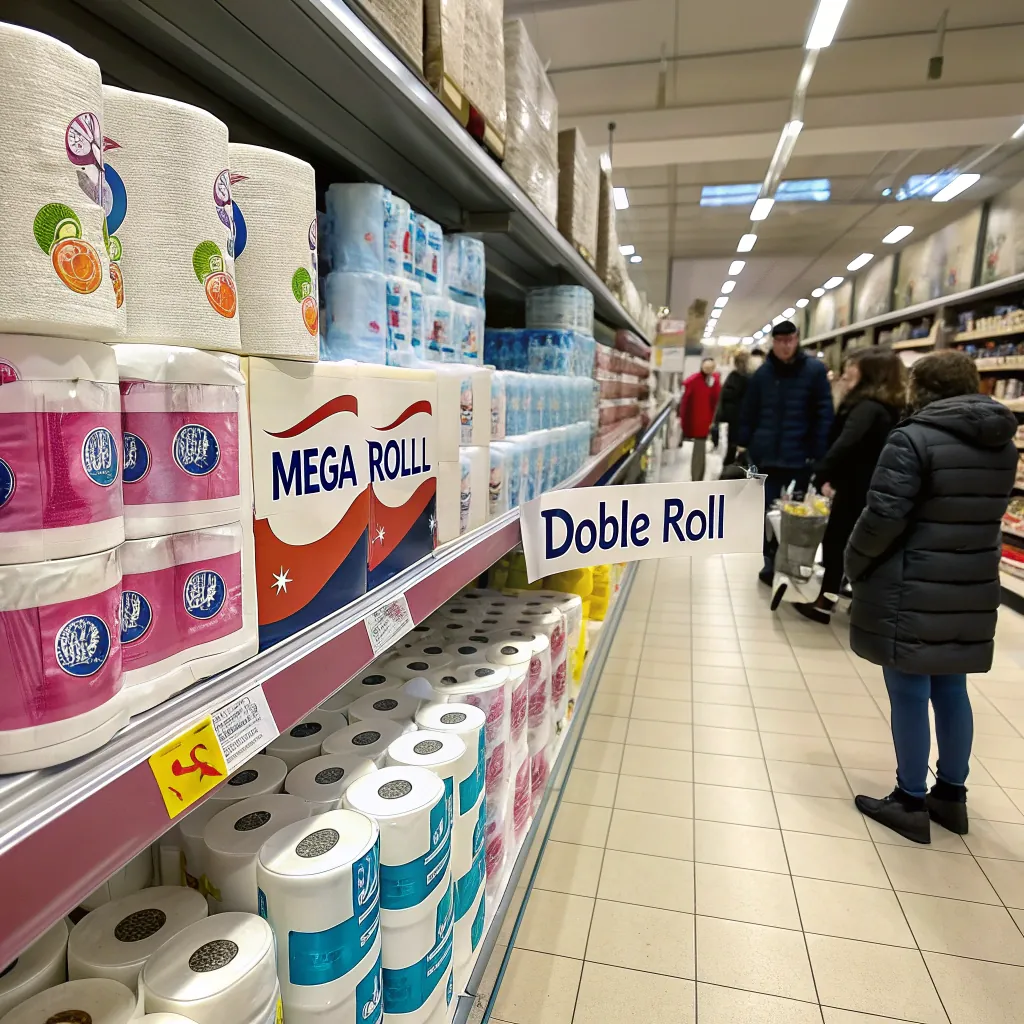
The idea of a “standard roll” is mostly a marketing shortcut. Brands use familiar numbers to make comparison easier, not because they must follow a rule. In practice, rolls that look the same size can hold very different numbers of sheets.
Why the idea of a standard roll exists
The concept comes from early mass production. Years ago, many brands sold single-ply toilet paper with similar width and length. Over time, consumers got used to seeing numbers like 200, 250, or 300 sheets per roll. This habit stayed, even when products changed.
Now, rolls vary in many ways:
- Ply count (1-ply, 2-ply, 3-ply)
- Sheet length
- Paper thickness
- Core diameter
- Winding tension
All these factors change how many sheets fit on one roll.
Common sheet count ranges in the market
While no standard exists, we still see patterns. Below is a simple overview of common ranges found in retail and commercial markets.
| Roll Type | Typical Sheet Count Range |
|---|---|
| Standard retail roll | 150–400 sheets |
| Large retail roll | 400–600 sheets |
| Jumbo commercial roll | 800–2,000+ sheets |
These ranges are not rules. They only reflect what is common today.
Why standards are avoided by manufacturers
A fixed standard would limit product design. Brands want freedom to:
- Adjust sheet size for comfort
- Use thicker or softer paper
- Reduce roll change frequency
- Fit specific dispensers
Because user needs differ, flexibility benefits both brands and buyers.
From experience, once sheet count is seen as a variable instead of a fixed promise, product comparison becomes clearer and more honest.
Do brands vary in sheet count?
Brand differences in sheet count are real and often larger than expected. Two rolls with the same price and size can deliver very different usage time.
Yes, brands vary widely in sheet count because each brand balances cost, softness, strength, and visual roll size differently.
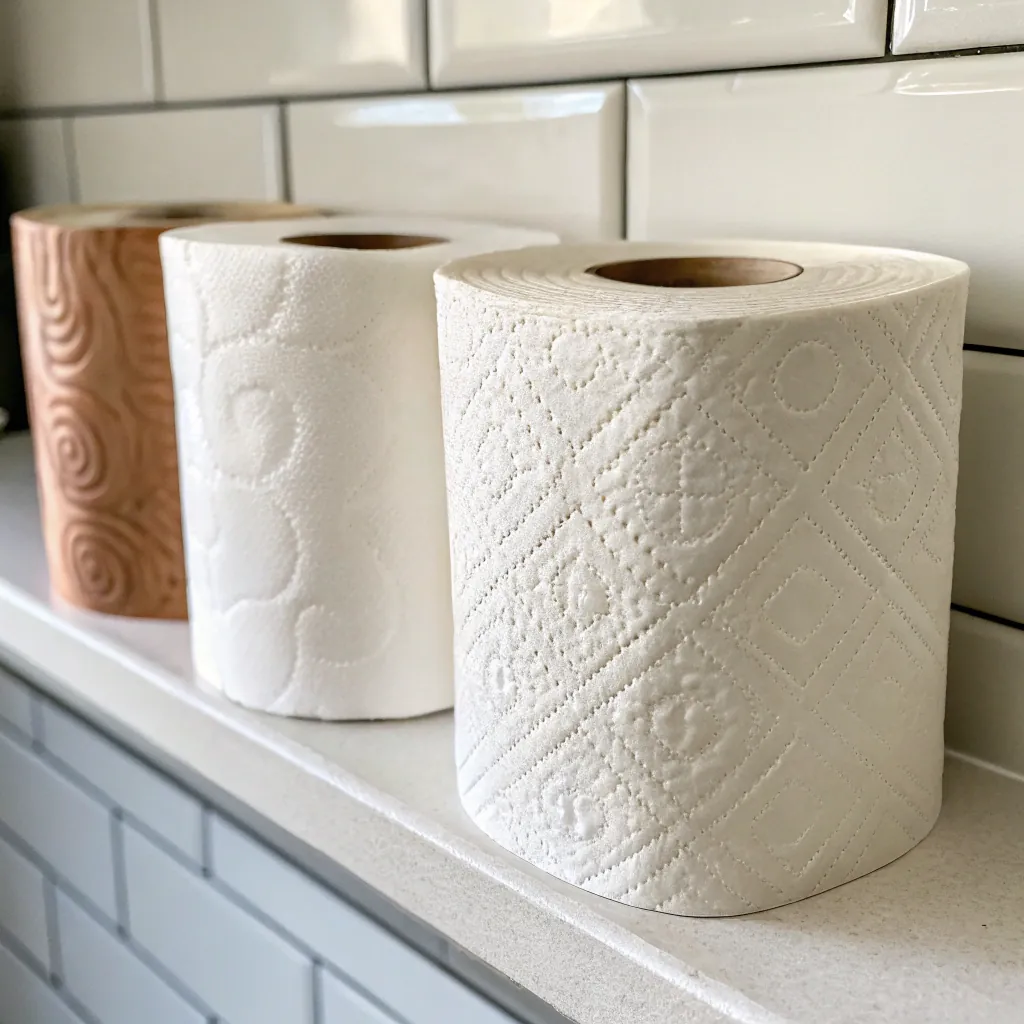
This variation is not accidental. It reflects brand strategy and target users.
How brand positioning affects sheet count
Brands usually fall into three broad groups:
- Value brands focus on high sheet count and lower cost per roll.
- Mid-range brands balance comfort and durability.
- Premium brands focus on softness and thickness, often with fewer sheets.
A premium roll may feel thicker and softer, but it may finish faster due to fewer sheets.
Sheet count vs real usage time
Sheet count alone does not tell the full story. A thin single-ply sheet may require more sheets per use. A thick multi-ply sheet may require fewer.
Below is a simplified comparison.
| Brand Style | Average Sheets | Sheets Used per Visit | Visits per Roll |
|---|---|---|---|
| Value brand | 400 | 6–8 | Higher |
| Mid-range | 300 | 4–6 | Medium |
| Premium | 200 | 3–4 | Lower |
This table shows why sheet count should always be viewed with usage behavior.
Visual roll size can be misleading
Some brands increase core size or loosen winding tension. This makes the roll look bigger while reducing paper length. The shelf impact is strong, but the real value may be lower.
When buyers only compare roll diameter, they may overestimate how long the roll lasts.
From years of observation, the biggest differences appear in commercial settings. Hotels, malls, and offices often discover that switching brands changes refill frequency even when dispenser size stays the same.
How is toilet paper sheet count calculated?
Many people imagine sheet count as a simple number chosen at random. In fact, it comes from a clear production calculation.
Sheet count is calculated by dividing the total paper length on a roll by the length of one sheet.
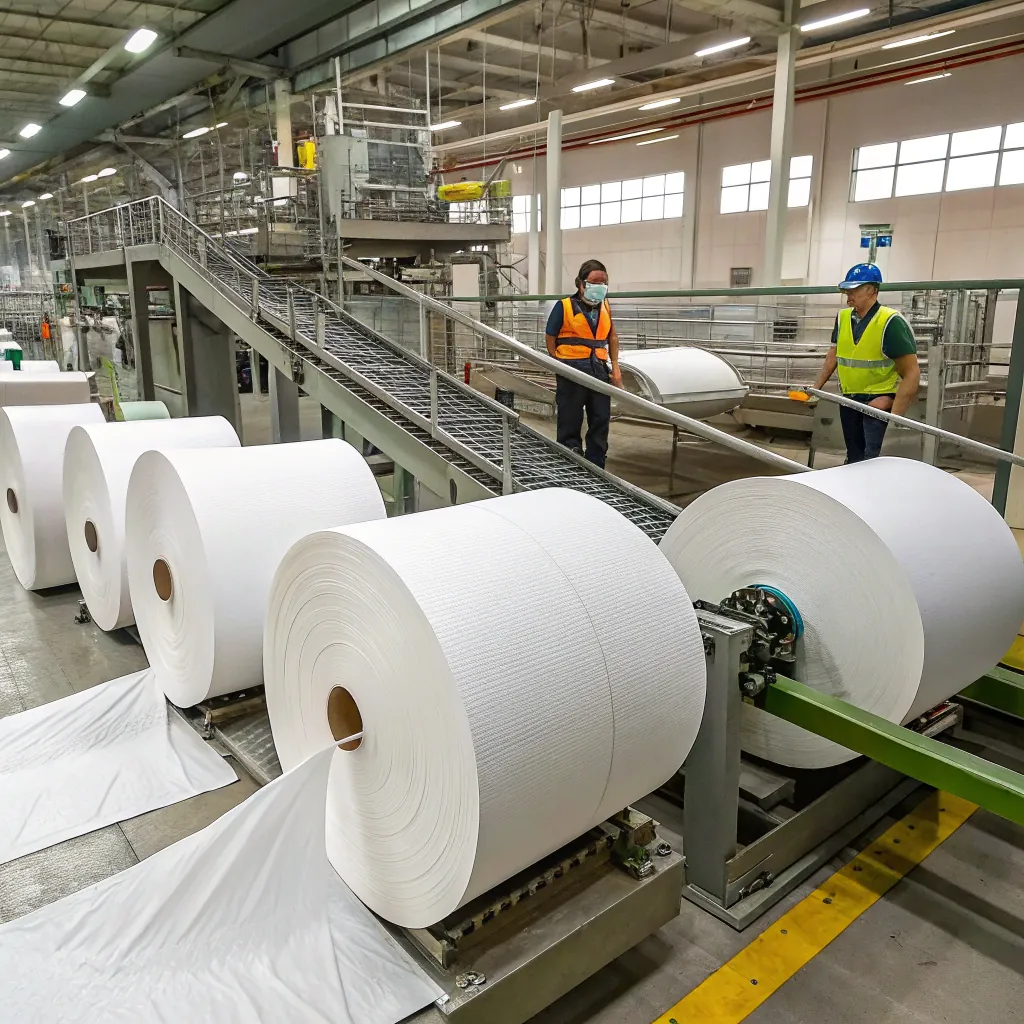
This sounds simple, but each variable can change the final number.
The core elements of calculation
Manufacturers work with four main factors:
- Total paper length
- Sheet length
- Ply thickness
- Winding tension
Only the first two directly decide sheet count. The others affect how much paper fits on the roll.
A simple example
If a roll contains 30 meters of paper, and each sheet is 10 centimeters long:
- 30 meters = 3,000 centimeters
- 3,000 ÷ 10 = 300 sheets
If the same roll uses 12-centimeter sheets, the count drops to 250 sheets.
Why sheet length varies
Sheet length is a design choice. Some brands prefer longer sheets to improve comfort. Others shorten sheets to increase count and reduce waste.
Common sheet lengths include:
- 9.5 cm
- 10 cm
- 11 cm
- 12 cm
A difference of just 1 cm can change the sheet count by 10–15%.
The role of ply and thickness
Thicker paper takes more space on the roll. This reduces total length and sheet count. Multi-ply paper often sacrifices count for comfort and strength.
This trade-off explains why two rolls with identical sheet size can have different counts.
Why production tolerances matter
In large-scale production, slight variations happen. Paper tension, humidity, and machine speed can affect total length. Most factories allow small tolerances, often within a few percent.
That is why sheet count is usually marked as an approximate number, not an absolute guarantee.
Can I trust the labeled sheet count?
This question matters the most for buyers who rely on printed numbers to plan budgets or inventory.
In most cases, labeled sheet counts are reliable within a small tolerance, but they should not be the only factor used to judge value.

Packaging labels are regulated in many markets, but the level of enforcement differs by region.
What labels usually guarantee
Most labels reflect:
- Average sheet count
- Standard production conditions
- Internal quality checks
Reputable manufacturers test rolls regularly and adjust machines to stay close to labeled numbers.
Where trust can break down
Problems appear when:
- Tolerances are too wide
- Core size changes without notice
- Sheet length is reduced quietly
- Marketing language hides real dimensions
For example, “Mega Roll” or “Double Roll” terms are often defined by the brand itself, not by law.
How to verify sheet count in practice
For critical use, buyers often:
- Measure sheet length manually
- Count sheets on sample rolls
- Compare total roll weight
- Track refill frequency over time
Weight comparison is especially useful. Rolls with similar paper quality usually show clear weight differences when sheet count varies.
Why sheet count should not stand alone
Sheet count does not reflect:
- Absorbency
- Strength
- Softness
- User satisfaction
A roll with fewer sheets may still offer better value if it reduces usage per visit.
From long-term observation, the best approach is to combine sheet count with real-world testing. Short trials often reveal more than numbers on a package.
Conclusion
Sheet count is not fixed, not universal, and not the only measure of value. By understanding how counts are designed and labeled, smarter choices become easier for both daily use and large-scale purchasing.