Skip to content
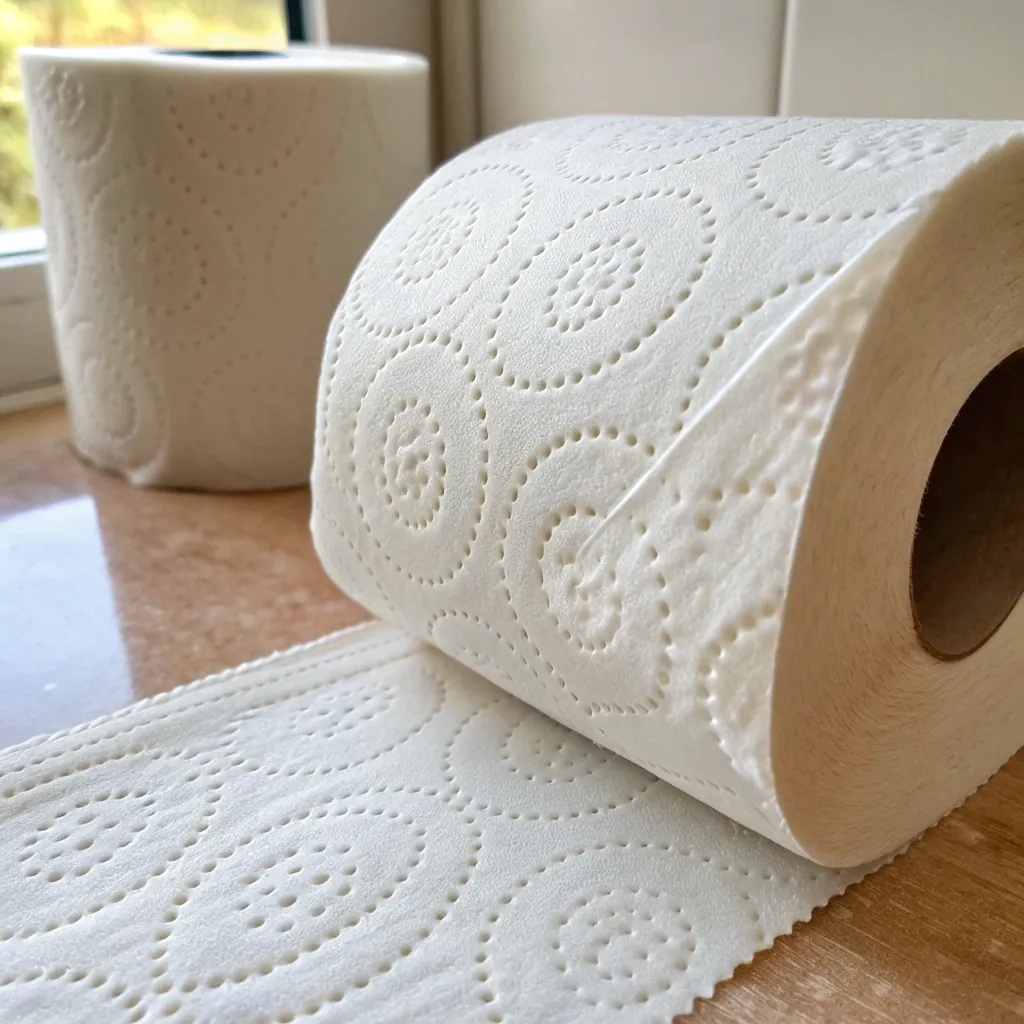
A roll looks simple, but the square count can feel like a guessing game when household needs, budgets, and restocking plans all depend on it.
Most toilet paper rolls have roughly 200–500 squares, but the exact number depends on sheet size, roll length, ply, and brand choices.
That sounds like a wide range, and it is. The good part is that the “mystery” is not random. With a few label details and a simple formula, the square count becomes predictable enough for buying, comparing, and planning.
Do toilet paper rolls list the number of squares?
Packaging can hide the one detail that matters, and that makes it easy to overpay or run out earlier than expected.
Many brands list sheet count, but some only list roll length or “equivalent rolls,” so the square count may be missing or hard to spot.
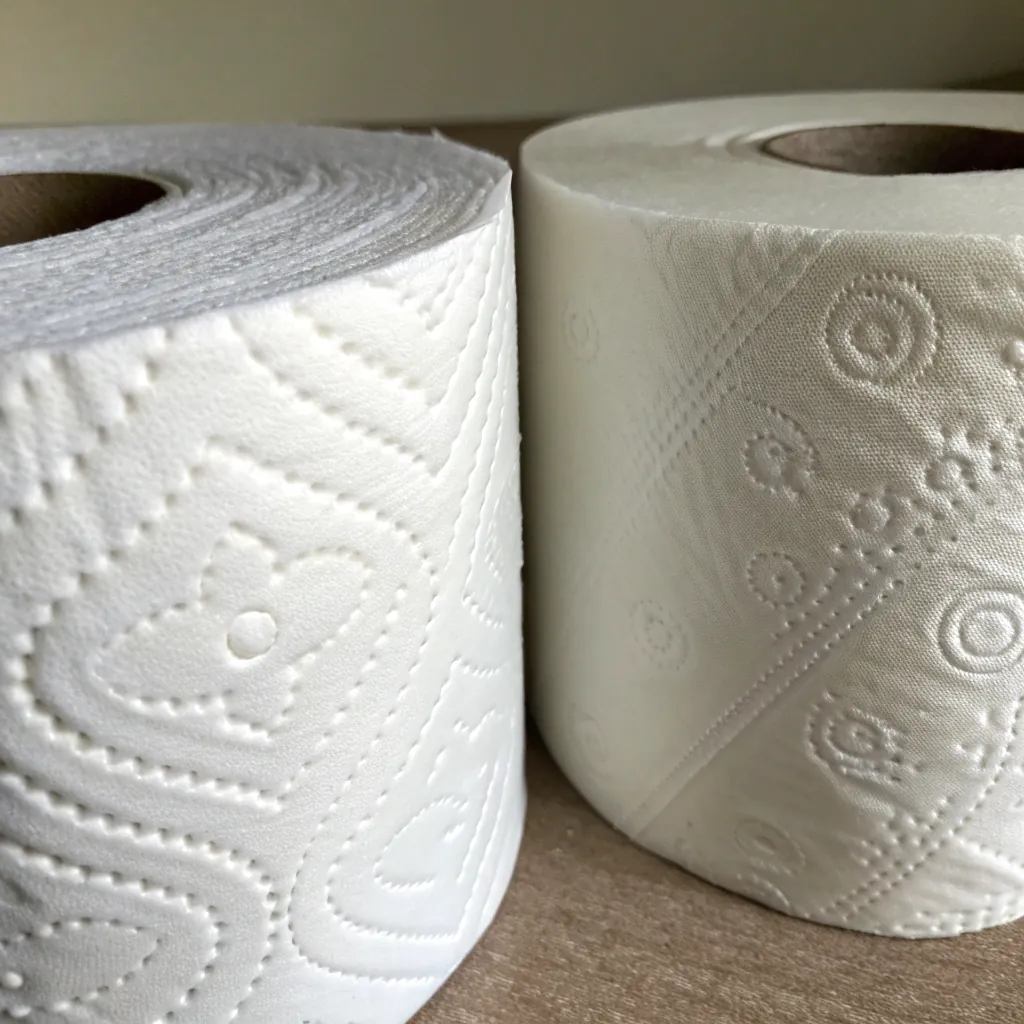
When looking for square count, the first step is to scan the front of the pack for words like “sheets,” “count,” or “squares.” Some brands place the number in large font because it helps comparison shopping. Other brands do not, because they prefer marketing terms like “mega,” “double,” or “family.” Those words can be useful, but they are not a measurement. When the square count is missing, the label often still includes enough numbers to estimate it.
Where brands usually hide the sheet count
Most packs place the sheet count in one of these areas:
- A side panel with small print near the barcode
- The back panel under “product facts”
- A small line near the roll size claim (like “Mega Roll”)
If sheet count is not printed, look for total roll length (like “150 ft” or “45.7 m”) and sheet size (often written as length × width). Some packs list only one of these, so it may take a bit of label reading.
Why “roll equivalence” is not the same as sheet count
“Equals X regular rolls” is a brand-made comparison. One company’s “regular roll” can be very different from another company’s. Even within one brand, a “regular” baseline can change across product tiers. That is why equivalence claims are weak for real planning.
Quick label checklist
To compare rolls in a clean way, it helps to collect these fields:
- Sheets per roll (best)
- Sheet length (often 3.7–4.5 inches)
- Total roll length (feet or meters)
- Ply (1-ply, 2-ply, 3-ply)
- Pack size (rolls per pack)
If sheet count is shown, that is the simplest answer. If it is not shown, the label still gives clues, and the rest of this article turns those clues into a number you can use.
Is sheet size related to square count?
A roll can look “bigger” and still have fewer squares, so it is easy to buy the wrong thing if only roll diameter is used.
Yes. Larger sheets usually mean fewer squares for the same roll length, while smaller sheets mean more squares, even if the roll looks similar.

Sheet size is one of the biggest reasons square counts differ. A “square” is usually a rectangle, not a perfect square. Brands keep the word “square” because it is familiar. What matters is sheet length, which is the part you tear off each time. If a roll has 150 feet of paper, then a 4-inch sheet creates fewer tear-offs than a 3.7-inch sheet. That is a direct math effect.
The simple relationship
- Same roll length + longer sheets = fewer squares
- Same roll length + shorter sheets = more squares
This matters when comparing “mega” rolls across brands. Two rolls can have the same total length but different sheet lengths. The roll with shorter sheets will have more squares, which can make it feel like it lasts longer in day-to-day use, even if the total paper length is the same.
Why brands change sheet size
Brands adjust sheet size for several reasons:
- To hit a target sheet count that looks good on the pack
- To match dispenser standards in commercial settings
- To control softness, strength, and tearing feel
- To position a product tier (value vs premium)
Even small changes add up. A sheet length difference of 0.3 inches can shift the sheet count by dozens of squares on a long roll.
A quick comparison table
Below is a practical way to see how sheet size affects square count when the roll length stays the same.
| Total roll length | Sheet length | Approx. squares per roll |
|---|---|---|
| 150 ft (1800 in) | 4.5 in | 400 |
| 150 ft (1800 in) | 4.0 in | 450 |
| 150 ft (1800 in) | 3.75 in | 480 |
| 150 ft (1800 in) | 3.70 in | 486 |
This table is not about “good” or “bad.” It is about making comparisons fair. If a brand gives fewer squares, it may still deliver the same total paper length, or it may offer thicker plies or higher basis weight. The key is to avoid using square count alone as the only value signal. Sheet size, total length, and ply all work together.
Can I calculate squares based on total roll length?
When the pack does not say sheets, it can feel like there is no way to compare. That is where a quick calculation helps.
Yes. Divide the total roll length (in inches) by the sheet length (in inches) to estimate the square count.
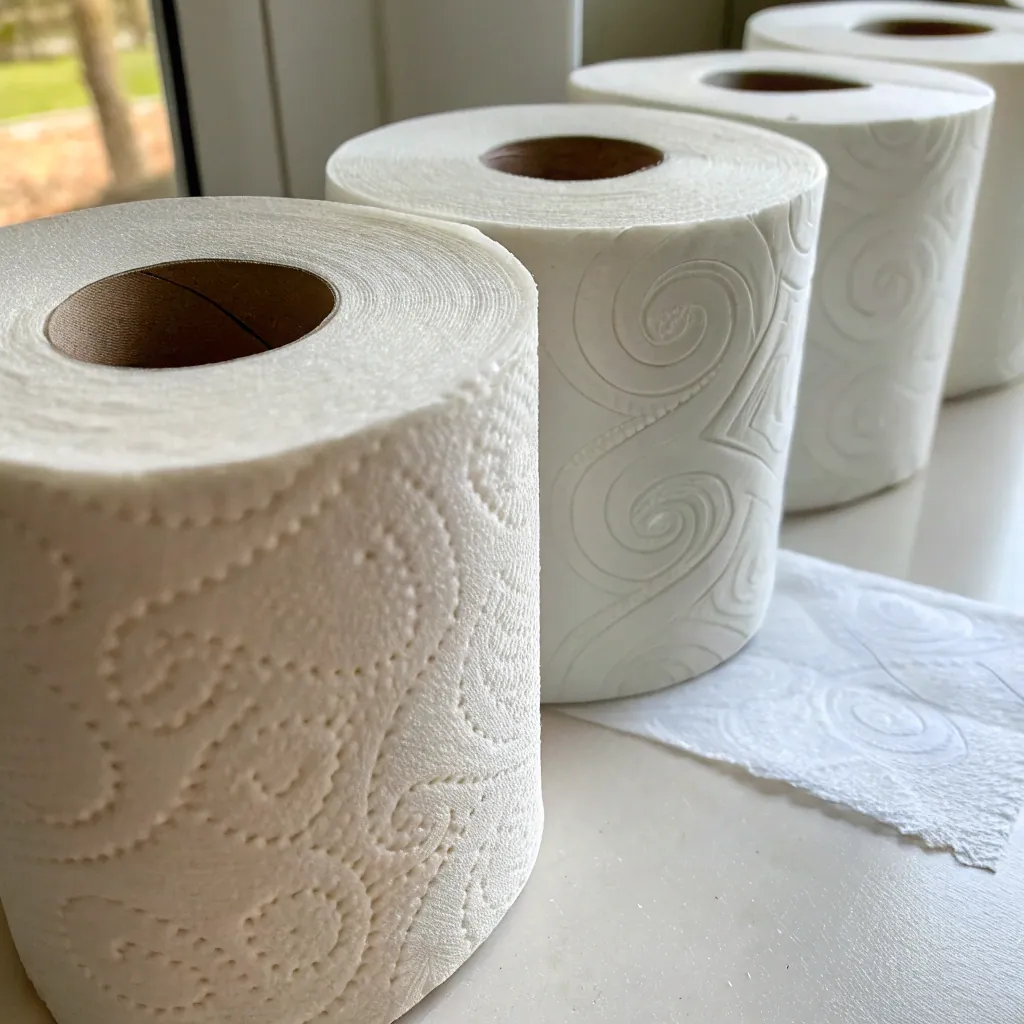
This calculation is simple enough to do on a phone while shopping. The only trick is to put everything in the same unit. Most labels show roll length in feet or meters, and sheet length in inches or centimeters. Converting is the main step.
The formula
- Convert total roll length to inches (or cm)
- Divide by sheet length
- Round to the nearest whole number
If roll length is in feet:
- Total inches = feet × 12
Then: - Squares ≈ total inches ÷ sheet length (in inches)
If roll length is in meters and sheet length is in centimeters:
- Total cm = meters × 100
Then: - Squares ≈ total cm ÷ sheet length (in cm)
Worked examples table
Here are examples that match common label patterns. The results are approximate because brands may round label numbers.
| Label info on pack | Convert | Calculation | Estimated squares |
|---|---|---|---|
| 150 ft roll, 4.0 in sheets | 150×12 = 1800 in | 1800 ÷ 4.0 | 450 |
| 140 ft roll, 4.0 in sheets | 140×12 = 1680 in | 1680 ÷ 4.0 | 420 |
| 45 m roll, 10 cm sheets | 45×100 = 4500 cm | 4500 ÷ 10 | 450 |
| 30 m roll, 11 cm sheets | 30×100 = 3000 cm | 3000 ÷ 11 | 273 |
What if the sheet length is not listed?
Some packs list width but not sheet length. In that case, the cleanest option is to look up the product spec sheet online or compare in-store with a brand that does show sheet size. Another simple method is to measure one sheet at home from a roll you already have and use that as a proxy for the next purchase, but that works best when staying within the same brand and product line.
What can make the estimate slightly off?
Even with correct math, the result can differ from the official sheet count because:
- Labels may round total length
- Perforation spacing can vary slightly
- Different production lots can have small tolerances
- Embossing and ply bonding can affect stretch under tension
For buying decisions, the estimate is still strong. It gets you close enough to compare products in a consistent way, which is the main goal.
Why does square number vary by ply and brand?
Two rolls can claim the same sheet count and still feel very different in real use, and that can be frustrating when trying to standardize buying.
Square count varies because brands balance ply, thickness, embossing, sheet size, and total length, and each brand uses different trade-offs for feel, strength, and cost.
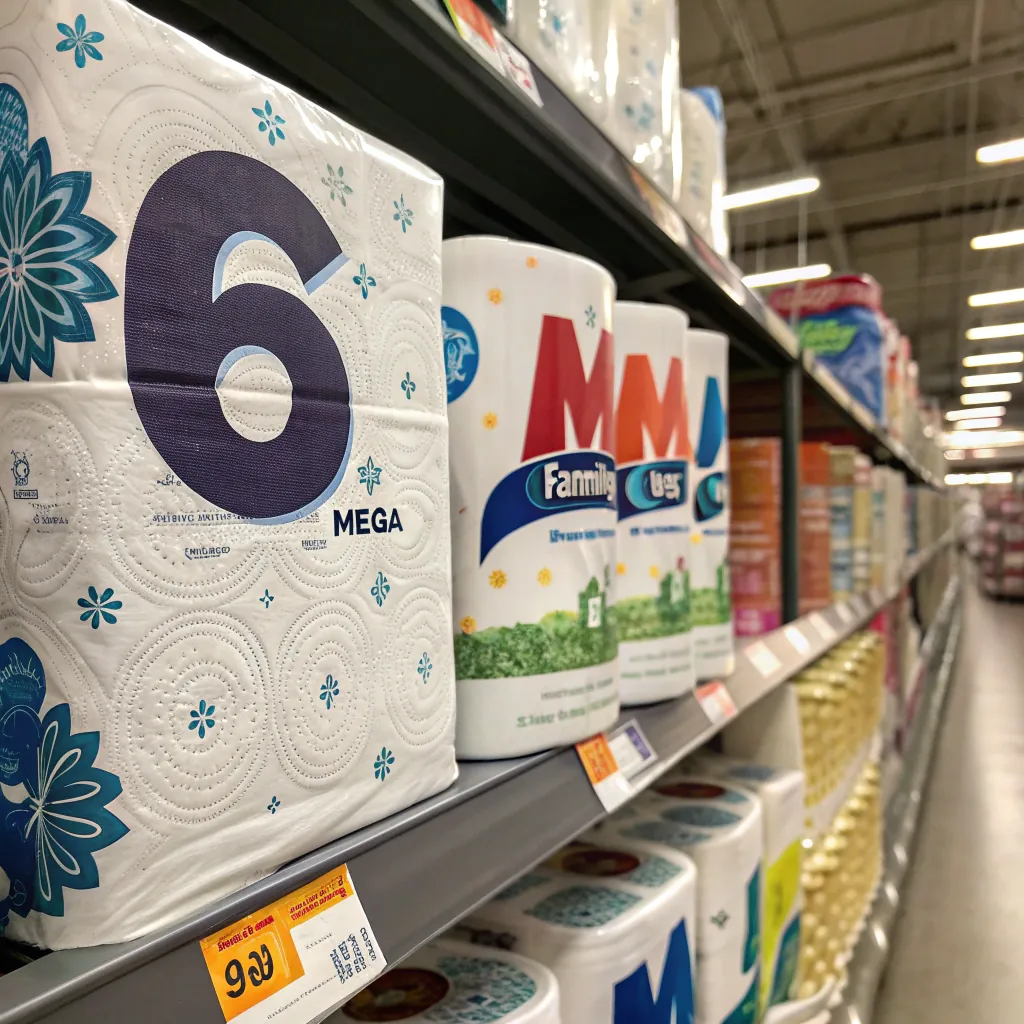
Ply is the number of layers in each sheet. A 2-ply sheet is two thin layers bonded together. A 3-ply sheet is three layers. More ply often increases softness and strength, but it also uses more fiber per square, which can raise cost and change how brands design the roll.
Ply changes how brands design “value”
When a brand adds ply or thickness, it may adjust other factors to keep the roll size reasonable:
- It may shorten total roll length
- It may increase sheet length so the sheet count drops
- It may tighten winding so the roll looks larger
- It may change embossing to create bulk and softness feel
This is why sheet count alone is not a perfect measure of how long a roll will last in a bathroom. Real usage depends on how many sheets people pull, and that depends on strength, absorbency, and confidence. A stronger sheet can reduce the number of sheets used per visit. A weaker sheet can push usage up.
Brand choices that impact square count
Different brands compete in different ways:
- Budget lines often keep higher sheet counts by using shorter sheets or lower basis weight.
- Premium lines may lower sheet count while increasing ply, softness, and strength.
- Commercial/jumbo rolls focus on total length and dispenser fit, not on sheet count marketing.
A practical way to compare brands without guessing
A simple method is to compare on two axes:
- Total paper length per dollar (or per case)
- Feel/performance (ply, softness, strength)
If a roll has fewer squares but each square is thicker and stronger, it may still deliver better real-world value for a hotel, an office, or a household that prefers fewer tear-offs. If a roll has many squares but each one is thin, it may work well for high-turnover settings where cost matters most and people pull a standard number of sheets anyway.
A small personal note that often shows up in audits
During a routine restock check in a shared restroom, the “same” number of rolls lasted different lengths of time across weeks. The main reason was not theft or waste. It was a switch to a softer product with longer sheets and fewer squares, which changed user behavior. Once the roll spec was standardized by length and sheet size, the usage became predictable again.
Conclusion
Square counts vary because roll length, sheet size, and ply vary. The label may show sheets, or it may only show length. With one simple division, the square count becomes clear, and comparisons become fair.