Skip to content

Many buyers worry that toilet paper comes from far away and may not be stable in supply. News headlines and trade tension make this fear stronger. At the same time, prices move fast and quality looks uneven, so confusion grows.
Yes, toilet paper is imported from China, but only as part of a much larger global supply. China plays a strong role in export and OEM production, while most countries still rely mainly on local manufacturing for daily use.
The topic looks simple, but the answer is not. Toilet paper sits at the center of cost, logistics, policy, and habit. To understand the real picture, it helps to break the question into clear parts and look at data, not emotion.
What percentage of toilet paper is made in China?
Many people think China makes most of the world’s toilet paper. This belief is common, but it is not accurate. China is a major producer, but it is not the main source for every market.
China produces a large share of global toilet paper for export, but less than 15% of the world’s toilet paper volume is traded across borders, and China supplies only part of that traded share.
Global production versus global trade
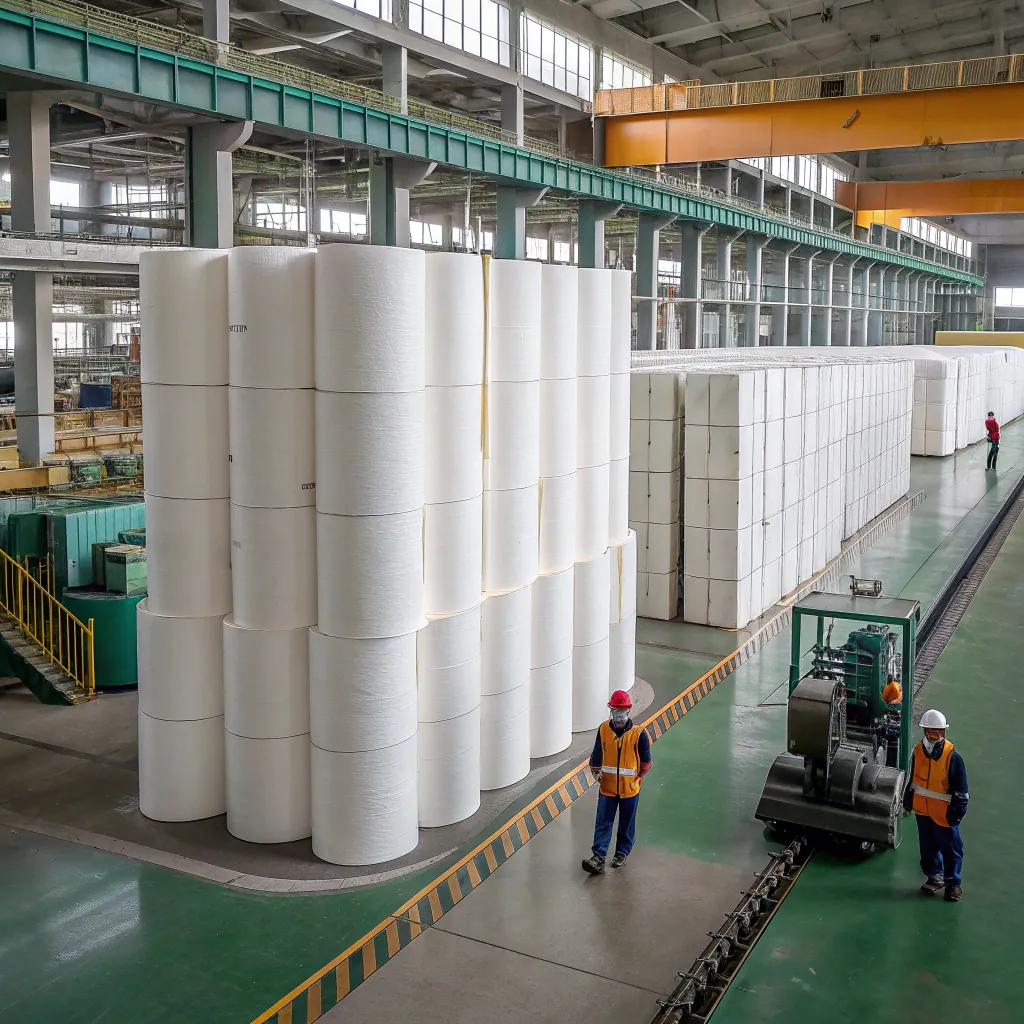
Toilet paper is heavy and low in value per unit. Because of this, most countries prefer to make it close to where it is used. Local mills reduce shipping cost and keep shelves full. This structure limits how much toilet paper is traded worldwide.
Here is a simple view:
- Most toilet paper is produced and used in the same country
- Only a small part enters international trade
- China is strong in export, but export itself is a small slice of total use
This is why production numbers alone can be misleading.
China’s role in the export market
China is one of the largest paper product exporters in the world. Its strength comes from scale, speed, and flexible OEM production. Many factories can switch between toilet paper, jumbo rolls, napkins, and tissue packs with ease.
China mainly exports:
- Jumbo roll toilet paper for commercial use
- Private label retail toilet paper
- Promotional and customized packaging products
These products often go to Africa, the Middle East, Southeast Asia, and parts of Europe.
Approximate global share overview
The table below shows a simplified view of toilet paper production and trade.
| Region | Share of Global Production | Share of Global Exports |
|---|---|---|
| China | High | Very High |
| United States | High | Low |
| Europe | High | Medium |
| Southeast Asia | Medium | Medium |
| Others | Medium | Low |
This table shows a key point. China leads in exports, not in total consumption.
Why the percentage feels higher than it is
Buyers see “Made in China” often because:
- Many imported products are clearly labeled
- OEM brands hide local production origin
- China supplies many emerging markets
As a result, China feels dominant, even when local mills still supply most daily demand.
Does the U.S. rely on China for toilet paper supply?
This question became popular during supply shocks and port delays. Empty shelves made people assume the U.S. depends on imports. The truth is more stable than the fear suggests.
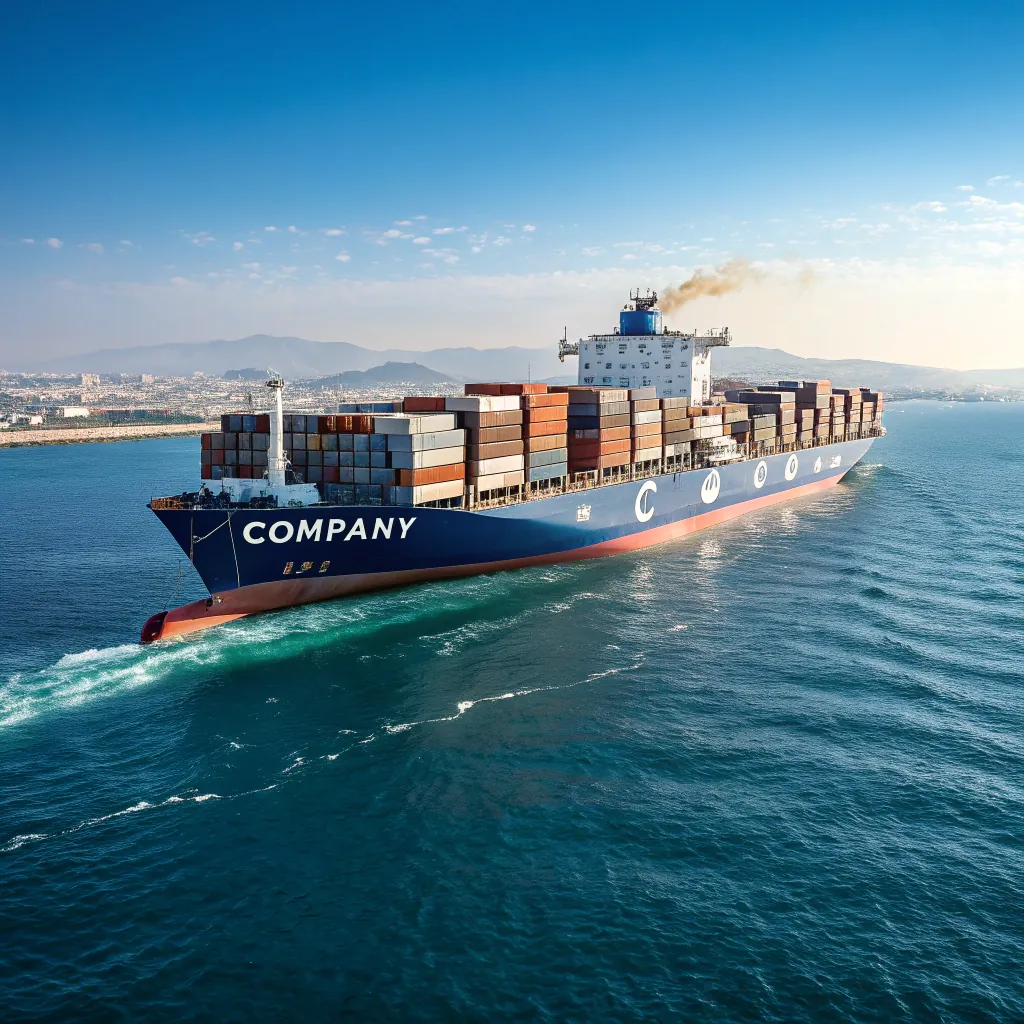
The U.S. does not rely on China for most toilet paper. Over 90% of toilet paper used in the U.S. is made domestically or within North America.
Strong domestic production base
The U.S. has a long-established paper industry. Large mills operate close to forests, water, and transport hubs. These mills focus on high-volume household brands and institutional supply.
Domestic production advantages include:
- Lower shipping cost inside the country
- Stable raw material access
- Fast restocking for retailers
This is why daily household toilet paper rarely depends on imports.
Where China fits into the U.S. market
China’s role in the U.S. is focused, not broad. Imports from China mainly include:
- Jumbo rolls for offices and public buildings
- Value-grade private label products
- Emergency or temporary supply during spikes
These imports act as a supplement, not a base.
Why shortages still happened
Shortages were not caused by import dependence. They came from demand shock. People bought more household rolls while offices closed. Factories could not switch formats fast enough.
Key reasons included:
- Household demand surged
- Commercial demand collapsed
- Packaging lines could not change overnight
The supply chain was stretched, not broken.
Import share comparison
| Category | Domestic Supply | Imported Supply |
|---|---|---|
| Household toilet paper | Very High | Very Low |
| Commercial jumbo rolls | Medium | Medium |
| Private label value packs | High | Low to Medium |
This shows that imports, including from China, fill gaps rather than control supply.
Which global brands manufacture in China?
This question often causes confusion. People see Chinese factories and assume famous brands move all production there. In reality, the picture is mixed and strategic.
Many global brands manufacture some toilet paper or tissue products in China, mainly for private label, regional markets, or export-focused lines, while keeping core production closer to end users.
Why brands use China at all
China offers specific advantages that brands value for certain products.
These include:
- OEM and ODM flexibility
- Fast tooling and packaging changes
- Competitive cost for labor-intensive formats
This makes China ideal for testing markets or serving price-sensitive regions.
What brands usually make in China
Most global brands do not ship household toilet paper from China to their home markets. Instead, they use China for:
- Export-only SKUs
- Secondary brands
- Custom or promotional items
Core brands stay closer to consumers.
Brand strategy logic
Large brands manage risk by spreading production. This avoids dependence on one country and helps control cost swings.
A simple breakdown looks like this:
| Product Type | Common Production Location |
|---|---|
| Core household rolls | Local or regional |
| Jumbo commercial rolls | Mixed |
| Private label export | China |
| Promotional tissue | China |
This strategy keeps supply stable while using China’s strengths where they matter most.
Why “manufactured in China” labels appear often
Some countries require clear origin labeling on imports. Local products may not highlight origin as strongly. This creates a visibility gap.
Also, many emerging markets import most paper goods. In those markets, China is the most active supplier, so the label appears often.
Has China’s export policy affected toilet paper availability?
Policy changes always raise concern. When people hear about export controls, they fear shortages. It is important to separate short-term signals from long-term structure.
China’s export policies have caused short-term price and timing changes, but they have not created long-term global shortages of toilet paper.
What kind of policies matter
China rarely bans toilet paper exports directly. Most policy effects come from:
- Environmental rules on pulp and water use
- Energy consumption limits
- Temporary logistics controls
These rules affect cost and lead time more than volume.
Short-term impact on buyers
When policies tighten, factories may slow output or raise prices. Buyers may see:
- Longer production queues
- Higher raw material cost
- More strict MOQ rules
These changes feel sharp but usually fade.
Why global supply stays stable
Toilet paper production is decentralized. Many countries have mills ready to scale up. When one region slows, others adjust.
Key stabilizers include:
- Local production capacity
- Multiple raw material sources
- Ability to switch grades and formats
This flexibility prevents long-term shortages.
Policy impact versus perception
Media often amplifies policy news. The actual effect on shelves is smaller than headlines suggest.
A simple comparison helps explain this:
| Factor | Media Impact | Real Supply Impact |
|---|---|---|
| Export policy news | High | Low |
| Local demand surge | Medium | High |
| Logistics disruption | High | Medium |
Policy matters, but it is not the main driver of availability.
Long-term outlook
China continues to export paper products, but with higher standards. This pushes weaker factories out and leaves more stable suppliers in place.
For buyers, this often means:
- Better quality consistency
- Clearer compliance
- More reliable long-term partners
The system becomes slower, but also more predictable.
Conclusion
Toilet paper is not as globally fragile as many believe. China plays a key export role, but most supply remains local. Understanding this balance helps buyers focus on real risks, not loud fears.