Skip to content
%[Close-up of toilet paper roll on holder next to a toilet in a tiled bathroom.](https://sinotissue.com/wp-content/uploads/toilet-roll-bathroom.webp "Toilet Paper Roll in Bathroom")
Many buyers feel confused when choosing toilet paper. Shelves show many options, but labels feel vague. This confusion leads to wrong choices, wasted money, and unhappy users.
**One ply toilet paper is made with a single layer of paper per sheet, designed to provide basic function with lower material use and faster breakdown.**
This short answer sounds simple, but the real meaning sits in use cases, cost control, plumbing safety, and supply decisions. Understanding these points helps buyers choose correctly instead of guessing.
## How does one-ply differ from two-ply toilet paper?
%[Supermarket aisle displaying shelves filled with various brands of toilet paper, neatly stacked in a well-lit, tiled store environment.](https://sinotissue.com/wp-content/uploads/supermarket-aisle-shelves-1.webp "Supermarket aisle with shelves of toilet paper")
Many people assume thicker paper is always better. This belief often comes from home use habits, not from business or system needs.
**One-ply toilet paper uses one paper layer, while two-ply bonds two layers together for extra thickness, softness, and strength.**
This difference affects much more than touch.
### Basic structural difference
One-ply paper has a single sheet per square. Two-ply paper presses and glues two sheets together. This simple change doubles material use.
The result shows in weight, roll size, and performance.
### Performance in daily use
Two-ply feels softer and stronger in hand. One-ply feels thinner but still works when used correctly. In many public places, one-ply is the standard choice.
This is not an accident.
### Usage behavior matters
In homes, users want comfort. In offices, malls, and schools, users want availability and safety. One-ply reduces waste because each pull uses less paper.
### Roll and storage impact
One-ply rolls often hold more sheets. This reduces replacement frequency. Maintenance teams prefer fewer roll changes.
Below is a clear comparison.
| Feature | One-Ply | Two-Ply |
|------|--------|--------|
| Layers | 1 | 2 |
| Thickness | Thin | Thicker |
| Sheet count per roll | Higher | Lower |
| Soft feel | Basic | Higher |
| Common use | Commercial | Home |
### Why commercial buyers prefer one-ply
Large buyers focus on system stability and cost control. One-ply supports these goals better than thicker options.
## Is one-ply toilet paper more eco-friendly?
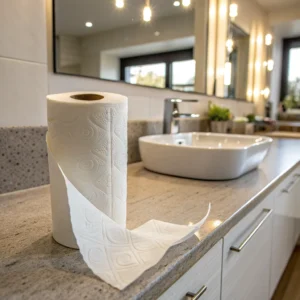
%[Two white toilet paper rolls with embossed swirl patterns on a bathroom countertop near a sink.](https://sinotissue.com/wp-content/uploads/toilet-paper-rolls-7.webp "Toilet Paper Rolls on Bathroom Counter")
Eco claims are everywhere. Many buyers want to reduce impact but struggle to judge real benefits.
**One-ply toilet paper often uses less raw material per use, which can reduce resource consumption and waste.**
This statement needs careful explanation.
### Material use per wipe
One-ply uses less fiber per sheet. Even if users pull one extra sheet, total fiber use often stays lower than two-ply.
Less fiber means:
- Fewer trees or bamboo cut
- Less water used in pulping
- Less energy during drying
### Production efficiency
Producing one-ply paper takes fewer steps. There is no need to bond layers. This saves glue, pressure, and energy.
Over large volumes, these savings add up.
### Transport impact
One-ply rolls often weigh less per sheet. Trucks and containers carry more usable paper with the same fuel.
This improves carbon efficiency per use.
### Waste system impact
Paper that uses fewer fibers breaks down faster. This lowers stress on sewage and septic systems. Blockages cause environmental damage and repair waste.
### Eco depends on raw material too
One-ply made from bamboo or recycled paper improves the eco profile further. One-ply made from virgin pulp still performs better than thick multi-ply in resource use.
A simple view helps.
| Factor | One-Ply | Two-Ply |
|----|-------|--------|
| Fiber per sheet | Lower | Higher |
| Energy per roll | Lower | Higher |
| Transport efficiency | Better | Lower |
| System stress | Lower | Higher |
### Honest eco thinking
Eco-friendly does not mean perfect. It means less impact. One-ply often fits this goal better when used at scale.
## Does one-ply toilet paper dissolve faster?
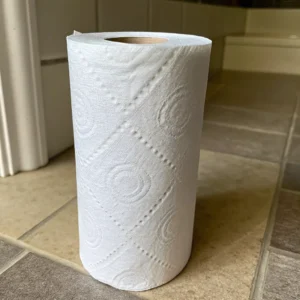
%[Two toilet paper rolls labeled one-ply and two-ply on a countertop, demonstrating their differences in texture and layering.](https://sinotissue.com/wp-content/uploads/toilet-paper-comparison.webp "Toilet Paper One-Ply vs Two-Ply")
Plumbing problems cost time and money. Many buyers learn this lesson only after damage happens.
**One-ply toilet paper dissolves faster in water because it has fewer layers and lower bonding strength.**
This feature matters more than comfort in many places.
### How paper dissolves
Paper breaks when water enters fibers and weakens bonds. Thicker paper resists this longer.
One-ply allows water to reach fibers quickly. The sheet separates and breaks apart.
### Septic and sewer safety
Older pipes and septic tanks need fast-dissolving paper. Slow breakdown leads to clogs and buildup.
Facilities that handle many users face higher risk. One-ply lowers that risk.
### Public system standards
Many public buildings require one-ply paper by rule. This includes:
- Airports
- Schools
- Hospitals
- Office towers
These places value system safety over luxury.
### Simple test behavior
When dropped in water, one-ply often sinks and breaks within seconds. Two-ply stays intact longer.
This behavior explains buyer choice in infrastructure-heavy sites.
### Why softness often conflicts with safety
Softness comes from longer fibers and stronger bonds. These features slow breakdown.
One-ply sacrifices softness to gain safety.
### Breakdown comparison
| Condition | One-Ply | Two-Ply |
|------|-------|--------|
| Initial water contact | Fast | Slower |
| Sheet separation | Quick | Delayed |
| Pipe safety | Higher | Lower |
| Septic risk | Lower | Higher |
### What buyers should prioritize
If plumbing repair costs more than comfort value, one-ply is the logical option.
## Is one-ply toilet paper more cost-effective?
%[Wooden shelf in a bathroom with potted plants, a roll of toilet paper, a reed diffuser, and a small basket.](https://sinotissue.com/wp-content/uploads/bathroom-decor-shelf.webp "Bathroom Shelf with Decor and Toiletries")
Cost pressure shapes most bulk buying decisions. Small savings per roll become large savings over time.
**One-ply toilet paper is usually more cost-effective due to lower material cost, higher sheet count, and reduced system issues.**
This benefit appears in several layers.
### Purchase price
One-ply rolls cost less to produce. Less fiber means lower raw material expense. This reflects in unit price.
### Usage control
Because sheets are thinner, users tend to take only what they need. Two-ply often leads to overuse.
Controlled use saves money quietly.
### Maintenance savings
More sheets per roll mean fewer replacements. Staff spend less time changing rolls.
Time saved equals labor savings.
### Infrastructure savings
Clogs cause repair costs, downtime, and complaints. One-ply reduces these events.
This hidden saving often outweighs paper price difference.
### Cost over time view
Looking only at roll price misses the full picture. Total cost includes:
- Paper
- Labor
- Repairs
- Downtime
One-ply performs well across all areas.
### Cost comparison example
| Cost Area | One-Ply | Two-Ply |
|--------|--------|--------|
| Roll price | Lower | Higher |
| Sheets per roll | More | Fewer |
| Replacement time | Less | More |
| Plumbing risk | Lower | Higher |
### Who benefits most
One-ply suits:
- Wholesalers
- Facility managers
- Hotels with high traffic
- Schools and offices
These buyers measure value by stability, not softness.
## Conclusion
One-ply toilet paper uses a single layer to deliver cost control, faster breakdown, and system safety. For high-use and commercial settings, it offers a practical balance between function, sustainability, and long-term value.