Skip to content
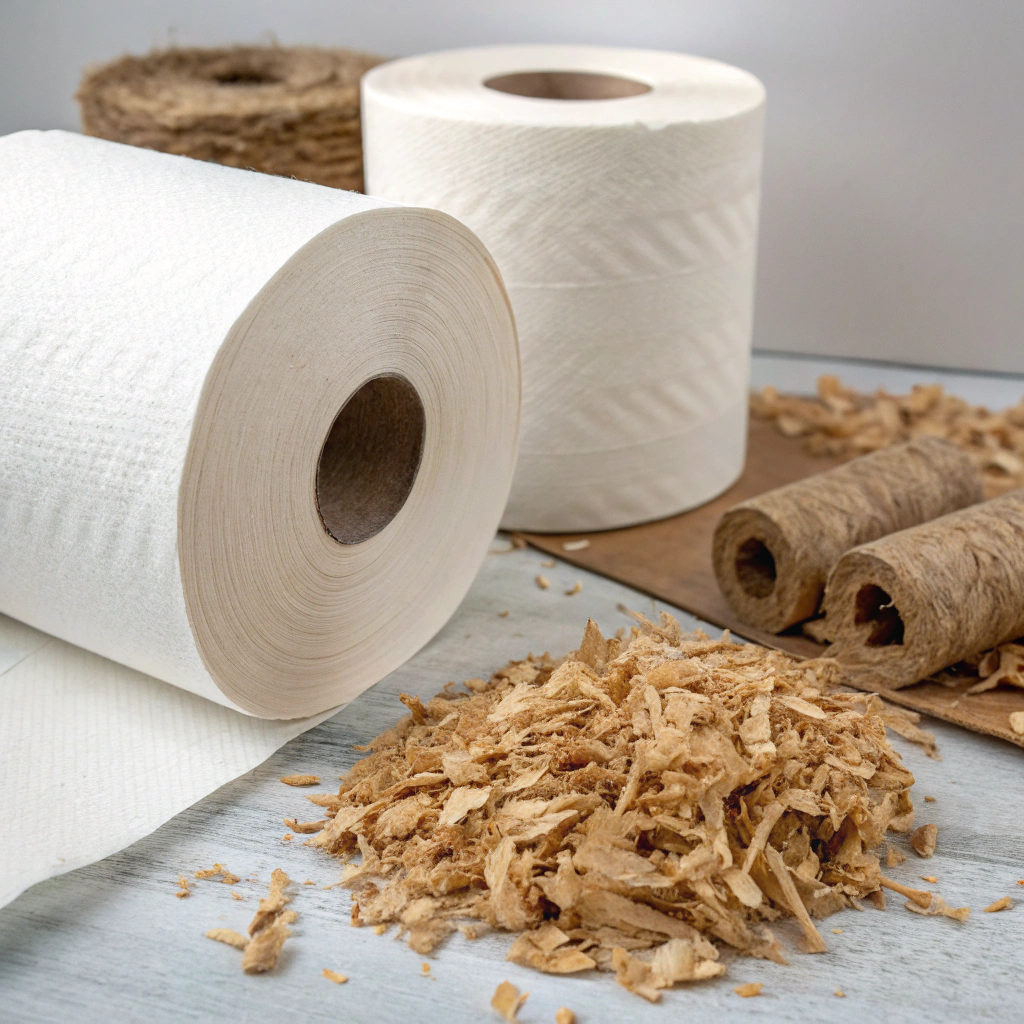
Toilet paper looks simple, but many people worry about where the wood comes from. They fear forest damage, waste, and hidden costs to nature.
Most toilet paper comes from managed forests or recycled sources, where trees are grown, harvested, and replanted under controlled systems to keep long-term supply and forest balance.
Many buyers stop at the shelf and never ask deeper questions. But when you understand the source of the fiber, you see why quality, price, and sustainability are closely linked. This knowledge also helps importers, wholesalers, and brand owners make better decisions for long-term business.
Is toilet paper made from sustainable forests?
Many people believe toilet paper always destroys natural forests. This fear comes from old stories and poor practices in the past.
Today, most large-scale toilet paper is made from wood sourced from managed and certified forests that are planted, harvested, and replanted in planned cycles.

Sustainable forests are not wild forests. They are planned working forests. Trees are grown like crops, but on longer timelines. A tree may grow for 7 to 20 years before harvest, depending on species. After cutting, new trees are planted or regrow naturally. This cycle keeps land productive and stable.
In modern paper supply chains, forests are often certified. These certifications require rules on replanting, water use, soil protection, and worker safety. Forest owners must prove they do not destroy protected land or high-risk ecosystems. Without proof, pulp mills cannot buy the wood.
Another point many people miss is yield. Fast-growing trees used for paper can produce far more fiber per hectare than slow-growing natural forests. This means less land is needed to produce the same amount of toilet paper. In practice, this reduces pressure on untouched forests.
From a business view, sustainable forests are also about stability. Paper mills need steady fiber supply. Wild logging creates risk. Managed forests reduce price swings and supply breaks. That is why large manufacturers invest in long-term forestry contracts.
Below is a simple comparison of forest types used in paper supply:
| Forest Type | Management Style | Environmental Risk | Supply Stability |
|---|---|---|---|
| Natural forest | Minimal control | High | Low |
| Managed plantation | Planned harvest | Low | High |
| Mixed-use forest | Partial control | Medium | Medium |
When buyers ask whether toilet paper comes from sustainable forests, the honest answer is yes, for most mainstream products. The real difference is how well the forest is managed and verified.
What tree species are used in toilet paper?
Many assume toilet paper comes from any random tree. This is not true. Only certain trees work well for soft, strong paper.
Toilet paper is mainly made from softwood and hardwood species such as pine, eucalyptus, and spruce because their fibers balance strength and softness.
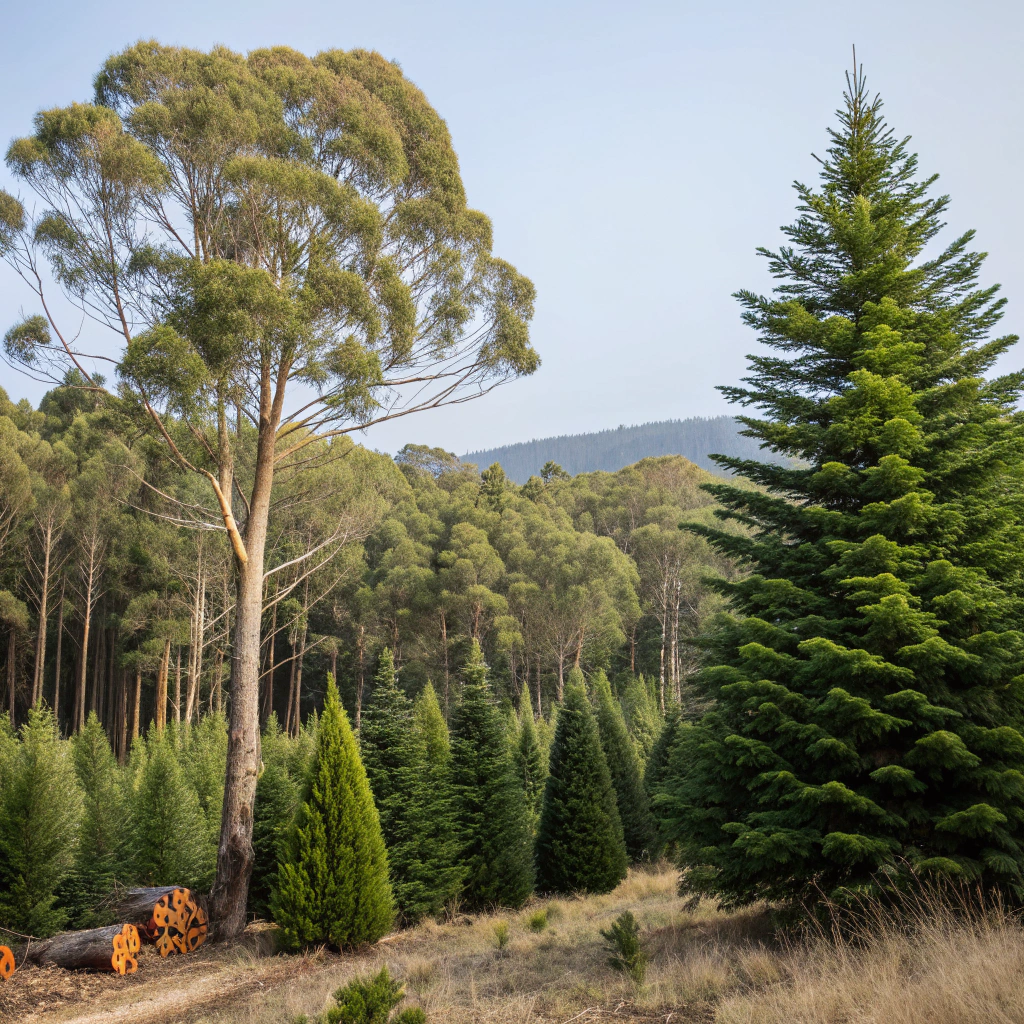
Softwood trees like pine grow tall and straight. Their fibers are long. Long fibers give paper strength. They help toilet paper hold together when wet. This is important for use and safety.
Hardwood trees like eucalyptus grow faster and have short fibers. Short fibers create smooth surfaces. They improve softness and comfort. Most toilet paper blends both fiber types to get the right balance.
Different regions favor different trees. Climate, soil, and water decide what grows best. For example, eucalyptus grows fast in warm areas. Pine grows well in cooler zones. Mills choose species that grow locally to reduce transport cost.
Fiber choice also affects cost and performance. Long fiber pulp costs more but adds strength. Short fiber pulp costs less and adds softness. Manufacturers adjust the mix based on product level.
Here is a simple overview:
| Tree Species | Fiber Length | Main Benefit | Common Use |
|---|---|---|---|
| Pine | Long | Strength | Core layers |
| Spruce | Long | Tear resistance | Premium rolls |
| Eucalyptus | Short | Softness | Surface layers |
| Birch | Short | Smooth feel | Facial and tissue |
Another factor is processing efficiency. Some trees require less chemical treatment. This lowers energy use and waste. Mills often test pulp blends to reduce cost while keeping quality stable.
From experience, buyers who understand fiber mix can better compare prices. Two rolls may look the same but perform very differently due to fiber choice. This is why asking about raw material is not just a marketing question. It is a quality question.
Are alternative fibers used in toilet paper?
Wood is common, but it is not the only option. Many buyers now ask about non-wood fibers.
Yes, toilet paper can also be made from bamboo, recycled paper, and agricultural fibers, each with different cost, feel, and environmental trade-offs.
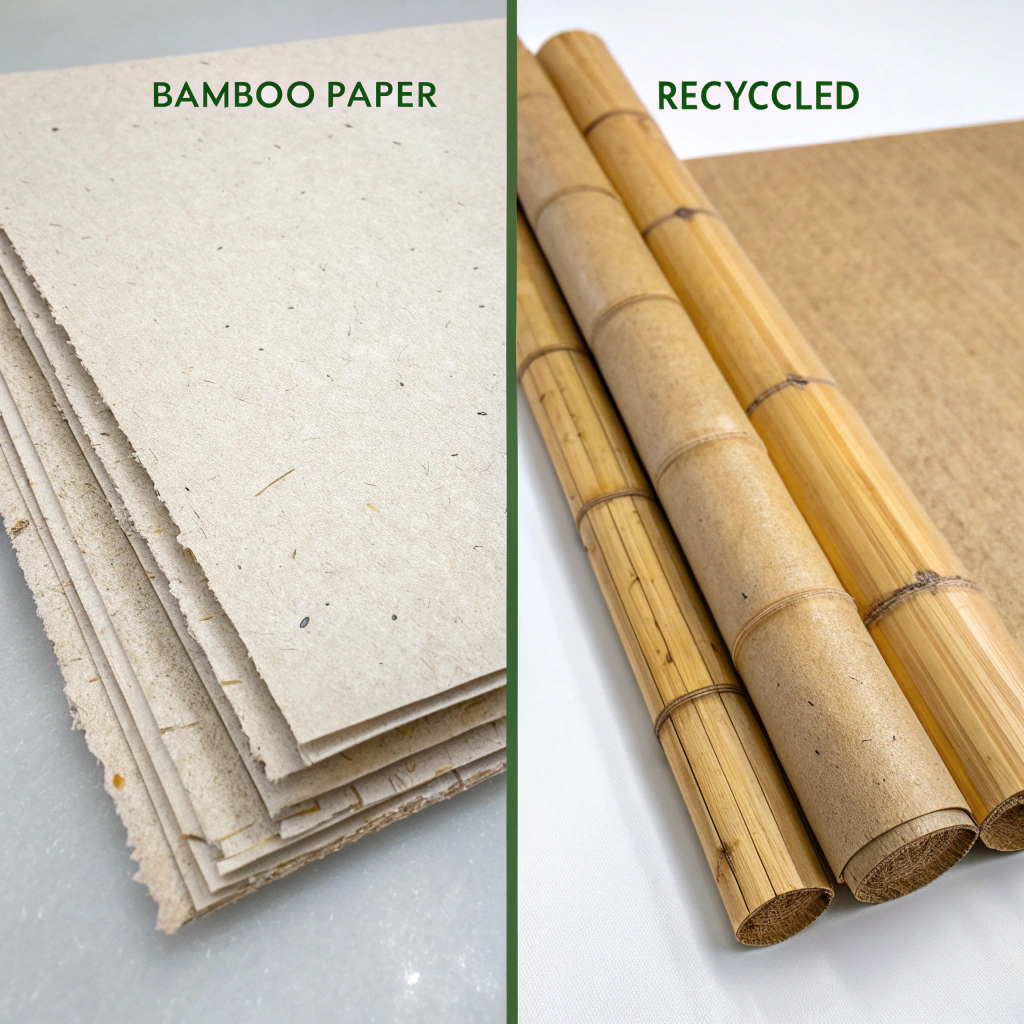
Bamboo is one popular alternative. It grows very fast. Some species grow over one meter per day. Bamboo does not need replanting after harvest. It regrows from the same root. This makes it attractive for sustainability claims.
However, bamboo fiber is naturally hard. It needs more processing to become soft. This uses more energy and chemicals. Bamboo paper can feel less smooth if not well processed. Cost also depends on location and supply chain.
Recycled paper is another option. It uses waste paper as raw material. This reduces landfill waste and lowers tree use. But recycled fiber is shorter and weaker. It cannot be recycled forever. After several cycles, fibers break down and must be replaced with fresh pulp.
Agricultural fibers like wheat straw or sugarcane bagasse are also used in some regions. These fibers come from farm waste. They reduce burning and waste. But supply is seasonal. Quality can vary a lot. Large-scale supply is still limited.
Below is a comparison of alternative fibers:
| Fiber Type | Renewability | Softness | Strength | Cost Stability |
|---|---|---|---|---|
| Bamboo | High | Medium | Medium | Medium |
| Recycled paper | Medium | Low | Low | High |
| Bagasse | Medium | Medium | Medium | Low |
| Wheat straw | Medium | Low | Low | Low |
From a buyer view, alternative fibers are not always better. Each has limits. Many successful products use blends. For example, recycled pulp mixed with virgin pulp improves strength. Bamboo mixed with wood pulp improves softness.
The best choice depends on market needs. Retail brands focus on story and image. Commercial buyers focus on strength and cost. Understanding fiber limits helps avoid wrong promises and customer complaints.
How is wood processed into toilet paper?
Many people see toilet paper as a simple product. The process behind it is more complex than expected.
Wood is turned into toilet paper through pulping, cleaning, refining, sheet forming, drying, and converting into finished rolls.
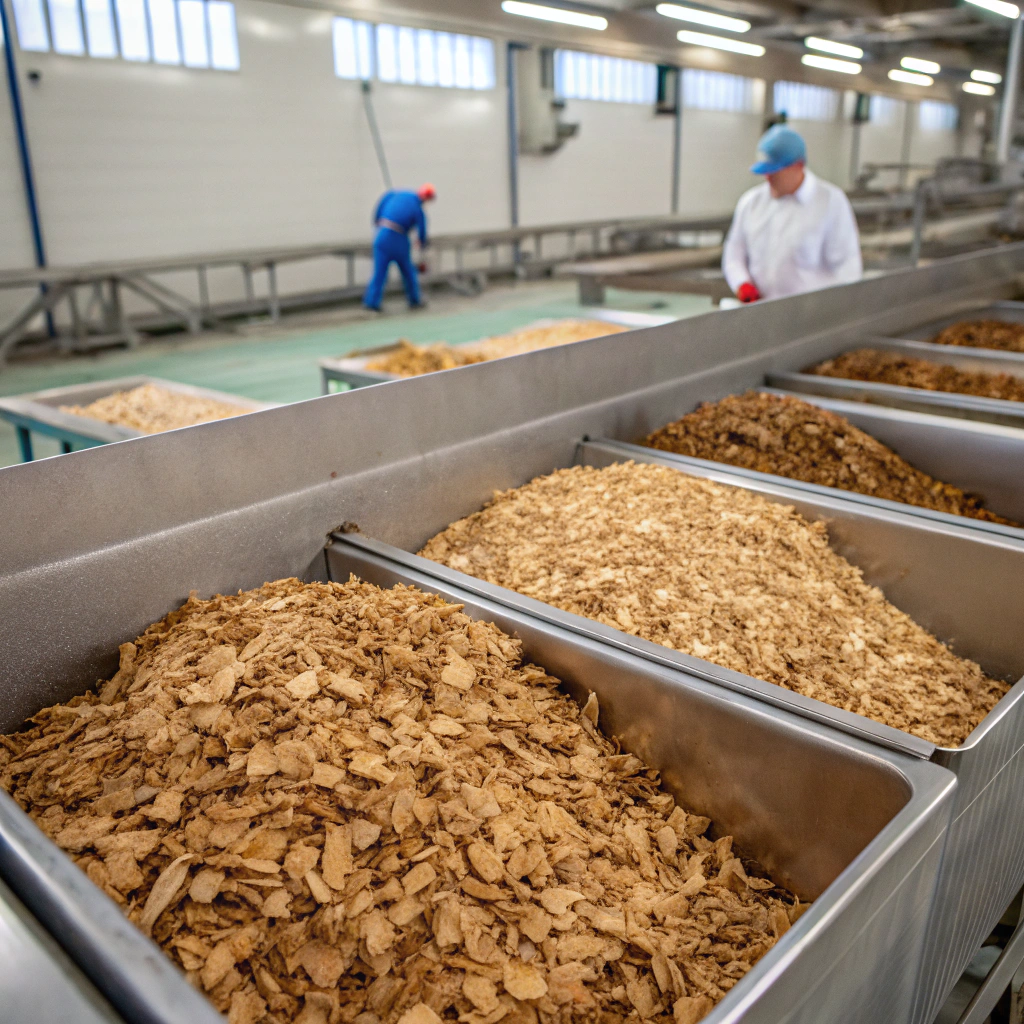
The process starts with logs or chips. Bark is removed. Clean wood chips are cooked in large tanks. Heat and chemicals separate fibers. This creates pulp. The pulp is washed to remove impurities.
Next comes refining. Fibers are beaten gently. This helps them bond better. Refining affects softness and strength. Too much refining makes paper hard. Too little makes it weak. This step requires experience.
The pulp is then mixed with water. It flows onto a moving screen. Water drains away. Fibers form a thin sheet. This sheet passes through large heated rollers. It dries and becomes paper.
After drying, the paper is wound into large rolls called jumbo rolls. These rolls are sent to converting lines. Machines emboss, perforate, cut, and rewind paper into small rolls.
Quality control runs through every step. Thickness, weight, absorbency, and strength are tested. Even small changes in pulp mix or moisture affect results.
Here is a simplified process flow:
| Step | Purpose | Key Control Point |
|---|---|---|
| Pulping | Separate fibers | Chemical balance |
| Washing | Clean pulp | Water purity |
| Refining | Improve bonding | Fiber damage |
| Forming | Create sheet | Even thickness |
| Drying | Remove water | Energy use |
| Converting | Final rolls | Size accuracy |
From a production view, toilet paper is about balance. Softness fights strength. Speed fights quality. Cost fights stability. Good factories manage these conflicts through systems, not shortcuts.
Understanding this process helps buyers judge factories better. It explains why price gaps exist and why stable suppliers matter more than short-term savings.
Conclusion
Toilet paper starts with forests, fibers, and careful processing. When the source is clear and controlled, quality stays stable and supply stays reliable. Knowing the origin helps buyers choose better, not just cheaper.