Skip to content
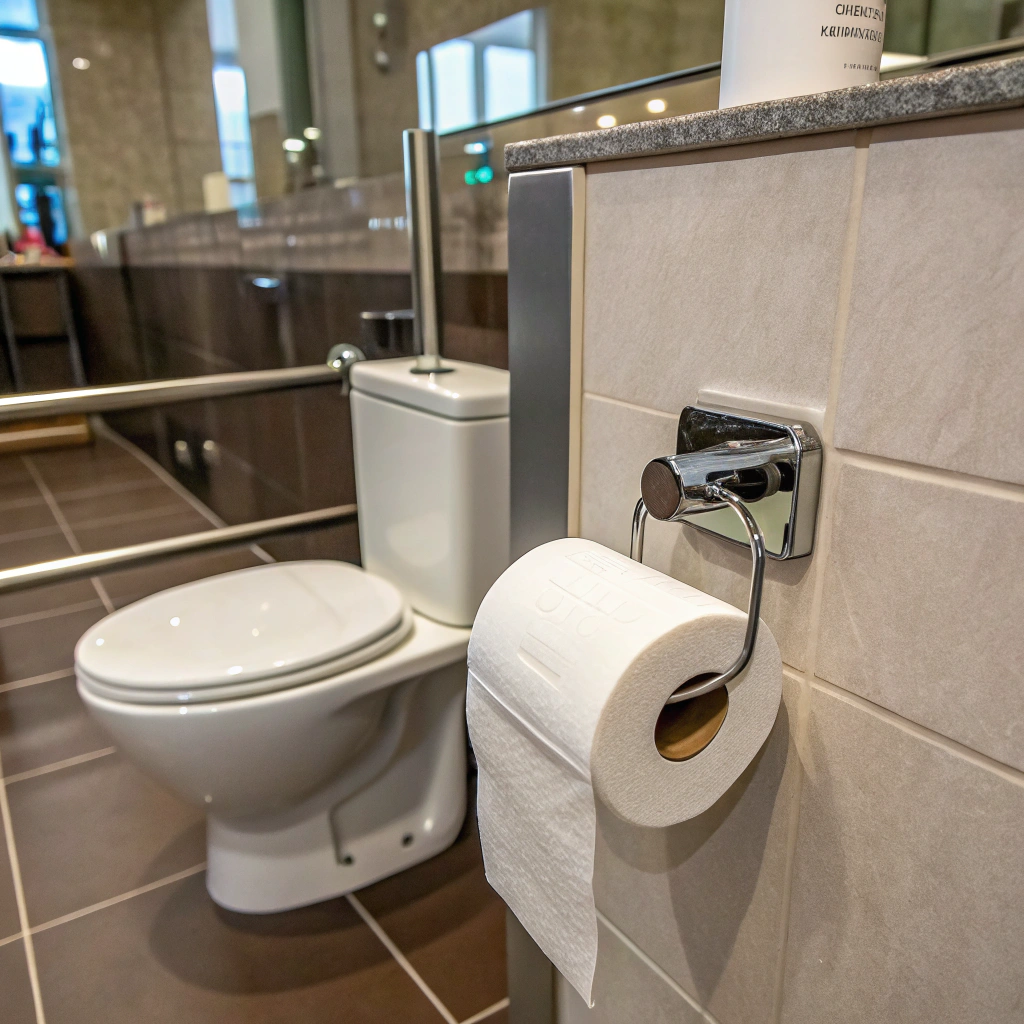
Many bathrooms look finished, yet daily use still feels awkward. Reaching too far or knocking things over is common. The real problem is often the toilet paper holder location. When the holder is wrong, comfort drops, habits break, and small spaces feel even smaller.
The best place for a toilet paper holder is within easy arm reach while seated, at a height and position that feels natural, safe, and simple for daily use. This placement reduces strain, keeps the bathroom clean, and supports good habits over time.
A holder may look like a small detail. In real life, it affects comfort, safety, and flow. Once the basics are clear, choosing the right spot becomes much easier.
Is Wall Placement Better Than Freestanding Holders?
Wall-mounted holders and freestanding holders both exist for a reason. Yet they serve very different needs. Choosing the wrong type often leads to clutter, wasted space, or daily frustration.
Wall placement is usually better because it saves floor space, stays stable, and keeps toilet paper within reach without movement. Freestanding holders work best only when drilling is not possible or layouts change often.
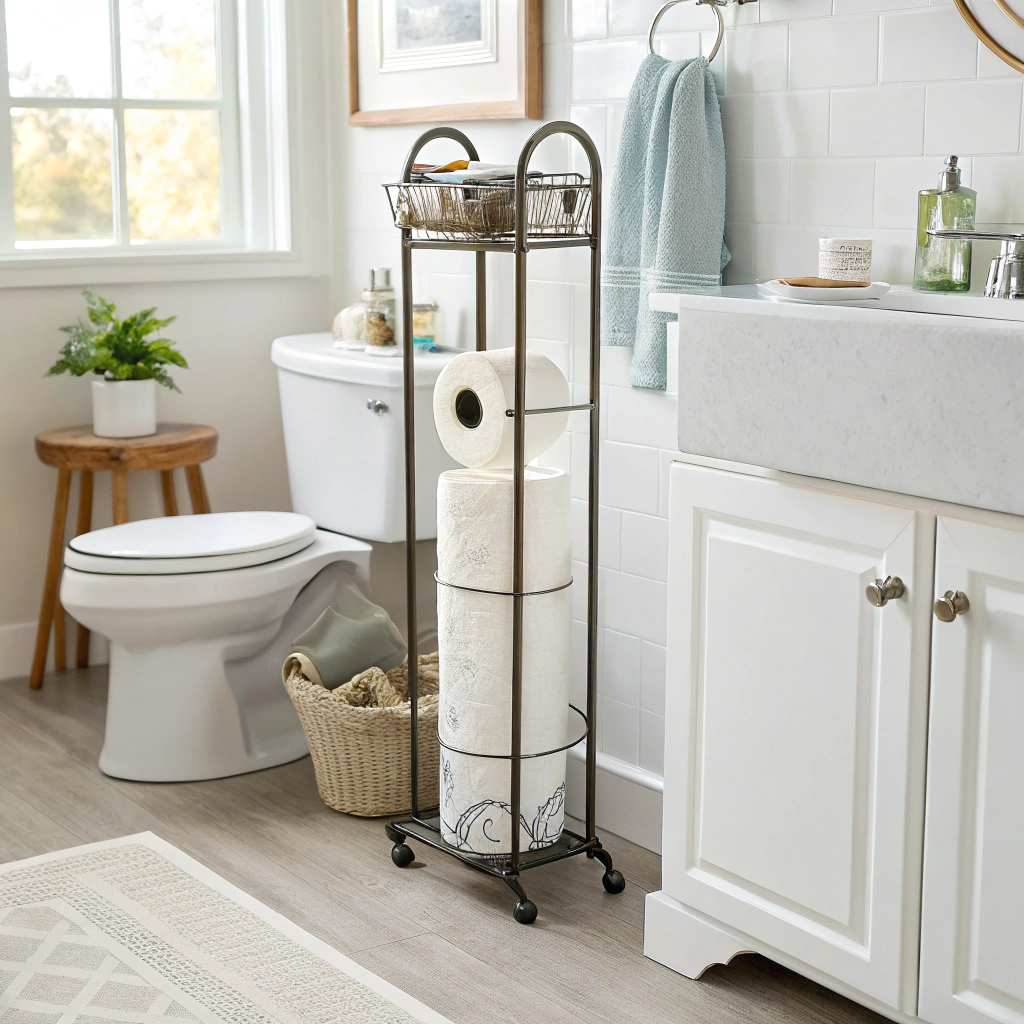
Wall-mounted holders fix one key problem first: movement. A holder attached to the wall does not slide, tip, or drift. In small or busy bathrooms, this stability matters. When users reach for paper, they expect it to stay in place. This becomes even more important in homes with children, elderly users, or commercial restrooms.
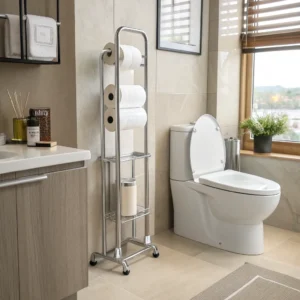
Freestanding holders rely on weight and balance. In theory, they are flexible. In practice, they often get bumped by feet, cleaning tools, or doors. Over time, they drift away from the toilet. This forces users to reach further than needed. That reach may seem small, but repeated daily use makes it noticeable.
Space and layout impact
Wall placement frees up floor space. This makes cleaning easier. It also reduces visual clutter. In narrow bathrooms, every inch matters. A freestanding holder can block walking paths or sit too close to the toilet base.
In contrast, wall holders sit above the floor line. This creates a cleaner look. It also allows better use of corners and tight side walls.
Installation limits
Freestanding holders win in one case: when walls cannot be drilled. Rental homes, temporary spaces, or tiled walls without anchors often limit options. In these cases, a heavy-base freestanding holder is acceptable.
Yet even then, placement should still follow wall-mounted logic. The holder should sit close to the seated hand position. If it ends up behind or far away, comfort is lost.
Hygiene and durability
Wall-mounted holders collect less dust and moisture. Floor units often trap water during cleaning. Over time, this leads to rust, stains, or loose parts.
Below is a simple comparison:
| Feature | Wall-Mounted Holder | Freestanding Holder |
|---|---|---|
| Stability | High | Medium to low |
| Floor space use | None | Requires space |
| Cleaning ease | Easy | Harder |
| Installation | Needs drilling | No drilling |
| Best for | Long-term use | Temporary setups |
For most bathrooms, wall placement remains the better choice. It supports daily habits with less effort and fewer problems.
What Is the Best Spot in Small Bathrooms?
Small bathrooms magnify every mistake. A few inches off can turn a normal action into an awkward one. This is why placement matters even more in compact spaces.
The best spot in a small bathroom is the nearest side wall, slightly forward of the toilet seat, at a height that allows easy reach without leaning. This balance keeps movement simple and avoids crowding.
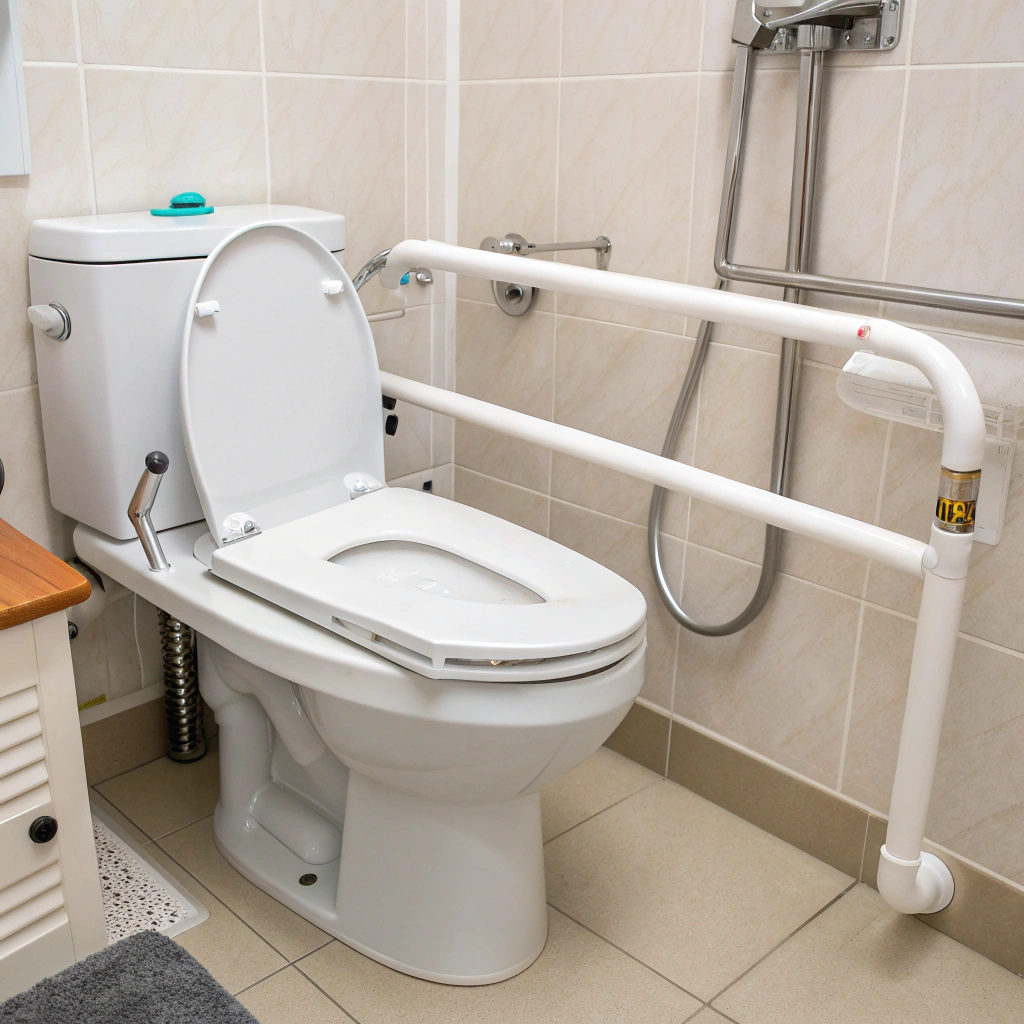
Small bathrooms often limit wall choices. There may be only one usable side wall. Sometimes that wall also hosts plumbing or cabinets. In such cases, the goal is not perfection. The goal is comfort within limits.
Distance from the toilet
The holder should sit close enough that the arm can reach without twisting the body. A common rule is placing it about one forearm length from the seated position. This keeps the spine straight and shoulders relaxed.
If the holder is too far forward, users lean. If it is too far back, users twist. Both actions feel minor at first. Over time, they become annoying.
Height matters more in small spaces
In tight bathrooms, vertical placement saves horizontal space. A holder placed too low forces bending. One placed too high causes shoulder lift.
Most users feel comfortable when the holder center sits slightly below elbow height while seated. This keeps motion natural and controlled.
Door and fixture conflicts
Doors are often ignored during planning. A holder placed behind a swinging door becomes useless. The same happens when towel bars or sinks block access.
Before drilling, always simulate real use. Sit, reach, and check clearance. This simple test prevents most mistakes.
Shared bathrooms
In homes where multiple people use the same bathroom, compromise is key. Average reach should guide placement, not extreme height or arm length. Neutral placement serves more users over time.
Below is a practical guide for small bathrooms:
| Factor | Recommended Approach |
|---|---|
| Side wall | Use closest clear wall |
| Forward position | Slightly ahead of seat |
| Height | Near seated elbow level |
| Door swing | Avoid overlap |
| Visual clutter | Keep lines clean |
In small bathrooms, good placement creates a sense of order. The room feels larger when movements stay simple and direct.
Can Holders Be Installed on Vanity Sides?
Vanity-side installation is often debated. Some see it as clever. Others see it as wrong. The truth depends on design, distance, and daily habits.
Yes, holders can be installed on vanity sides if the vanity is close enough to the toilet and does not force twisting or leaning. When done right, this option saves wall space and keeps access simple.
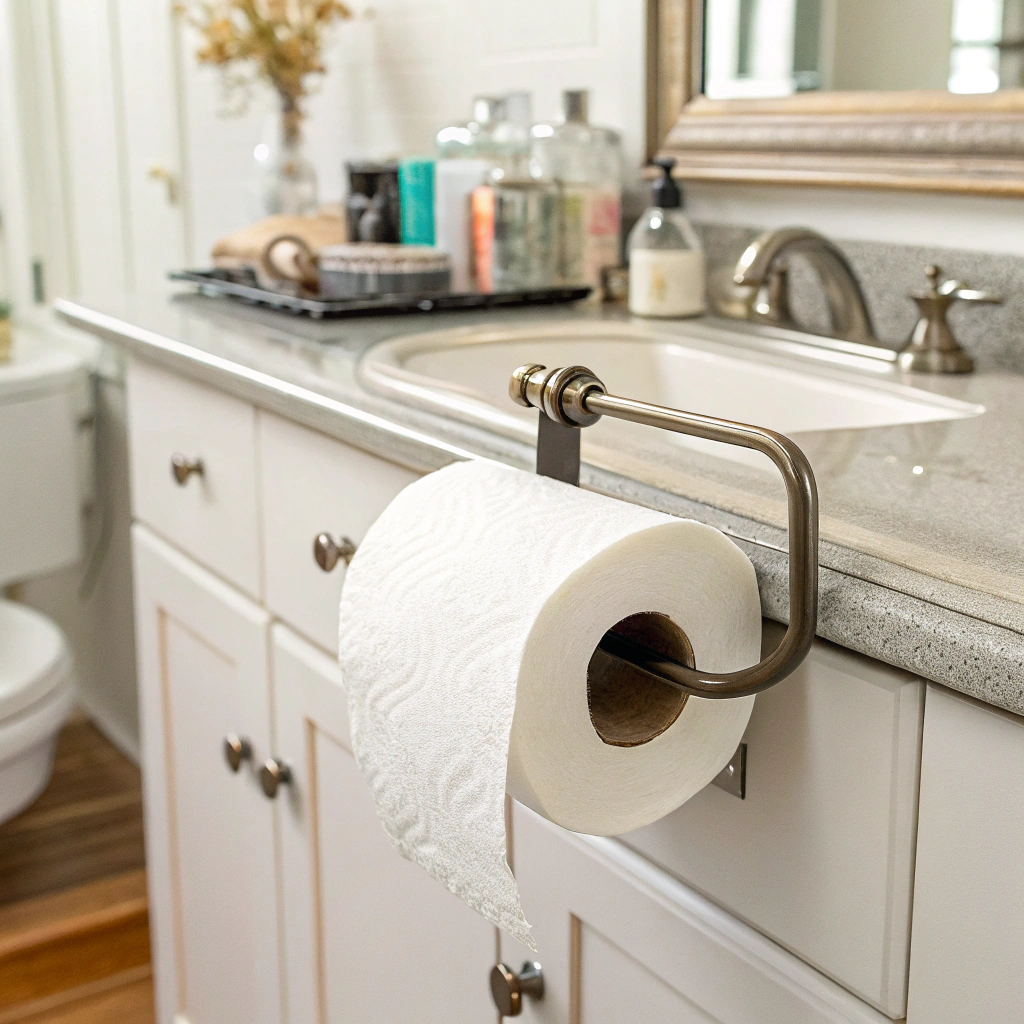
Many modern bathrooms combine toilet and vanity into one compact line. In these layouts, the side of the vanity may be the closest solid surface. Ignoring it limits options.
When vanity placement works
Vanity-side holders work best when the vanity sits right next to the toilet. The gap should be small. If the user can reach the vanity surface easily while seated, the holder may work there too.
The vanity panel must be solid. Thin boards or decorative panels may loosen over time. A firm mounting surface ensures long-term stability.
When it fails
Problems appear when the vanity is too far forward. This forces the user to lean or twist. It also happens when drawers or doors interfere with paper roll movement.
Another issue is moisture. Vanities near sinks get splashed. Over time, this can affect paper quality if the holder sits too close to the basin.
Design balance
From a visual view, vanity-side holders create a clean look. They reduce wall clutter and align fixtures into one zone. This appeals to modern and minimal designs.
Yet function should come first. A beautiful holder that feels awkward will not be appreciated for long.
Installation tips
- Place the holder on the vanity side panel, not the front.
- Avoid drawer zones and hinges.
- Keep enough clearance for roll changes.
- Test reach before final fixing.
Below is a quick comparison:
| Vanity Placement | Result |
|---|---|
| Close and aligned | Works well |
| Too far forward | Causes leaning |
| Near sink edge | Risk of moisture |
| Solid panel | Long-lasting |
| Thin board | May loosen |
Vanity-side installation is not wrong. It simply requires more care. When space is tight, it can be a smart solution.
Should Holder Placement Follow Ergonomic Rules?
Many people place holders by habit or guesswork. Ergonomic rules exist to remove guesswork and protect the body over time.
Yes, holder placement should follow basic ergonomic rules to reduce strain, improve comfort, and support natural movement. These rules are simple and apply to most users.
Ergonomics focuses on how the body moves. In bathrooms, small repeated actions matter. Reaching for paper happens many times a day. Even small strain adds up.
Natural arm movement
The arm should move sideways, not backward or upward. Side reach keeps the shoulder relaxed. Backward reach twists the spine. Upward reach lifts the shoulder.
This is why side wall placement slightly forward works best for most users.
Neutral posture
Good placement allows the body to stay neutral. Feet flat. Back straight. No leaning. No twisting. When posture stays neutral, comfort stays high.
Children and elderly users benefit most from this. Stable posture reduces slip risk and improves balance.
Standard ranges
While people differ, shared bathrooms need averages. Ergonomic studies suggest keeping frequently used items within easy reach zones. Toilet paper is one of those items.
Placing the holder too far from this zone creates unnecessary movement.
Adaptation for special needs
In accessible bathrooms, ergonomic rules become even more important. Wheelchair users require different heights and distances. In these cases, side reach and clear knee space guide placement.
Even in homes, thinking about future needs is wise. Good ergonomics age well.
Simple checklist
Before final placement, check:
- Can the paper be reached without leaning?
- Does the arm move sideways, not backward?
- Is the roll easy to change?
- Is the holder clear of obstacles?
If all answers are yes, placement likely follows ergonomic logic.
Conclusion
Placing a toilet paper holder is a small choice with daily impact. The right spot improves comfort, safety, and flow. Wall-mounted, side-reach, and ergonomic placement work best for most bathrooms.