Skip to content
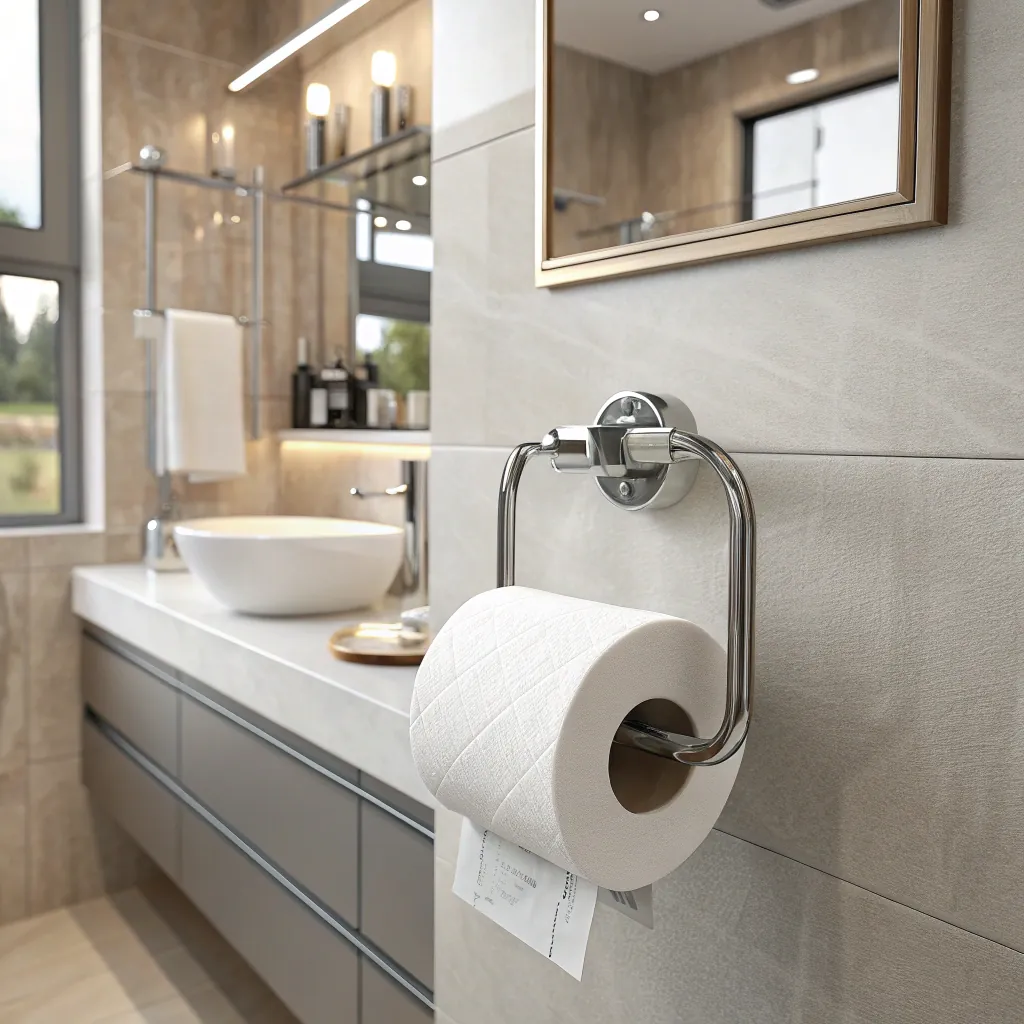
The toilet paper roll holder is easy to ignore. Many people never ask who invented it. But small problems create big daily pain when they stay unsolved. Bathroom habits changed fast, yet tools lagged behind for years.
The toilet paper roll holder was invented to solve storage, hygiene, and ease-of-use problems that appeared when toilet paper moved from loose sheets to paper rolls in the late nineteenth century. Its invention followed changes in home design, plumbing, and daily routines.
The story of this object is not about one genius moment. It is about many small needs coming together. Once paper rolls entered homes, people needed a clean and stable way to use them. That simple need pushed inventors, builders, and users to rethink bathroom hardware.
When was the toilet paper holder first patented?
The date of the first toilet paper holder patent matters because it shows when people stopped treating toilet paper as loose paper and started treating it as a fixed bathroom product.
The first known patent for a toilet paper roll holder was granted in 1891 in the United States, shortly after perforated toilet paper rolls became common.
At that time, indoor plumbing was spreading across cities. Bathrooms were moving indoors. Homes started to have private toilets instead of shared outdoor spaces. This shift changed how people thought about cleanliness and comfort.
Early toilet paper use before holders
Before roll holders, toilet paper did not look like it does today. Many households used:
- Loose sheets sold in stacks
- Old newspapers or catalogs
- Wrapped paper stored in drawers or boxes
These methods worked, but they had problems. Paper could fall on the floor. It could get wet. It could tear unevenly. People wanted more control.
When perforated rolls entered the market, they solved tearing issues but created a new one. Where should the roll go?
The 1891 patent and its purpose
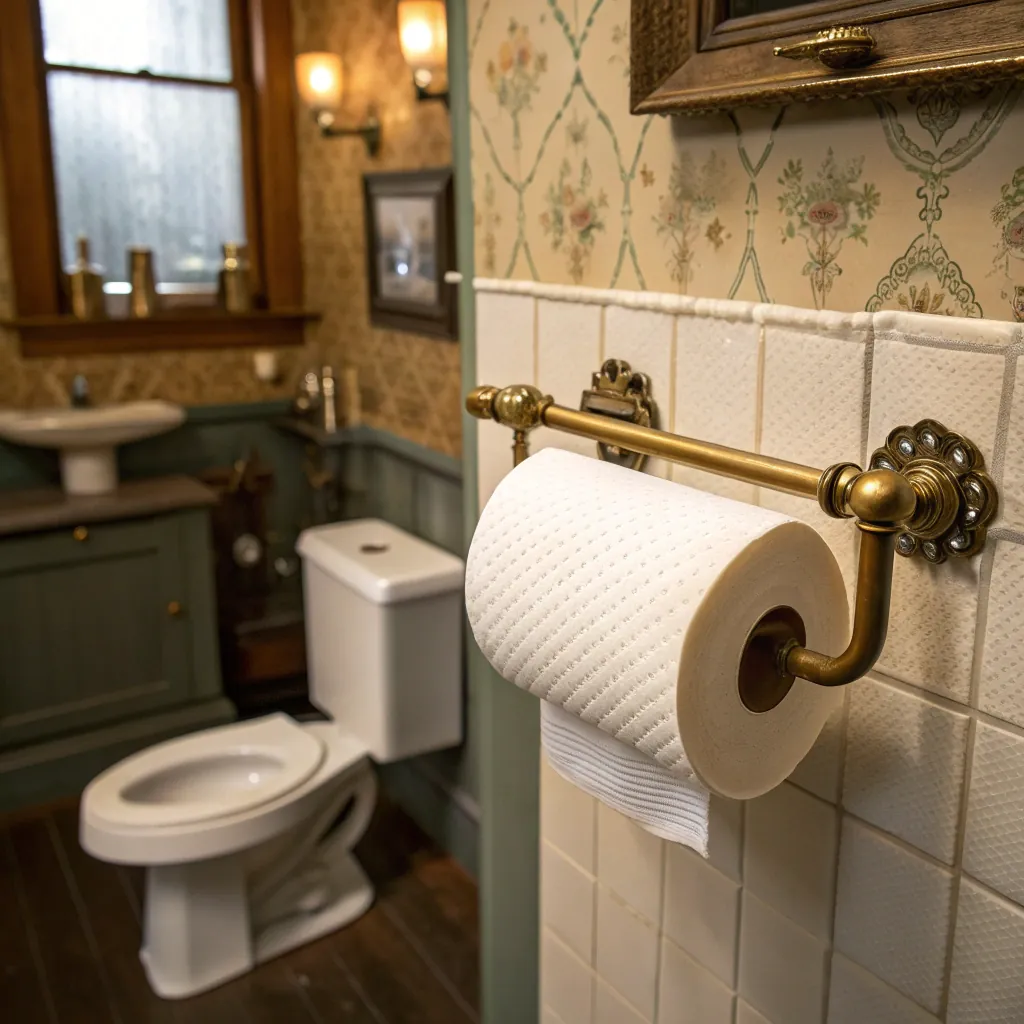
The 1891 patent described a wall-mounted device that could hold a paper roll and allow smooth rotation. The design was simple. A rod passed through the roll. The rod rested in brackets fixed to the wall.
This idea may sound obvious today. But at the time, it solved several issues at once:
- It kept paper off the floor
- It allowed one-hand use
- It reduced waste from tearing too much paper
Why patents appeared at that time
Patents usually appear when three things happen together:
- A new product enters daily life
- Many people face the same small problem
- Manufacturing allows mass production
The toilet paper roll holder fit all three. By the early 1890s, toilet paper rolls were no longer rare. Builders needed standard solutions. Hardware makers saw a chance to sell more fixtures.
Early holder materials and styles
Early holders were not plastic. They were made from materials already used in homes.
| Material | Reason for Use | Common Location |
|---|---|---|
| Cast iron | Strong and cheap | Public buildings |
| Brass | Rust-resistant | Middle-class homes |
| Wood | Easy to shape | Rural homes |
| Porcelain | Decorative | High-end homes |
These holders matched other bathroom fixtures like towel bars and soap dishes. Bathrooms were becoming places of pride, not just function.
The first patent did not end invention. It started a chain reaction. Each new bathroom design created new holder designs.
What led to the invention of roll holders?
The invention of the roll holder was not random. It came from clear social and technical pressure.
The invention of roll holders was driven by changes in hygiene standards, indoor plumbing, and the mass production of toilet paper rolls.
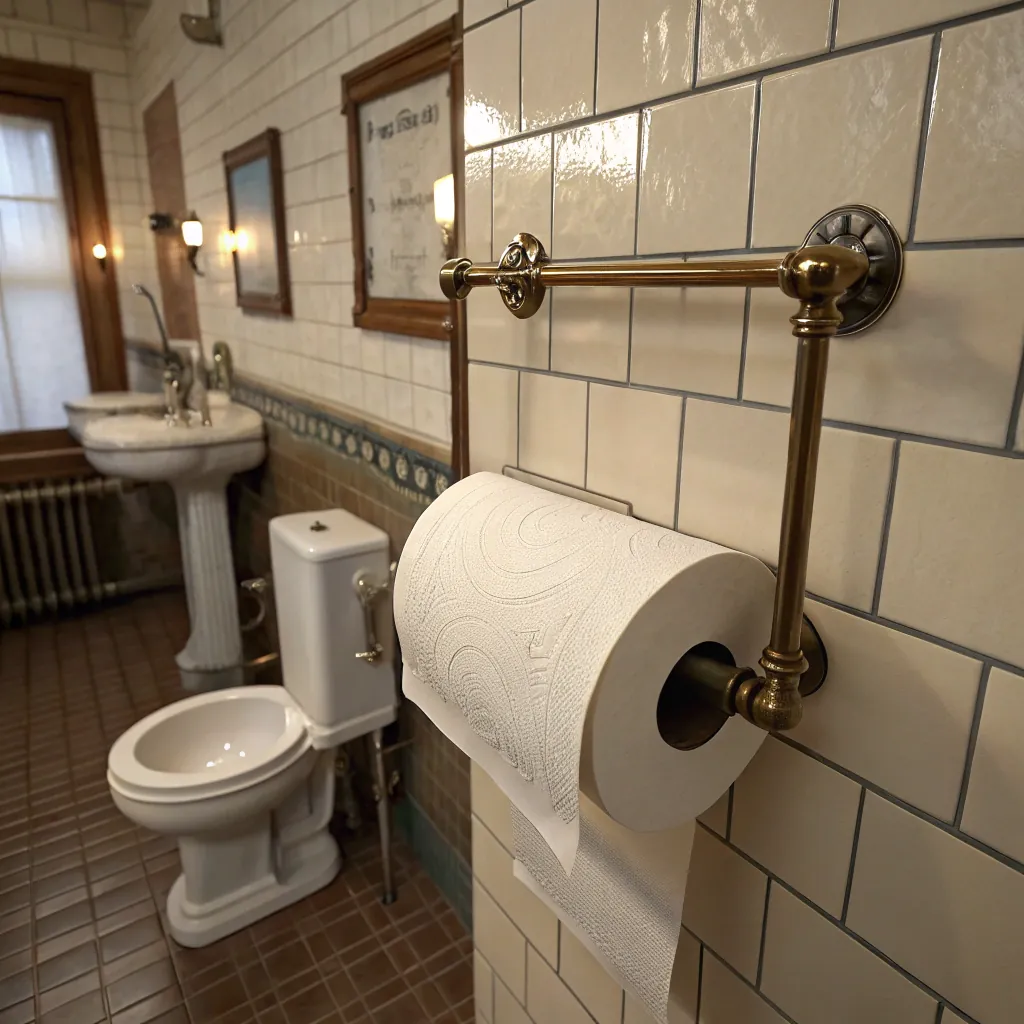
When daily habits change, tools must change too. Toilet paper roll holders appeared because older storage methods failed under new conditions.
Hygiene concerns in the late 1800s
In the nineteenth century, disease awareness increased. Germ theory became widely accepted. People began to care more about clean surfaces and clean hands.
Loose toilet paper caused problems:
- It touched dirty surfaces
- It absorbed moisture from the air
- It was handled by many people
A holder reduced contact. It kept paper suspended and cleaner. This mattered in both homes and public spaces.
Indoor plumbing changed behavior
Once toilets moved indoors, storage space changed. Outdoor privies had shelves and boxes. Indoor bathrooms had tiled walls and limited floor space.
Roll holders solved this layout problem. They used wall space instead of shelves. They fit small rooms.
Standardization of toilet paper rolls
Mass production demands standard size. Toilet paper companies settled on roll widths and core sizes. Once rolls became uniform, holders could be uniform too.
This allowed:
- Builders to install holders during construction
- Hotels to replace rolls easily
- Factories to produce holders at scale
Standardization reduced cost and increased adoption.
Influence of public buildings
Public restrooms played a big role. Schools, offices, and train stations needed:
- Durable fixtures
- Easy refilling
- Less waste
Loose paper caused too much mess. Roll holders limited access to paper length and reduced theft.
Social comfort and privacy
As bathrooms became private spaces, comfort mattered more. People wanted smooth, predictable use. A holder allowed controlled tearing without noise or struggle.
Below is a simple comparison that shows why holders won.
| Storage Method | Cleanliness | Ease of Use | Waste Control |
|---|---|---|---|
| Loose stacks | Low | Medium | Low |
| Drawer storage | Medium | Low | Medium |
| Roll holder | High | High | High |
The roll holder was not luxury. It was a response to daily frustration.
How has the design of toilet roll holders evolved?
Design evolution shows how society changes. Toilet roll holders moved from pure function to style, safety, and branding.
Toilet roll holder design evolved from simple rods to enclosed, decorative, and multifunctional fixtures that reflect changing bathroom styles and user needs.
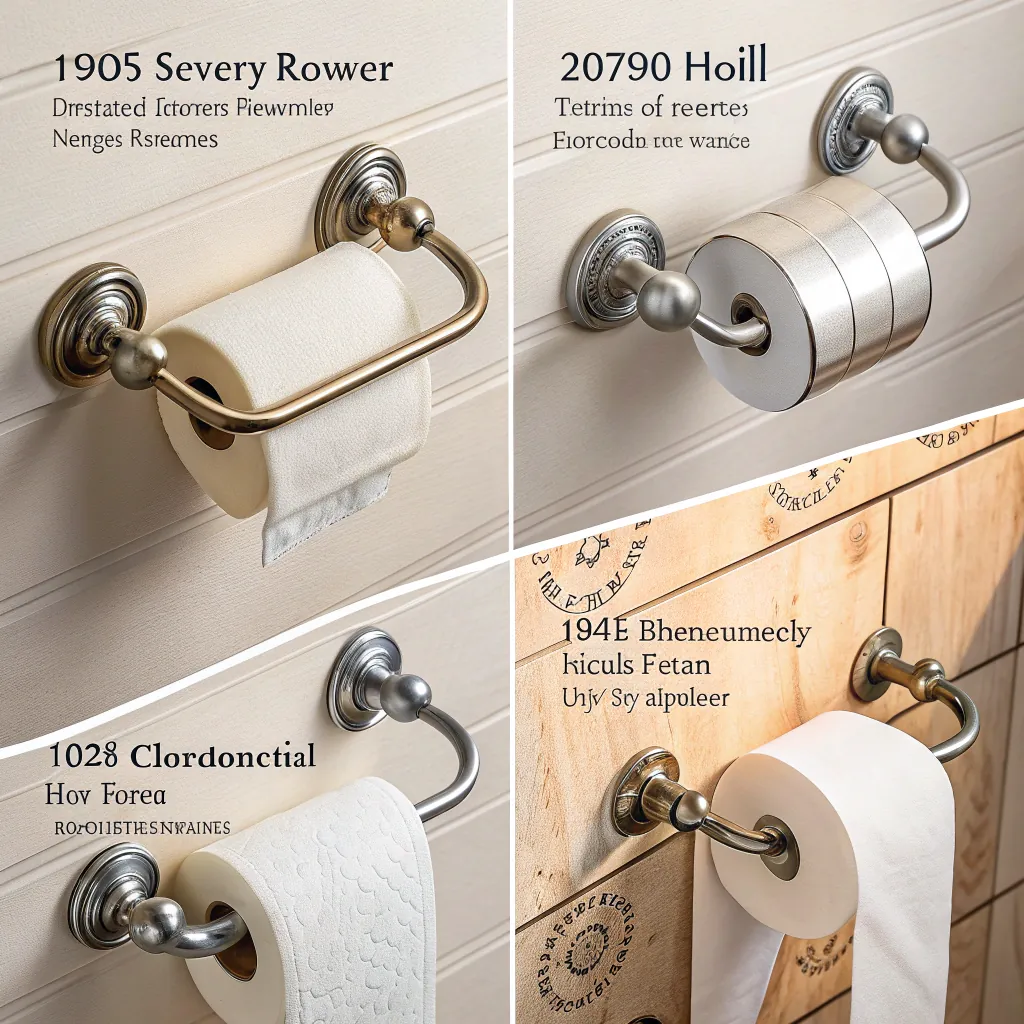
Each era left its mark on holder design.
Early twentieth century designs
Early designs stayed close to the original patent. Most were:
- Wall-mounted
- Exposed rolls
- Made from metal
These holders focused on strength. Appearance mattered, but durability came first.
Mid-century modern changes
By the 1950s and 1960s, bathrooms became design spaces. Color, shape, and symmetry mattered.
Holders started to include:
- Rounded edges
- Chrome finishes
- Matching sets with towel bars
Plastic also entered the market. It reduced cost and allowed new shapes.
Safety and child-friendly features
As households changed, safety concerns appeared. Sharp edges became less acceptable. Spring-loaded rods replaced fixed rods to make roll changes easier.
Designers added:
- Smooth curves
- Enclosed ends
- Flexible mounts
These changes reduced injury and frustration.
Enclosed and covered holders
Some users disliked seeing the roll. Covered holders solved this. They protected paper from splashes and added a cleaner look.
Covered holders became common in:
- Hotels
- Restaurants
- High-end homes
They also reduced paper exposure to humidity.
Commercial and industrial designs
Commercial spaces demanded different solutions. Jumbo roll holders appeared. These held larger rolls to reduce refill frequency.
Key design goals included:
- Lockable covers
- Theft prevention
- Easy maintenance
Below is a comparison of home and commercial holder design goals.
| Feature | Home Holders | Commercial Holders |
|---|---|---|
| Appearance | High priority | Medium priority |
| Durability | Medium | Very high |
| Roll size | Standard | Jumbo |
| Security | Low | High |
Branding and customization
In recent decades, holders became part of brand identity. Hotels and offices chose designs that matched their image. Some holders included logos or unique shapes.
This shift shows how even simple objects carry meaning.
Are there modern alternatives to traditional holders?
Modern bathrooms do not rely on one solution. New lifestyles and technologies created alternatives.
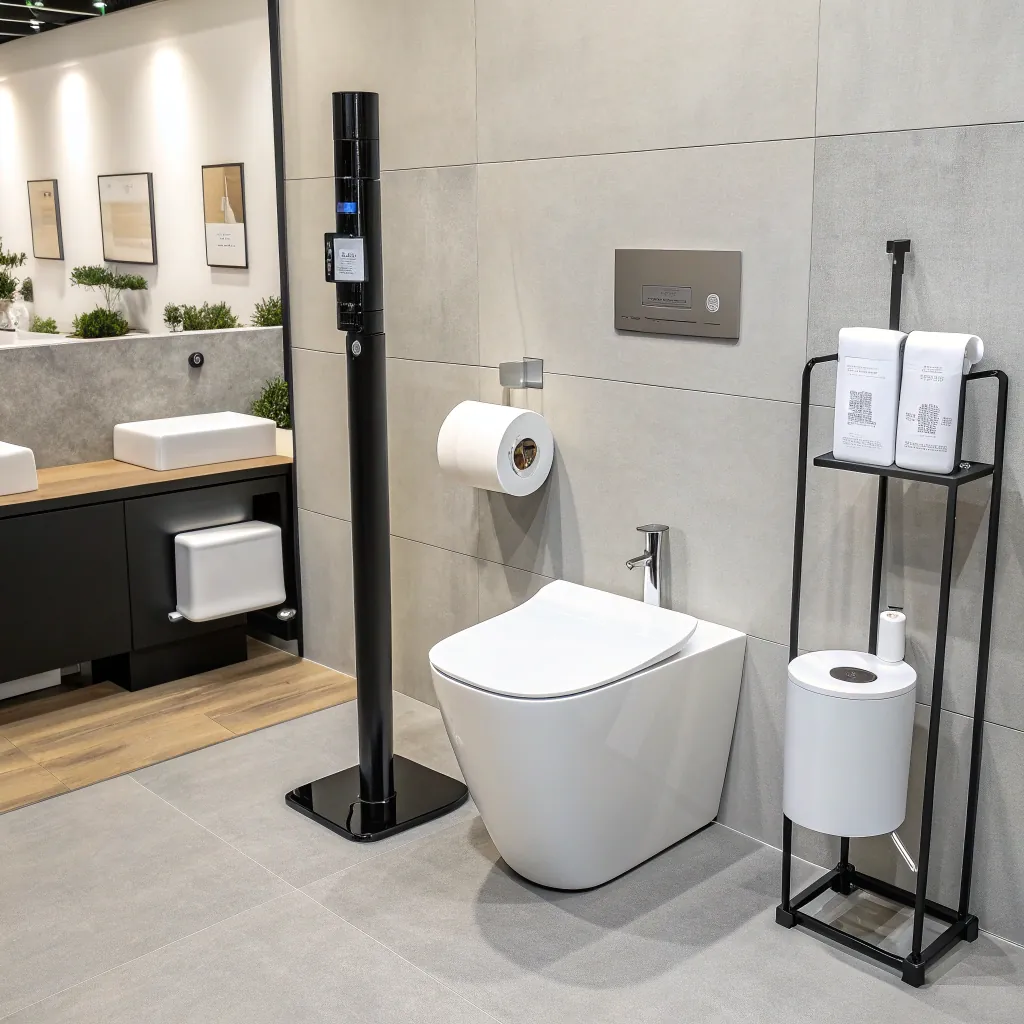
Modern alternatives to traditional toilet paper holders include freestanding stands, recessed holders, bidet systems, and smart bathroom fixtures designed for space, hygiene, and convenience.
These alternatives respond to different needs.
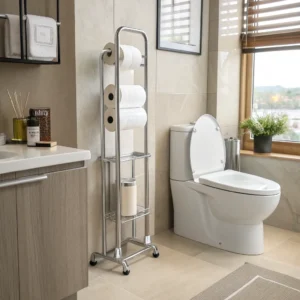
Freestanding toilet paper stands
Freestanding stands require no wall drilling. They suit renters and flexible layouts.
Benefits include:
- Easy placement
- Extra roll storage
- Simple replacement
They also fit modern minimalist styles.
Recessed wall holders
Recessed holders sit inside the wall. They save space and reduce visual clutter.
They are common in:
- Small bathrooms
- Luxury homes
- New constructions
However, they need planning during building.
Multi-roll and storage units
Some holders combine storage and dispensing. They store extra rolls below the active one.
This design reduces emergency shortages. It also improves organization.
Bidet systems and reduced paper use
Bidet systems changed the role of holders. In some homes, paper use dropped. Holders became secondary.
Designs adapted by:
- Holding fewer rolls
- Combining with towel holders
- Moving location
Paper did not disappear, but its role shifted.
Smart bathroom fixtures
Technology entered bathrooms slowly. Some modern fixtures include sensors and automated covers. These designs focus on hygiene and touch-free use.
While still rare, they show where the market may go.
Why traditional holders still survive
Despite alternatives, traditional holders remain popular because they are:
- Cheap
- Easy to install
- Easy to use
They also work across cultures and habits. No learning curve exists.
The roll holder may look unchanged, but its role continues to adapt.
Conclusion
The toilet paper roll holder was invented to solve real daily problems created by new habits and spaces. From its first patent to modern designs, it reflects how small tools shape comfort, hygiene, and routine in everyday life.