Skip to content

Choosing the wrong toilet paper roll size can lead to higher costs, storage issues, and frequent replacements. Many buyers focus on price alone and overlook roll dimensions.
Toilet paper rolls come in many sizes depending on their intended use. Household rolls are usually smaller, while commercial and jumbo rolls are much larger. Roll size often affects sheet count, usage frequency, storage needs, and overall value.
Many people assume all toilet paper rolls are similar. In reality, roll dimensions vary greatly between brands, markets, and applications. Understanding these differences helps wholesalers, retailers, hotels, offices, and consumers make better purchasing decisions.
What Are the Typical Size Ranges for Toilet Paper Rolls?
Many buyers compare prices without understanding roll dimensions. This often leads to incorrect cost calculations and poor purchasing decisions.
Typical toilet paper rolls range from small household rolls with 150–500 sheets to jumbo commercial rolls containing thousands of sheets. Roll diameter, width, and core size vary according to usage requirements.

When discussing toilet paper roll size, several measurements matter. Many people only look at the outside diameter. However, width, sheet count, sheet size, and core diameter are equally important.
Common Measurements Used for Toilet Paper Rolls
Manufacturers usually describe rolls using the following dimensions:
| Measurement | Typical Household Range | Typical Commercial Range |
|---|---|---|
| Roll Diameter | 9–13 cm | 18–30 cm |
| Roll Width | 9–10 cm | 9–10 cm |
| Core Diameter | 3–4 cm | 5–8 cm |
| Sheet Count | 150–500 sheets | 1,000–4,000+ sheets |
The household products found in supermarkets are generally compact and designed for home dispensers. Most consumers never notice the exact dimensions because the rolls fit standard holders.
Commercial buyers often focus on different factors. Hotels, office buildings, airports, schools, and shopping malls need rolls that last longer and reduce maintenance time.
Why Roll Diameter Matters
A larger diameter usually means more paper is wound onto the roll. This reduces replacement frequency.
For example:
- A small household roll may need replacement every few days.
- A medium roll may last one week.
- A jumbo roll can last several weeks in high-traffic facilities.
This difference becomes very important in commercial environments where labor costs matter.
Regional Differences
Roll sizes also vary by country.
Some markets prefer:
- Compact rolls for easier storage
- Larger rolls for better value perception
- Thicker paper with fewer sheets
- Thinner paper with higher sheet counts
During conversations with international buyers, it becomes clear that local preferences often influence product specifications more than technical standards.
Understanding "Big" and "Small"
A roll that appears larger does not always contain significantly more usable paper.
Several factors influence actual paper volume:
- Sheet thickness
- Embossing pattern
- Ply count
- Core size
Two rolls with identical diameters may contain different amounts of tissue.
That is why experienced buyers evaluate both dimensions and sheet counts before making purchasing decisions.
Do Household and Commercial Rolls Differ in Size?
Many first-time buyers assume commercial toilet paper is simply a larger version of household tissue. The reality is much more complex.
Yes, household and commercial toilet paper rolls differ significantly in diameter, sheet count, core size, and intended usage. Commercial rolls are designed for efficiency, while household rolls prioritize convenience and compatibility with home dispensers.

The difference between household and commercial toilet paper goes beyond appearance.
Manufacturers design each type for a specific environment.
Household Toilet Paper Characteristics
Home users typically prioritize:
- Comfort
- Softness
- Attractive packaging
- Easy dispenser compatibility
Household rolls often feature:
- Smaller cores
- Softer tissue
- Decorative embossing
- Premium packaging
The goal is user comfort rather than maximum efficiency.
Commercial Toilet Paper Characteristics
Commercial users have different priorities.
Facility managers often care about:
- Lower maintenance costs
- Reduced replacement frequency
- Storage efficiency
- Lower cost per sheet
As a result, commercial rolls are usually much larger.
Side-by-Side Comparison
| Feature | Household Roll | Commercial Roll |
|---|---|---|
| Primary User | Families | Businesses |
| Diameter | Smaller | Larger |
| Core Size | Smaller | Larger |
| Sheet Count | Lower | Higher |
| Packaging | Retail-focused | Bulk-focused |
| Replacement Frequency | More frequent | Less frequent |
Why Commercial Rolls Use Larger Cores
One question often arises when comparing products.
Why do commercial rolls have larger centers?
The answer relates to dispensing systems.
Commercial dispensers require:
- Better roll stability
- Smoother rotation
- Faster replacement
A larger core helps achieve these goals.
Storage Considerations
Household users generally buy smaller quantities.
Commercial buyers may order:
- Full pallets
- Full containers
- Long-term inventory
Storage efficiency becomes important at scale.
Larger rolls reduce the number of individual units that staff must handle.
Usage Environment Matters
The environment often determines the best roll size.
Examples include:
- Hotels
- Restaurants
- Hospitals
- Schools
- Office buildings
- Shopping centers
Each environment experiences different traffic levels.
A busy airport restroom may consume more paper in one day than a family home uses in a month.
This is why commercial rolls continue growing in popularity among institutional buyers.
Are Larger Rolls Always More Cost-Effective?
Many people automatically assume bigger rolls provide better value. This assumption is not always correct.
Larger rolls are often more cost-effective because they contain more paper and reduce replacement labor. However, factors such as sheet quality, storage costs, waste, and dispenser compatibility also affect overall value.

Cost-effectiveness depends on more than roll size.
A larger roll may have a lower cost per sheet, but that does not automatically make it the best choice.
Understanding Cost Per Sheet
Experienced buyers often calculate:
Cost Per Sheet = Roll Price ÷ Sheet Count
This simple calculation creates a more accurate comparison than looking at roll price alone.
For example:
| Roll Type | Price | Sheets | Cost Per Sheet |
|---|---|---|---|
| Small Roll | $0.50 | 200 | $0.0025 |
| Medium Roll | $0.90 | 500 | $0.0018 |
| Jumbo Roll | $4.00 | 2500 | $0.0016 |
The larger roll appears more economical.
However, other factors must also be considered.
Hidden Costs
Several hidden costs can influence purchasing decisions.
Storage Costs
Large rolls require:
- Bigger warehouses
- Larger shelves
- More storage planning
Businesses with limited storage may prefer medium-sized products.
Compatibility Costs
A jumbo roll often requires:
- Commercial dispensers
- Installation expenses
- Maintenance costs
Without compatible dispensers, large rolls cannot be used efficiently.
Waste Management
In some locations, partially used rolls are discarded during cleaning schedules.
This practice can reduce the financial benefit of larger rolls.
Quality Versus Quantity
Not all tissue paper performs equally.
A cheaper large roll may use:
- Lower basis weight
- Lower absorbency
- Lower strength
Users may consume more sheets during each use.
In that case, apparent savings disappear.
When Larger Rolls Make Sense
Larger rolls are usually beneficial when:
- Traffic is high
- Labor costs are significant
- Storage space is available
- Appropriate dispensers exist
Examples include:
- Airports
- Hotels
- Stadiums
- Schools
- Office complexes
When Smaller Rolls Make Sense
Smaller rolls may remain the better choice for:
- Homes
- Small offices
- Luxury hospitality settings
- Premium washrooms
The best value comes from matching roll size to actual usage patterns rather than automatically choosing the largest option available.
Is Roll Size Linked to Sheet Count?
Many consumers believe a larger roll automatically means more sheets. While this is often true, the relationship is not always straightforward.
Roll size is usually linked to sheet count, but other factors such as sheet thickness, ply construction, embossing, and core size also affect the final roll dimensions.
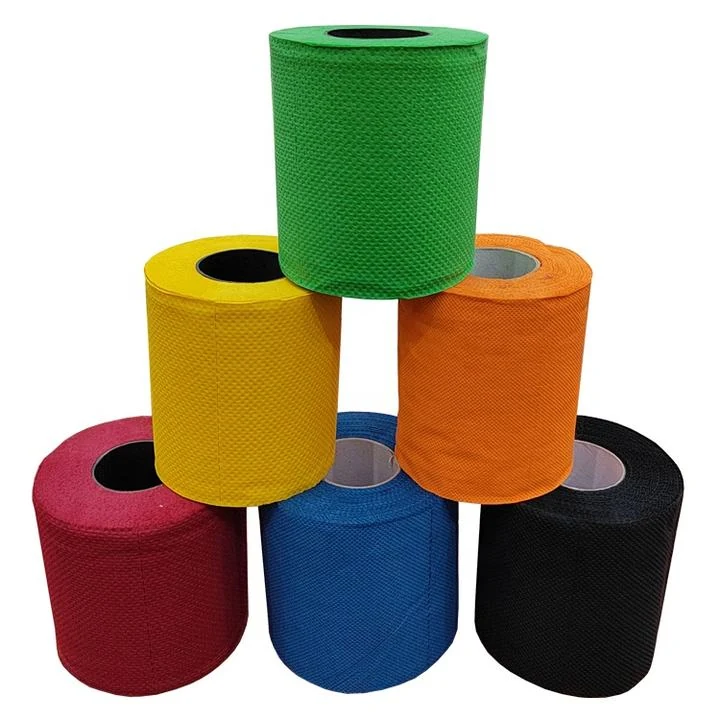
The connection between roll size and sheet count is important for both consumers and wholesale buyers.
A larger roll generally contains more paper. Yet the amount of paper depends on several manufacturing variables.
Factors That Influence Roll Size
Manufacturers can create larger rolls through different methods.
These include:
More Sheets
This is the most direct method.
Examples:
- 200 sheets
- 500 sheets
- 1000 sheets
- 3000 sheets
Adding sheets naturally increases roll diameter.
Thicker Sheets
Paper thickness also matters.
A roll with fewer thick sheets may appear larger than a roll containing many thin sheets.
Higher Ply Counts
Toilet paper commonly comes in:
- 1-ply
- 2-ply
- 3-ply
- 4-ply
Additional layers increase roll volume.
The Role of Embossing
Embossing creates texture patterns on tissue.
Benefits include:
- Improved softness
- Better appearance
- Enhanced absorbency
However, embossing also introduces air gaps.
This can make rolls appear larger without significantly increasing paper content.
Core Size Influence
The cardboard core occupies space inside the roll.
A larger core increases diameter while reducing the amount of tissue that can fit within a given size.
This is particularly noticeable in commercial products.
Why Sheet Count Remains Important
Many professional buyers focus on sheet count because it provides a more objective measurement.
Sheet count helps compare products regardless of:
- Brand
- Packaging style
- Embossing design
- Marketing claims
Evaluating Real Value
When comparing toilet paper rolls, several specifications should be reviewed together:
- Roll diameter
- Sheet count
- Sheet dimensions
- Ply count
- Tissue weight
- Core size
Looking at only one factor may produce misleading conclusions.
A larger roll often contains more sheets, but this is not guaranteed. Careful specification review provides a much clearer understanding of actual product value and expected performance.
Conclusion
Toilet paper roll sizes vary widely between household and commercial applications. Roll diameter, sheet count, ply construction, and core size all influence performance and value. Understanding these factors helps buyers choose products that balance cost, convenience, storage efficiency, and user satisfaction.