Many buyers assume toilet paper in the United States comes from one source. That idea creates confusion when prices change, supply slows down, or quality differs between brands.
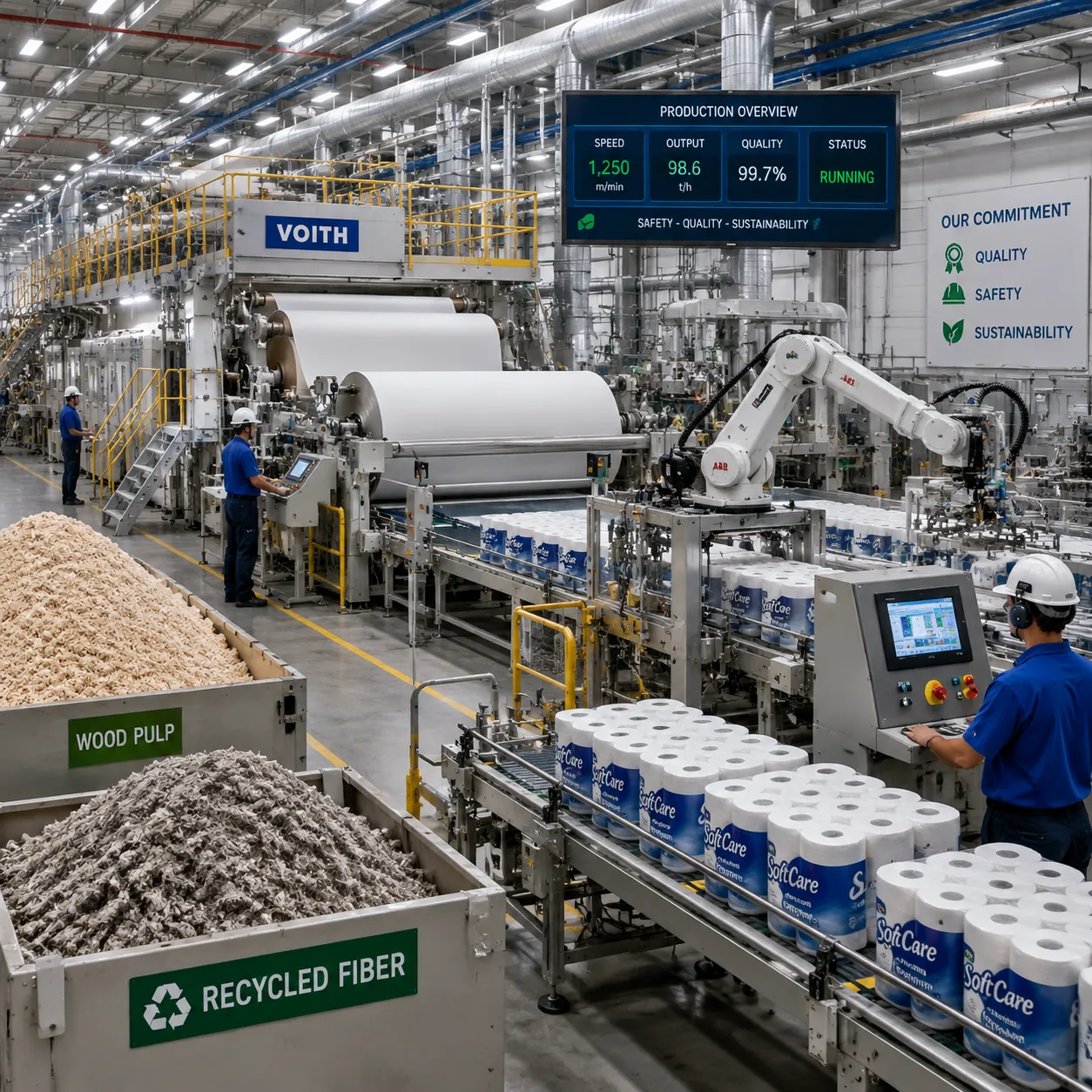
Most toilet paper sold in the United States is produced inside the country. American factories turn wood pulp or recycled fiber into finished tissue products through large automated paper mills and converting plants.
The U.S. toilet paper industry is large and complex. Different regions focus on different raw materials, production methods, and packaging systems. Some brands rely on virgin wood pulp from southern forests. Others focus on recycled paper collected from offices and homes. Large retailers also work with private-label manufacturers across several states. Understanding where toilet paper comes from helps importers, wholesalers, and retailers make smarter sourcing decisions.
Are Most U.S. Toilet Paper Brands Domestically Produced?
Many people think imported toilet paper dominates the U.S. market because many household products come from overseas. That assumption is not true for tissue paper products.
Most toilet paper brands sold in the United States are manufactured inside the country because tissue products are bulky, costly to ship, and easier to produce close to consumers.
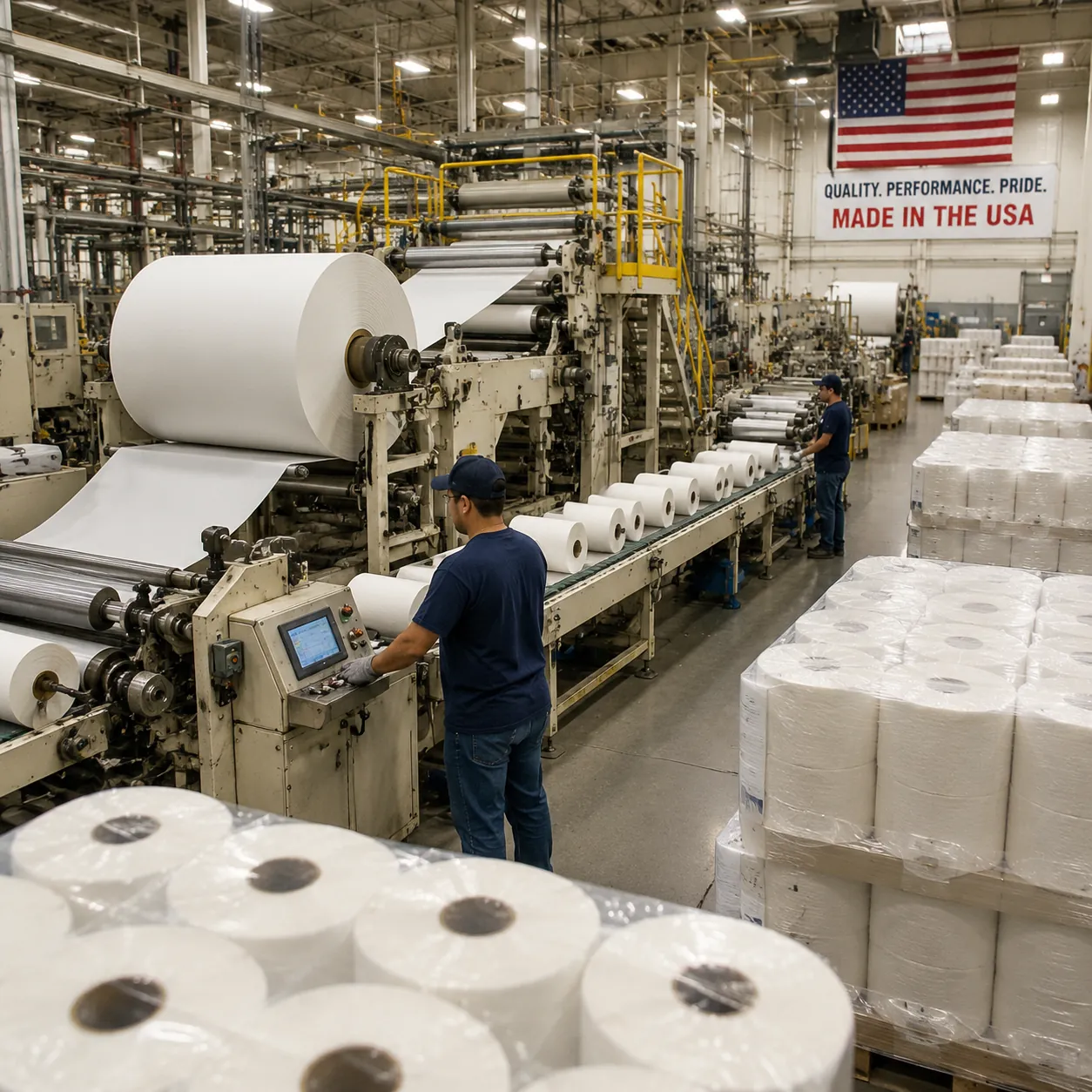
The U.S. tissue industry depends heavily on local production. Large paper companies operate massive factories across the country. These factories convert pulp into toilet paper, facial tissue, napkins, and paper towels every day.
Why Domestic Production Matters
Toilet paper takes up a lot of container space. The product is lightweight but bulky. Shipping finished toilet paper across oceans increases freight costs quickly. Because of this, many companies prefer local manufacturing.
Here are the main reasons domestic production dominates:
| Factor | Why It Matters |
|---|---|
| Freight Cost | Large rolls occupy container space fast |
| Delivery Speed | Local factories shorten lead times |
| Product Freshness | Faster turnover reduces warehouse pressure |
| Supply Stability | Domestic mills reduce import risks |
| Retail Demand | Stores need constant replenishment |
During the COVID-19 pandemic, many Americans saw empty shelves for the first time. That period showed how important local production capacity is. Domestic factories increased production, simplified packaging, and focused on core products to stabilize supply.
Major U.S. Toilet Paper Manufacturers
Several companies control a large share of the American tissue market.
Kimberly-Clark
Kimberly-Clark produces brands like Cottonelle and Scott. The company operates several manufacturing sites in the United States.
Procter & Gamble
Procter & Gamble manufactures Charmin and other tissue products. Its factories serve supermarkets, warehouse clubs, and online retailers.
Georgia-Pacific
Georgia-Pacific owns Angel Soft and Quilted Northern. The company also supplies commercial tissue products for hotels and office buildings.
Private Label Production
Many supermarket chains do not manufacture tissue products themselves. Instead, they work with contract manufacturers. These factories produce customized products with private packaging and retail branding.
This model has become common because retailers want:
- Flexible packaging
- Lower costs
- Fast replenishment
- Different quality levels
- Seasonal promotions
Some U.S. companies also import jumbo tissue rolls from other countries and convert them locally into finished products. This hybrid model helps reduce raw material costs while keeping local distribution efficient.
Domestic Production Does Not Mean 100% Local Materials
A toilet paper roll manufactured in America may still use imported pulp, chemicals, or packaging materials. Production location and raw material origin are not always the same thing.
For example:
- Canadian pulp may enter U.S. tissue mills
- Imported recycled fiber may supplement local supply
- Packaging film may come from Asia
- Printing ink may come from Europe
The final converting and packaging process still happens in American factories.
Why Buyers Still Source Overseas
Even though the U.S. produces most of its own toilet paper, importers and wholesalers still buy from overseas manufacturers for several reasons:
- Better container loading efficiency
- Lower labor costs
- Customized OEM packaging
- Flexible MOQ
- Faster scaling for promotions
Some African and Middle Eastern distributors also buy jumbo rolls from China because they can convert products locally and lower total operating costs.
The U.S. market remains highly domestic, but global supply chains still play an important role behind the scenes.
Which States Manufacture the Most Toilet Paper?
Many consumers never think about where tissue factories are located. Yet geography strongly affects pricing, logistics, and raw material supply.
Southern states produce a large share of American toilet paper because they have strong forestry resources, large paper mills, and lower operating costs.
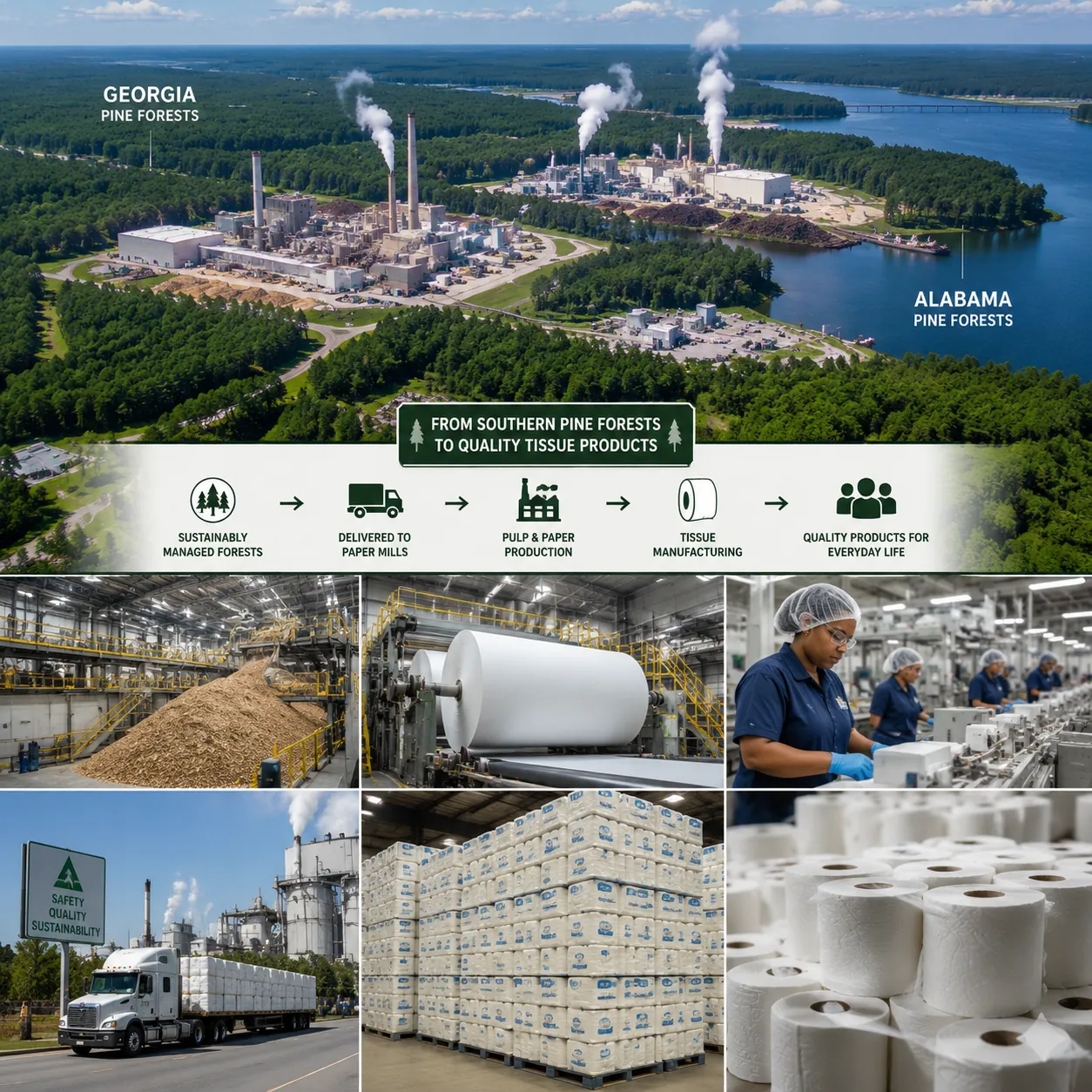
The American tissue industry spreads across several major manufacturing regions. Most factories are located near forests, transportation systems, or large population centers.
Top Toilet Paper Manufacturing States
Several states stand out because of their paper industry history and infrastructure.
| State | Industry Advantage |
|---|---|
| Georgia | Strong forestry and paper industry base |
| Alabama | Large pulp mills and low energy costs |
| South Carolina | Major tissue converting facilities |
| Wisconsin | Historic paper manufacturing center |
| Pennsylvania | Strong distribution network |
| Texas | Large consumer market and logistics access |
The Southern Paper Belt
The southeastern United States is often called the “paper belt.” States like Georgia and Alabama have massive pine forests. These forests support pulp production for tissue products.
Southern pine trees grow relatively fast. That growth cycle helps maintain long-term fiber supply.
Why the South Dominates
Several factors support tissue manufacturing in the South:
Forest Access
Paper mills need huge amounts of wood fiber. Southern forests provide stable raw material access.
Transportation Infrastructure
Factories rely on rail systems, highways, and ports. Southern states invested heavily in industrial logistics.
Lower Utility Costs
Paper manufacturing uses large amounts of electricity, steam, and water. Lower utility costs improve profitability.
Labor Availability
The region has a long manufacturing history. Skilled workers understand paper converting and machine operation.
Wisconsin’s Historical Role
Wisconsin remains one of America’s most famous paper manufacturing states. The state developed strong expertise in paper production many decades ago.
Many tissue companies still operate there because:
- Skilled labor already exists
- Supply chains are established
- Machinery support networks are nearby
- Technical knowledge remains strong
Even so, newer investment often moves south because operating costs can be lower.
Tissue Mills vs. Converting Plants
Not every factory performs the same function.
Tissue Mills
These facilities produce the giant parent rolls. Mills process pulp into large tissue reels.
Converting Plants
Converting facilities cut, emboss, perforate, and package tissue products into retail-ready rolls.
Sometimes these operations happen in one location. In other cases, parent rolls move between states before final packaging.
Why Factory Location Affects Buyers
Location affects much more than transportation.
For wholesalers and distributors, factory geography impacts:
- Delivery lead time
- Container loading speed
- Freight rates
- Inventory planning
- Weather disruption risks
A buyer serving East Coast retailers may prefer suppliers closer to major ports or highway systems.
Large retailers also diversify suppliers across several states. This reduces risk if one factory faces shutdowns from hurricanes, labor shortages, or maintenance problems.
The U.S. tissue industry uses regional manufacturing strategies to maintain stable national supply.
Is U.S. Toilet Paper Made From Local Trees?
Many buyers ask whether American toilet paper really comes from American forests. The short answer is yes, but the full answer is more detailed.
Much of the toilet paper produced in the United States uses wood pulp from North American forests, especially southern pine and northern softwood trees.

Paper production starts with fiber. That fiber usually comes from wood pulp or recycled paper.
Where American Pulp Comes From
The United States has a large forestry industry. Trees harvested for tissue production usually come from managed forests instead of natural old-growth forests.
Common fiber sources include:
- Southern yellow pine
- Spruce
- Fir
- Eucalyptus blends
- Hardwood species
Southern states supply large amounts of virgin pulp because their forests grow quickly and support commercial harvesting.
Managed Forestry Systems
Modern forestry operations work differently from the old logging systems many people imagine.
Most industrial forests follow planned harvesting cycles.
Typical Forestry Process
- Trees are planted
- Forests are monitored
- Mature trees are harvested
- New seedlings are replanted
- Growth cycles continue
This process helps maintain long-term fiber supply.
Virgin Pulp vs. Recycled Fiber
Virgin pulp comes directly from wood. Recycled fiber comes from recovered paper products.
Both materials appear in the U.S. tissue market.
| Material Type | Main Features |
|---|---|
| Virgin Pulp | Softer texture and stronger fibers |
| Recycled Fiber | Lower environmental impact |
| Bamboo Pulp | Fast-growing alternative source |
| Mixed Fiber | Balances cost and performance |
Premium toilet paper usually contains higher percentages of virgin fiber because softness and strength matter for consumer products.
Commercial tissue products often use more recycled material because cost efficiency matters more for hotels, offices, and public facilities.
Does the U.S. Import Pulp?
Yes. The U.S. paper industry also imports pulp from countries like:
- Canada
- Brazil
- Chile
Canadian softwood pulp is especially important because it provides strong long fibers that improve tissue durability.
Some manufacturers blend imported pulp with domestic fiber to balance quality and cost.
Environmental Pressure on the Industry
Consumers increasingly ask where paper comes from. Retailers now face pressure to prove responsible sourcing.
Because of this, many manufacturers seek certifications such as:
- FSC certification
- Sustainable forestry verification
- Chain-of-custody tracking
Large retailers also request environmental compliance documents from suppliers.
Why Fiber Choice Matters
Different fibers create different product performance.
Softness
Hardwood pulp often improves softness.
Strength
Softwood fibers improve durability and wet strength.
Absorbency
Fiber blending changes water absorption performance.
Cost
Raw material pricing changes throughout the year based on forest supply and global pulp markets.
Manufacturers constantly adjust formulations to balance quality, sustainability, and profitability.
The final toilet paper roll often reflects many sourcing decisions happening far upstream in the supply chain.
Do American Companies Use Recycled Content?
Many consumers want environmentally friendly tissue products. This demand pushed many American manufacturers to increase recycled content usage over the last two decades.
Many American tissue manufacturers use recycled paper fiber, especially in commercial and value-grade products, though premium household brands still rely heavily on virgin pulp for softness and strength.
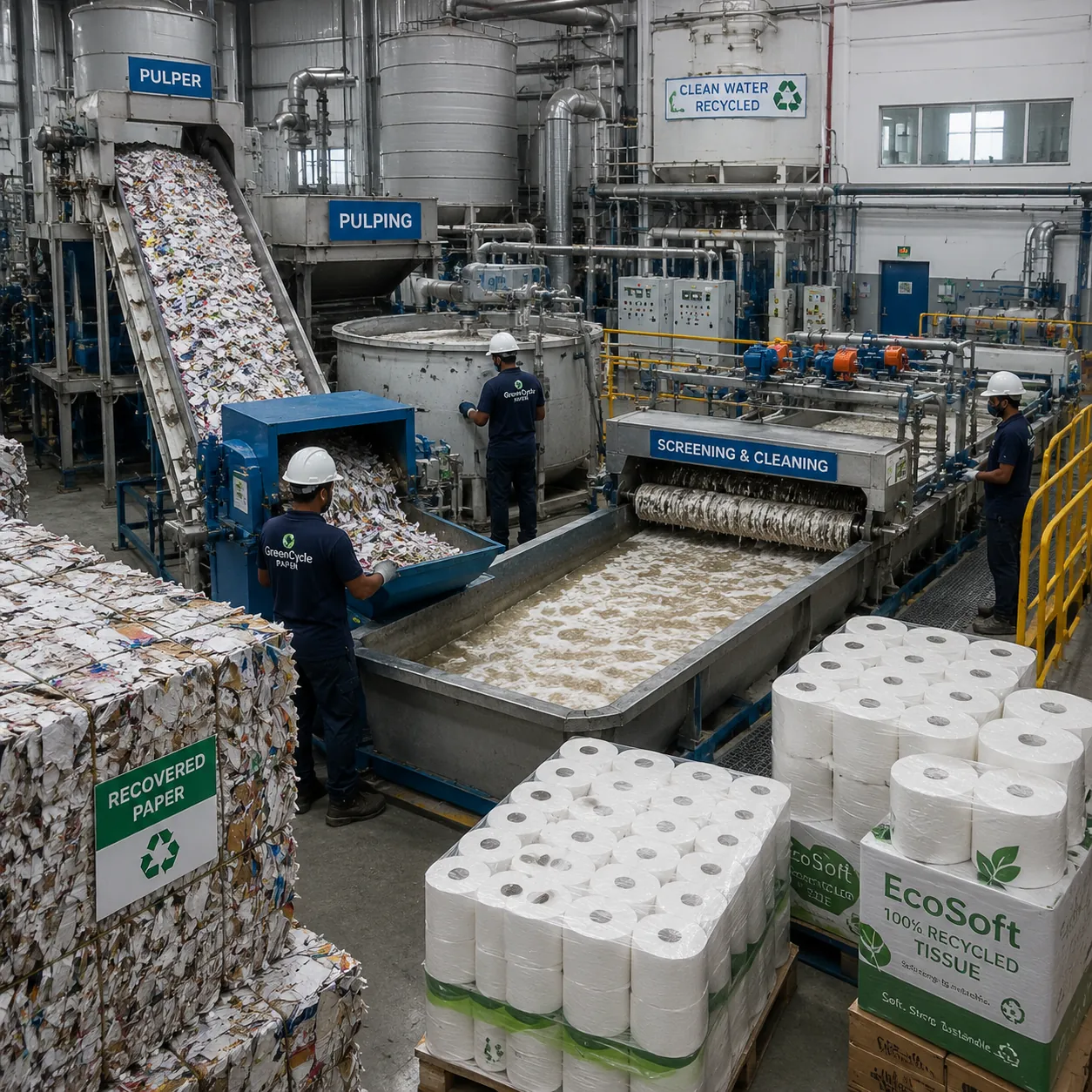
Recycled content now plays a major role in the tissue industry. Still, not every toilet paper product uses the same percentage of recycled fiber.
How Recycled Toilet Paper Is Made
The process begins with recovered paper.
Common sources include:
- Office paper
- Newspapers
- Cardboard
- Mixed paper waste
- Post-consumer tissue products
Factories clean and process this material into usable pulp.
The Deinking Process
Recovered paper contains ink, glue, staples, and contaminants. Mills remove these materials through several cleaning stages.
Typical steps include:
- Shredding
- Mixing with water
- Screening
- Ink removal
- Fiber cleaning
- Bleaching
- Tissue formation
The final pulp becomes new tissue products.
Why Some Brands Avoid High Recycled Content
Recycled fiber shortens during repeated processing cycles. Short fibers can reduce softness and durability.
This creates trade-offs for manufacturers.
Premium Retail Brands
High-end toilet paper focuses on:
- Softness
- Thickness
- Bright appearance
- Comfort
Virgin pulp often performs better in these categories.
Commercial Tissue Products
Hotels, airports, schools, and office buildings usually prioritize:
- Cost control
- Bulk purchasing
- Environmental targets
- Functional performance
These buyers often accept higher recycled content.
Consumer Preferences Are Changing
Younger consumers increasingly look for sustainable products.
Retailers now market products using terms like:
- Recycled content
- Tree-free tissue
- FSC certified
- Eco-friendly packaging
Some brands even highlight carbon reduction goals.
Bamboo Tissue Growth
Bamboo pulp products are gaining attention in the American market because bamboo grows faster than traditional trees.
Bamboo tissue products often promote:
- Sustainability
- Fast renewability
- Reduced forest pressure
- Natural image branding
Even so, bamboo remains a smaller share of the total U.S. tissue market.
Challenges With Recycled Fiber
Using recycled content is not always simple.
Supply Variability
Recovered paper quality changes constantly.
Processing Cost
Cleaning recycled fiber requires additional equipment and chemicals.
Product Consistency
Fiber inconsistency can affect softness, strength, and appearance.
Food and Hygiene Standards
Some tissue products require stricter safety standards, especially in healthcare and food-service applications.
Because of these challenges, many manufacturers use blended fiber systems instead of 100% recycled content.
Future Trends
The U.S. tissue industry continues moving toward more sustainable production.
Future developments may include:
- Higher recycled fiber efficiency
- Improved bamboo processing
- Lower water consumption
- Energy-efficient paper machines
- Better packaging sustainability
Large retailers and institutional buyers increasingly request environmental data from suppliers. Sustainability is no longer only a marketing topic. It now affects purchasing decisions across global supply chains.
Conclusion
Most toilet paper sold in the United States is manufactured domestically using a mix of local wood pulp, imported fiber, and recycled materials. Southern states dominate production, while sustainability and recycled content continue shaping the future of the American tissue industry.