
Many buyers feel confused when a roll does not fit a dispenser. This small detail can cause big problems in daily use.
A standard toilet paper roll core is usually about 1.5 to 2 inches (38–50 mm) in diameter, but it can vary slightly by manufacturer and market.
This topic looks simple, but it connects to packaging, machines, and user experience. Understanding it helps avoid costly mistakes in bulk orders.
What is the standard diameter of a toilet paper core?
Many people assume all toilet paper cores are the same. That assumption often leads to mismatched products and wasted inventory.
The most common core diameter is around 1.6 inches (about 40 mm), which fits most household and commercial dispensers worldwide.

When discussing toilet paper cores, the term "width" often causes confusion. In most cases, buyers actually mean the inner diameter of the cardboard tube. This dimension decides whether the roll can fit onto a holder or dispenser.
Common Core Sizes in the Market
Different markets use slightly different standards. Below is a simple comparison:
| Market Type | Core Diameter (mm) | Core Diameter (inches) | Usage Scenario |
|---|---|---|---|
| Household Standard | 38–42 mm | 1.5–1.65 inches | Home bathrooms |
| Commercial Standard | 45–50 mm | 1.75–2 inches | Offices, malls, airports |
| Jumbo Roll Core | 70–76 mm | 2.75–3 inches | High-traffic public toilets |
Why This Size Became Standard
The standard size did not happen randomly. It developed over time due to:
- Compatibility with early dispenser designs
- Balance between strength and material cost
- Ease of manufacturing on high-speed machines
From experience, small differences like 2–3 mm can already affect compatibility. That is why buyers should always confirm specifications before placing large orders.
Manufacturing Considerations
Core diameter also depends on:
- Paper thickness (ply and grammage)
- Roll length
- Machine settings
For example, thicker paper often requires slightly larger cores to avoid compression issues during winding.
In large-scale production, consistency matters more than the exact number. A stable diameter ensures smooth loading, storage, and usage.
Is core width the same in all packaging sizes?
Many buyers think smaller packs use smaller cores. This idea sounds logical but is not always correct.
Core diameter usually stays the same across different packaging sizes, but jumbo and industrial rolls use larger cores for structural support.
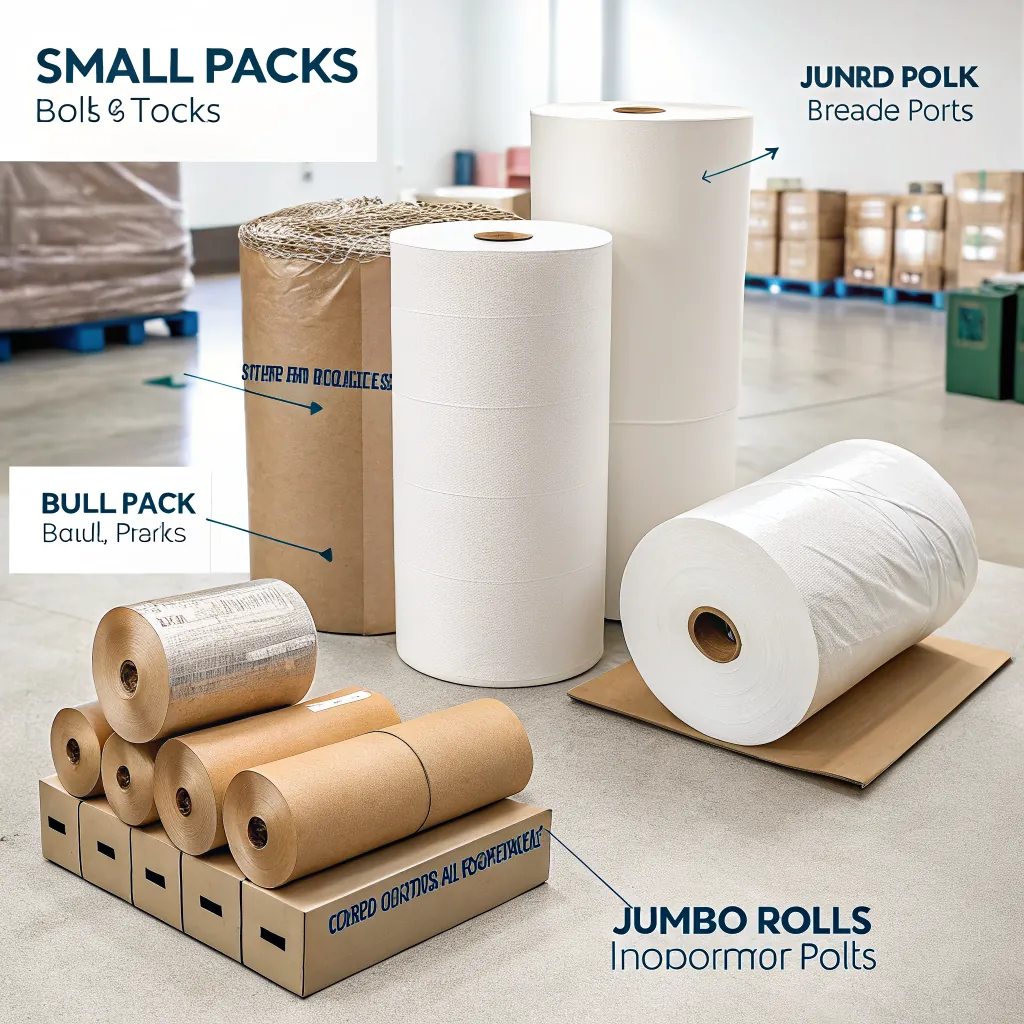
The size of the packaging does not always affect the core. A 4-roll pack and a 24-roll pack often contain rolls with the same inner diameter.
Packaging vs Core Structure
Here is a simple breakdown:
| Packaging Type | Roll Size Change | Core Size Change | Reason |
|---|---|---|---|
| Small packs | No | No | Same product, different count |
| Bulk retail packs | No | No | Cost efficiency |
| Jumbo rolls | Yes | Yes | Higher load capacity needed |
| Industrial rolls | Yes | Yes | Dispenser compatibility |
Why Jumbo Rolls Are Different
Jumbo rolls serve a different purpose. They are used in:
- Airports
- Shopping malls
- Factories
These locations need:
- Longer usage time
- Less frequent replacement
- Stronger core structure
A larger core prevents the roll from collapsing under its own weight.
Practical Insight from Orders
In real supply cases, many clients focus on roll length and forget core size. This leads to issues like:
- Rolls not fitting dispensers
- Increased return rates
- Customer complaints
A simple check before production can avoid these problems. That is why professional suppliers always confirm core specifications during order discussions.
How does core width impact dispensers?
A mismatch between core size and dispenser can stop a product from being used at all. This is a common issue in bulk supply.
Core width directly affects whether a roll fits, rotates smoothly, and dispenses paper efficiently.

Dispensers are designed with fixed spindle sizes. If the core is too small or too large, problems appear immediately.
Key Effects on Dispenser Performance
1. Fit Compatibility
If the core is too small:
- The roll may not stay stable
- It may fall off or tilt
If the core is too large:
- The roll cannot be installed
2. Rotation Efficiency
A correct core size allows smooth rotation. If not:
- Paper tears unevenly
- Users pull harder
- Waste increases
3. Maintenance Impact
Improper core size leads to:
- Frequent jams
- Faster dispenser wear
- Higher maintenance costs
Matching Core Size with Dispenser Type
| Dispenser Type | Recommended Core Size | Common Use Case |
|---|---|---|
| Standard holder | 38–42 mm | Homes, small offices |
| Lockable dispenser | 45–50 mm | Commercial buildings |
| Jumbo dispenser | 70–76 mm | High-traffic restrooms |
Real-World Lesson
In one case, a buyer ordered a large quantity of rolls with a slightly smaller core. The rolls looked fine, but they did not rotate properly in existing dispensers. This caused user complaints and required replacement.
This example shows that even a small detail like core width can affect the whole user experience.
Can narrow cores affect usability?
Some buyers prefer narrow cores to save material costs. This idea seems efficient, but it comes with trade-offs.
Yes, narrow cores can reduce stability, affect rolling performance, and make the product harder to use in standard dispensers.

Pros and Cons of Narrow Cores
Advantages
- Lower material cost
- Slightly more paper per roll
- Reduced shipping weight
Disadvantages
- Poor compatibility with dispensers
- Increased deformation risk
- Harder rotation
Structural Impact
A narrower core means less internal support. This can lead to:
- Roll compression during transport
- Oval-shaped rolls
- Paper sticking or tearing
User Experience Issues
From a user perspective:
- Rolls may feel tight when pulling
- Paper may not unwind smoothly
- More force is needed
These small issues add up, especially in commercial settings.
When Narrow Cores Make Sense
They can still work in certain cases:
- Direct-to-consumer retail products
- Manual holders without strict size limits
- Cost-sensitive markets
However, for large-scale or commercial use, standard cores are usually the safer choice.
Balance Between Cost and Performance
Choosing core size is about balance:
| Factor | Narrow Core | Standard Core |
|---|---|---|
| Cost | Lower | Moderate |
| Compatibility | Limited | High |
| Durability | Lower | Higher |
| User Experience | متوسط | Better |
A good supplier will help find the right balance based on the target market.
Conclusion
Core size may look small, but it affects compatibility, cost, and user experience. Choosing the right diameter ensures smooth use, fewer complaints, and better long-term value.