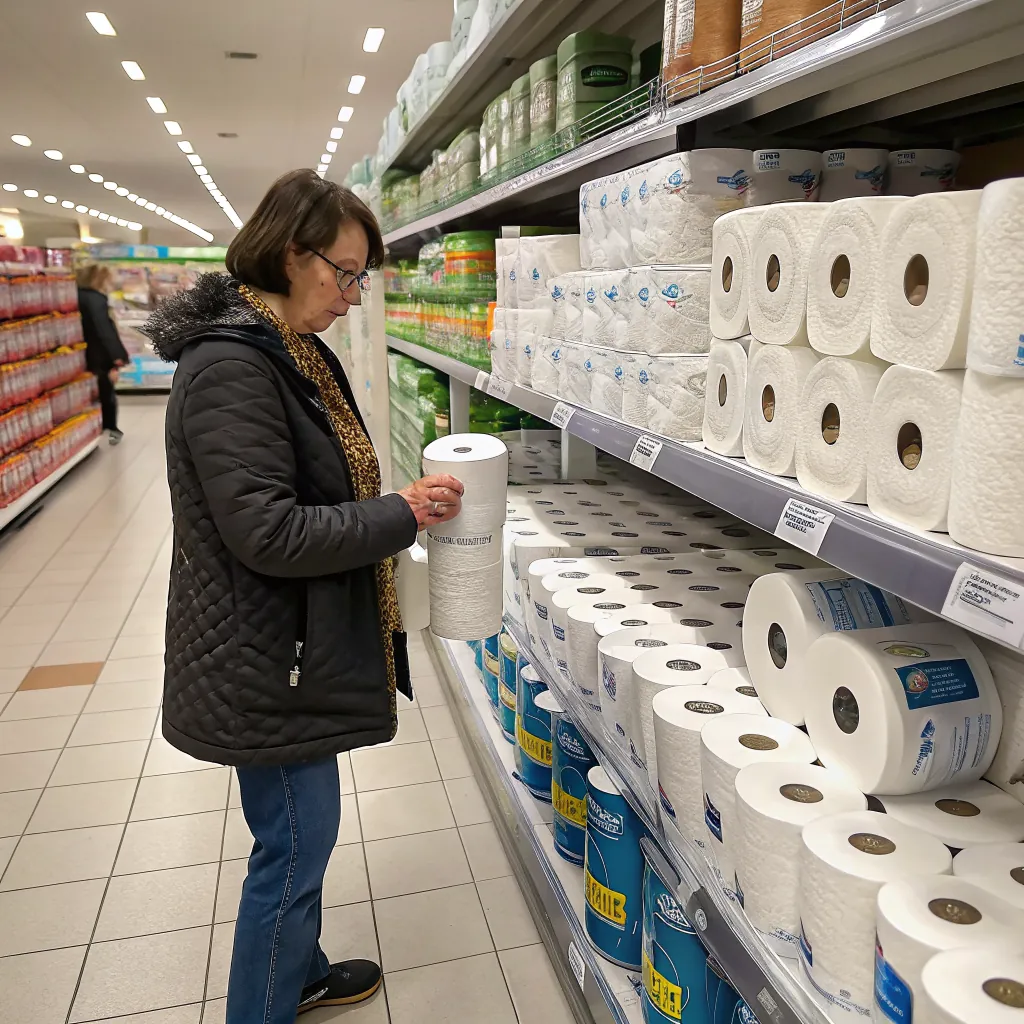
Most people buy toilet paper by habit. Then the roll runs out too fast, and the price no longer looks as good as it did on the shelf.
A roll of toilet paper can have very different square counts, and there is no single number that fits every product. Many standard rolls may look similar, but brands often change sheet count, sheet size, ply, and roll length, so the real total can vary a lot.
That is why square count matters more than many buyers think. A roll can look big, feel soft, and still give less actual use than another roll beside it. The numbers on the pack can tell a clearer story, but only when they are read with care.
Is Square Count Printed on Toilet Paper Packaging?
Shoppers often stand in front of a shelf and guess which roll gives the best deal. The problem is simple. Packaging can be loud and bright, but the most useful detail may sit in small print.
Yes, square count is often printed on toilet paper packaging, but not always in the most obvious place. It may appear as sheets per roll, total sheets, or roll dimensions, and some brands make it easier to find than others.
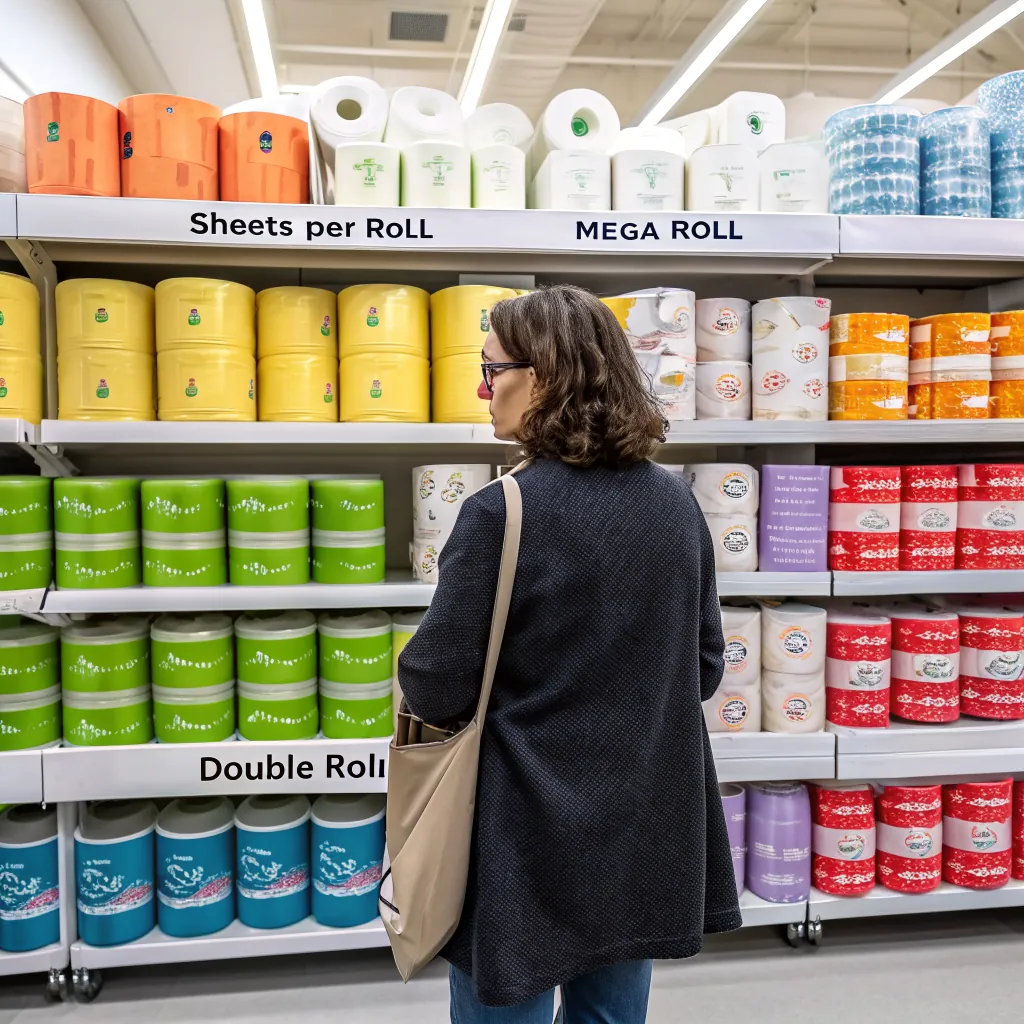
Many packs do include square count. Still, brands do not always use the same words. Some write “sheets per roll.” Some use “2-ply, 300 sheets.” Some focus on “mega roll” or “double roll” and leave the buyer to search for the fine print. This is where confusion begins.
Where brands usually place the number
In many cases, the sheet count is not front and center. It may appear on the side panel, near the barcode, or in a product detail block. A shopper in a hurry may only notice words like “family pack” or “extra soft.” Those terms sound useful, but they do not tell the full story.
A practical way to read the pack is to look for four things together:
| Packaging Detail | What It Tells You | Why It Matters |
|---|---|---|
| Sheets per roll | Total square count in one roll | Helps estimate how long one roll may last |
| Ply | Number of layers per sheet | Affects thickness, comfort, and use rate |
| Sheet size | Length and width of each square | Bigger sheets may mean more paper per roll |
| Total rolls in pack | Number of rolls included | Helps compare full pack value |
This issue matters because brands know buyers respond fast to simple claims. Words like “mega,” “ultra,” or “long lasting” are marketing language. They may be true in some sense, but they are not exact. The sheet count is exact. That is why it deserves more attention than the big text on the front.
Why square count can be easy to miss
A pack can show bold promises and still hide the real paper details in small font. This is not always meant to mislead. Sometimes it comes from design choices. The front of the pack sells comfort, strength, or softness. The side panel handles technical facts. But for buyers who want a clean value check, this split creates friction.
There is also another layer to the problem. Some buyers think “squares” and “sheets” are different. In toilet paper packaging, they usually mean the same thing. One square is one sheet. Still, when one pack says “320 sheets” and another says “90 meters,” comparison becomes harder.
What a careful buyer should do
A useful habit is to ignore the product name for a moment and scan the facts panel first. That one small shift changes the buying process. It turns a habit purchase into a simple comparison.
When writing about this topic, I often return to the same point: buyers do not need more claims. They need clearer numbers. A roll should be judged by what it gives, not by what its label suggests.
Do Different Brands Offer Consistent Square Numbers?
Two toilet paper rolls can look almost the same from the outside. Then one finishes in days, while the other lasts much longer. That gap can leave buyers feeling tricked.
No, different brands do not offer consistent square numbers. Brands set their own sheet counts, sheet sizes, roll lengths, and product tiers, so two rolls in the same store can have very different totals even when they seem similar.
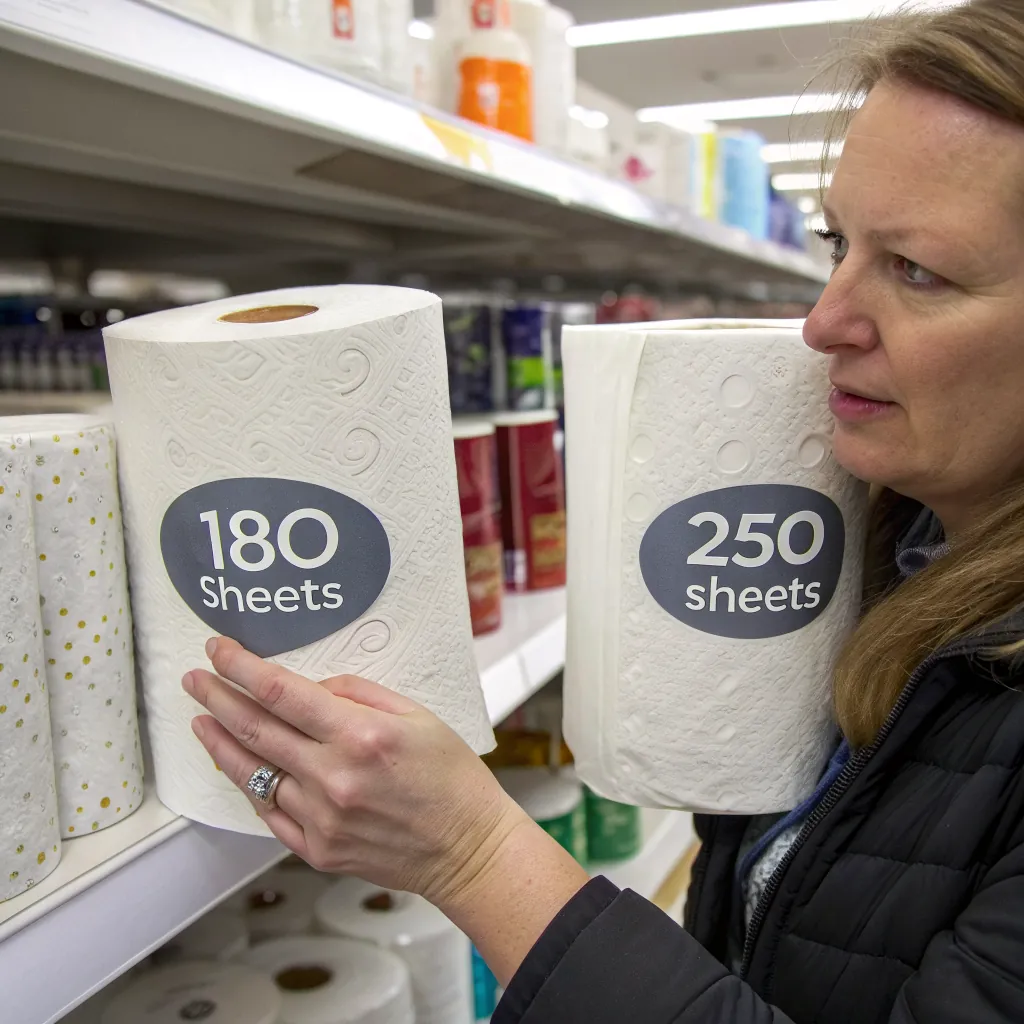
This lack of consistency is normal in the market. Toilet paper is not sold under one fixed rule for square count. Brands build product lines for different budgets and users. One brand may sell a standard roll with 180 sheets, while another may offer 250 sheets in what looks like the same size category. Then another brand may cut the sheet count but increase sheet width or thickness.
Why “same type” does not mean same count
Many buyers assume one standard roll should match another standard roll. That would make shopping easier, but it is not how the market works. Each brand chooses its own balance of cost, softness, strength, and shelf appeal.
A few common reasons explain this difference:
Product positioning
A premium brand may use fewer but thicker sheets. A budget brand may use more but thinner sheets. Both can claim value, but the user experience will differ.
Size category inflation
Terms like regular roll, double roll, and mega roll are not always equal across brands. One brand’s double roll may not match another brand’s double roll in sheet count or total paper length.
Regional habits
Different markets prefer different product styles. Some buyers want compact retail packs. Some want bigger rolls for fewer replacements. Some care most about softness. Others want cost control first.
The result is a shelf full of products that use similar language but deliver different counts.
| Roll Label on Pack | What Buyers May Assume | What Often Happens in Reality |
|---|---|---|
| Standard roll | Normal sheet count across brands | Counts still vary from brand to brand |
| Double roll | Exactly twice a standard roll | Often close, but not always equal |
| Mega roll | Much bigger than double roll | Size and sheet count depend on the brand |
| Family pack | Better long-term value | Pack size may rise more than per-roll value |
Why this inconsistency matters
The biggest issue is not that brands are different. The issue is that many buyers compare the wrong signals. They compare roll diameter, pack color, or label size. Those clues are weak. Square count gives better ground for comparison, but only if the buyer also checks sheet size and ply.
A brand can increase square count and still reduce total value by making each sheet smaller. Another brand can offer fewer sheets, but larger sheet dimensions and better absorbency may reduce use per visit. So yes, square numbers vary, and that variation alone does not tell the whole story.
I have seen many buying decisions shaped by the look of the roll rather than the facts on the pack. That is understandable. Toilet paper is a low-attention purchase for most people. But the more brands stretch category names, the more useful direct number reading becomes.
Can Square Count Be Used to Compare Value?
A low shelf price can feel like a win. Then the roll disappears fast, and the next shopping trip comes sooner than expected. That is where value gets blurry.
Yes, square count can be used to compare value, but it should never be used alone. It works best when combined with price, ply, sheet size, and how fast the paper is actually used in daily life.
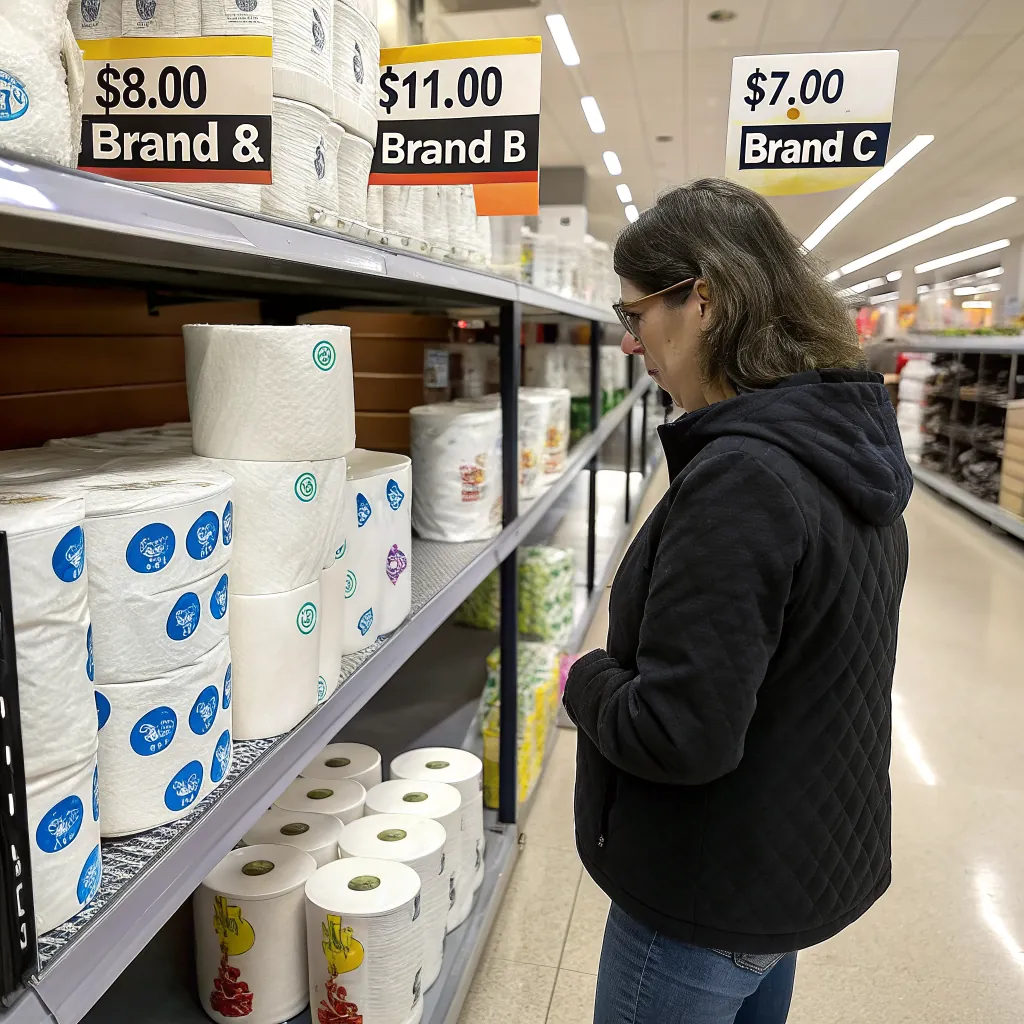
Square count is a helpful starting point because it gives a measurable unit. A buyer can divide price by total sheets and get a rough cost per square. That makes comparison easier across packs of different sizes.
A simple way to compare value
Let us say one pack costs less, but each roll has fewer sheets. Another pack costs more, but each roll lasts longer. Without the square count, the cheaper pack looks better. With the count, the picture may change.
Here is a simple example:
| Product | Pack Price | Rolls | Sheets per Roll | Total Sheets | Cost per 100 Sheets |
|---|---|---|---|---|---|
| Brand A Standard Pack | $8.00 | 8 | 220 | 1,760 | $0.45 |
| Brand B Mega Pack | $11.00 | 6 | 400 | 2,400 | $0.46 |
| Brand C Budget Pack | $7.00 | 8 | 180 | 1,440 | $0.49 |
From this table, Brand A looks slightly better than Brand B on cost per 100 sheets, and both beat Brand C. But that is not the end of the story.
Why sheet count alone can mislead
A 2-ply sheet and a 3-ply sheet do not behave the same way. A smaller sheet and a larger sheet do not cover the same area. A weaker sheet may force more use each time. So the cheapest cost per sheet can still lead to faster use.
That is why a better value check asks a few more questions.
What to compare with square count
1. Ply strength
Higher ply often means more thickness and better absorbency. In some homes, that can lower total use.
2. Sheet dimensions
A brand with 300 small sheets may not beat a brand with 250 larger sheets in real use.
3. Roll replacement rate
In homes, offices, hotels, or public washrooms, the labor cost of changing rolls can matter too. Larger rolls may save staff time.
4. User habits
A family with children may value durability. A hotel may care more about guest comfort. A wholesale buyer may care most about total cost and stable supply.
A more useful mindset
Value is not the same as the lowest price. It is the balance between price and useful output. Square count helps because it gives a fixed number to start with. It brings some order to a category filled with soft claims and oversized words.
When I compare packs, the most honest approach is simple: start with total sheets, then adjust for ply and sheet size, then think about actual use. This method does not make shopping perfect, but it makes it far more rational.
For buyers who purchase in volume, this matters even more. A small difference per roll becomes a large cost gap over time. In that setting, square count stops being a minor detail and becomes part of cost control.
Why Do Square Counts Vary Between Rolls?
A buyer may notice that one roll finishes far sooner than expected, even though the package looked similar to another one bought last month. That can feel random, but it rarely is.
Square counts vary between rolls because manufacturers make different choices about sheet size, ply, paper weight, roll diameter, target market, and price point. The variation is usually a product design decision, not an accident.
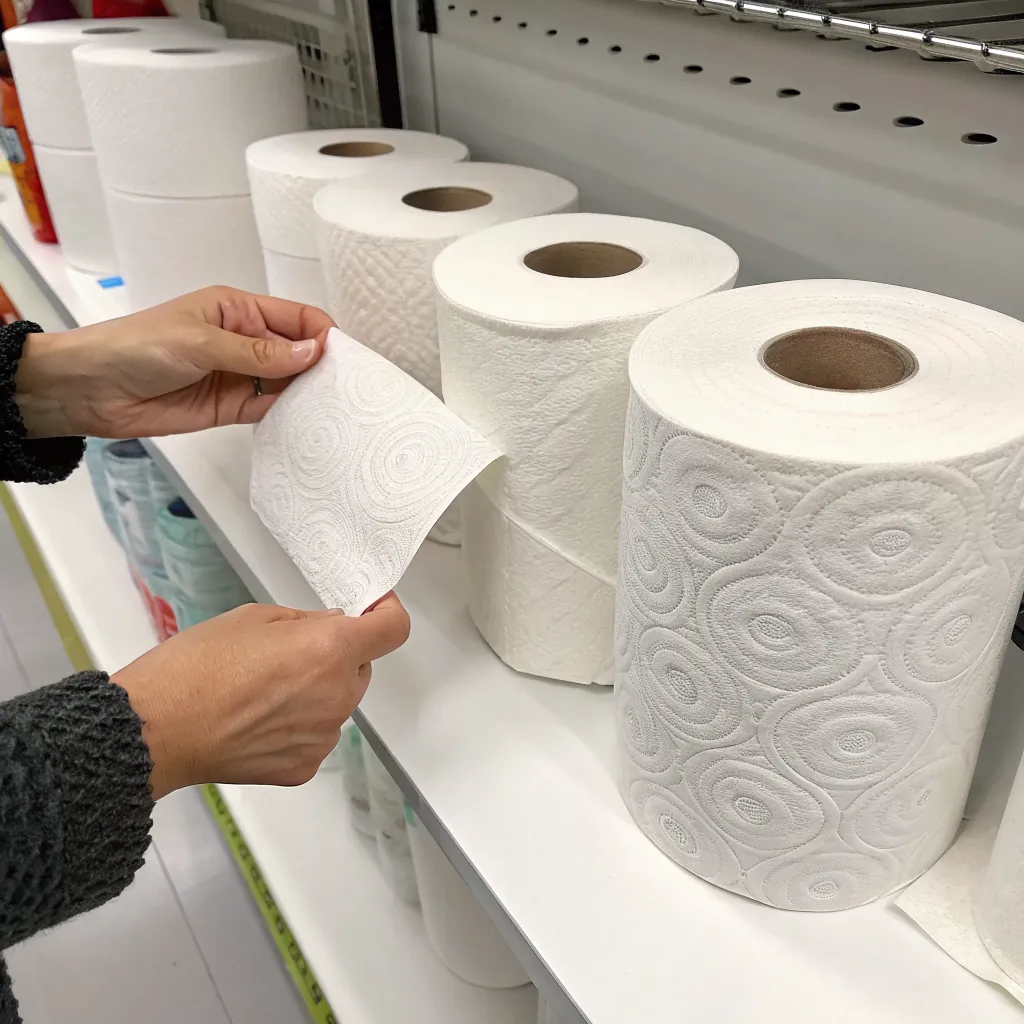
This variation exists because a toilet paper roll is not built from one standard formula. It is a mix of design, cost, machine settings, raw material choice, and market strategy.
The main reasons behind square count differences
1. Sheet size changes
One brand may keep the same roll width but shorten each sheet. Another may widen or lengthen the sheet. A higher square count can come from smaller pieces, not more total paper area.
2. Ply differences
A thicker 3-ply roll uses more material per sheet than a thin 1-ply or 2-ply roll. To hit a target price or roll diameter, the brand may lower the number of sheets.
3. Roll category design
Manufacturers often build product lines around price tiers. A base line may carry fewer squares. A premium line may carry more or use better paper. A commercial line may focus on long rolls and reduced refill frequency.
4. Core size and winding style
Not all rolls use the same cardboard core size or winding tension. A roll wound tighter may hold more sheets in a similar shape. A larger core can reduce the actual paper volume even if the roll looks wide.
Square count is part of market strategy
A roll is not just paper. It is also a product offer. Manufacturers ask simple questions: Who will buy it? What price can it hit? What shelf space will it take? What claims will attract attention? These choices shape square count.
A retail brand may want a soft, fluffy look on the shelf. That visual bulk can make the roll seem generous, even if the sheet count is moderate. A commercial supplier may care less about shelf appeal and more about roll efficiency. That product may look plain but last longer.
Why buyers notice the difference more now
Today, buyers pay more attention to hidden value. Price pressure makes people compare more closely. They begin to ask why one “big roll” does not last like another. Once that question appears, square count becomes a key part of the answer.
There is also a psychological side. People often judge a roll by diameter. That is easy to see. But diameter alone is weak evidence. A puffier roll can contain more air and less usable paper than a tighter one. The count tells a more exact story.
What this means in practice
A buyer should not expect every roll to match another roll just because both sit in the same category. Variation is normal. The smart move is to treat square count as one signal inside a bigger set of facts.
In everyday buying, that means reading past the front label. In bulk buying, it means building a comparison sheet and checking total paper yield. In both cases, the lesson is the same. Rolls vary because they are designed to vary. That is how brands target different users, prices, and selling points.
Conclusion
Square count is one of the clearest facts on a toilet paper pack, but it only becomes useful when read with ply, sheet size, and price. A better buying decision starts when the eye moves past marketing words and looks at the real numbers.